itstargetnews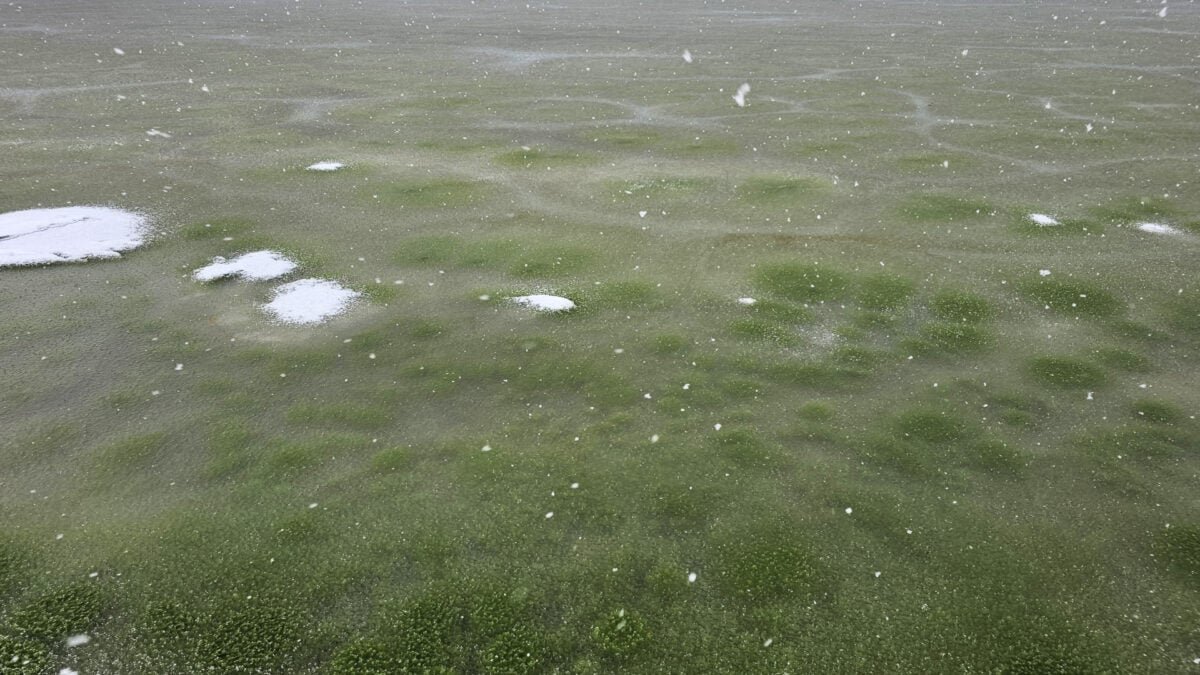
A frozen lake in Czechia has turned an ominous green color, a warning sign of ecological changes due to climate warming.
Researchers from the Biology Center of the Czech Academy of Sciences collected samples of the toxic blue-green algae bloom in Lake Lipno, which caused the ice to turn green in December 2025. Cyanobacteria blooms usually occur in the summer months and into the fall, but in this case, it seems to continue during the winter, resulting in the clear color of the ice.
The unusual sight of green ice is likely due to weeks of sunshine, calm weather, and light winds, according to researchers.

A green christmas
Lake Lipno, the largest reservoir in Czechia (also known as the Czech Republic), is plagued by excess nutrients. Pollution is caused by industrial activities, agricultural runoff, municipal waste, and other human-led activities that result in unusual ecological phenomena such as cyanobacteria blooms.
A cyanobacteria bloom is a rapidly growing bacteria known for its odor and green color. The blooms harm the local ecology, poisoning nearby aquatic organisms while also endangering human health. They usually thrive in warm water, which is usually found in the summer months.

In Czechia, Lake Lipno experiences a longer algae season that sometimes lasts until December. By examining samples from Lake Lipno, researchers were able to confirm that it was indeed cyanobacteria blooms that caused it to turn green.
Late last year, the cyanobacteria remained near the surface for an unusually long time until the reservoir froze over. That results in areas of clear ice that develop black cyanobacterial aggregates, forming so-called cyanobacterial eyes.

The phenomenon is most pronounced around Christmas Eve, when the weather is warmer than usual for this time of year. Some of the ice briefly melted and then refrozen, allowing patches of cyanobacterial eyes to form due to differences in the absorption of the Sun’s radiation.
Warmer weather ahead
The cyanobacteria blooms finally disappeared after heavy snowfall, blocking sunlight from reaching the algae under the ice.
The case of Lake Lipno is the best documented worldwide and shows that regular cyanobacteria blooms can show strange behavior under atypical conditions. Researchers, however, predict that sightings of green ice will become more common in the future as the effects of climate change continue to alter ecosystems.
“The green ice in Lake Lipno fits the long-term changes we see here related to eutrophication and ongoing climate change,” said Petr Znachor, a hydrobiologist from the Biology Center of the Czech Academy of Sciences, in a statement. “This suggests that we may witness similar surprises more often in the future.”