itstargetnews
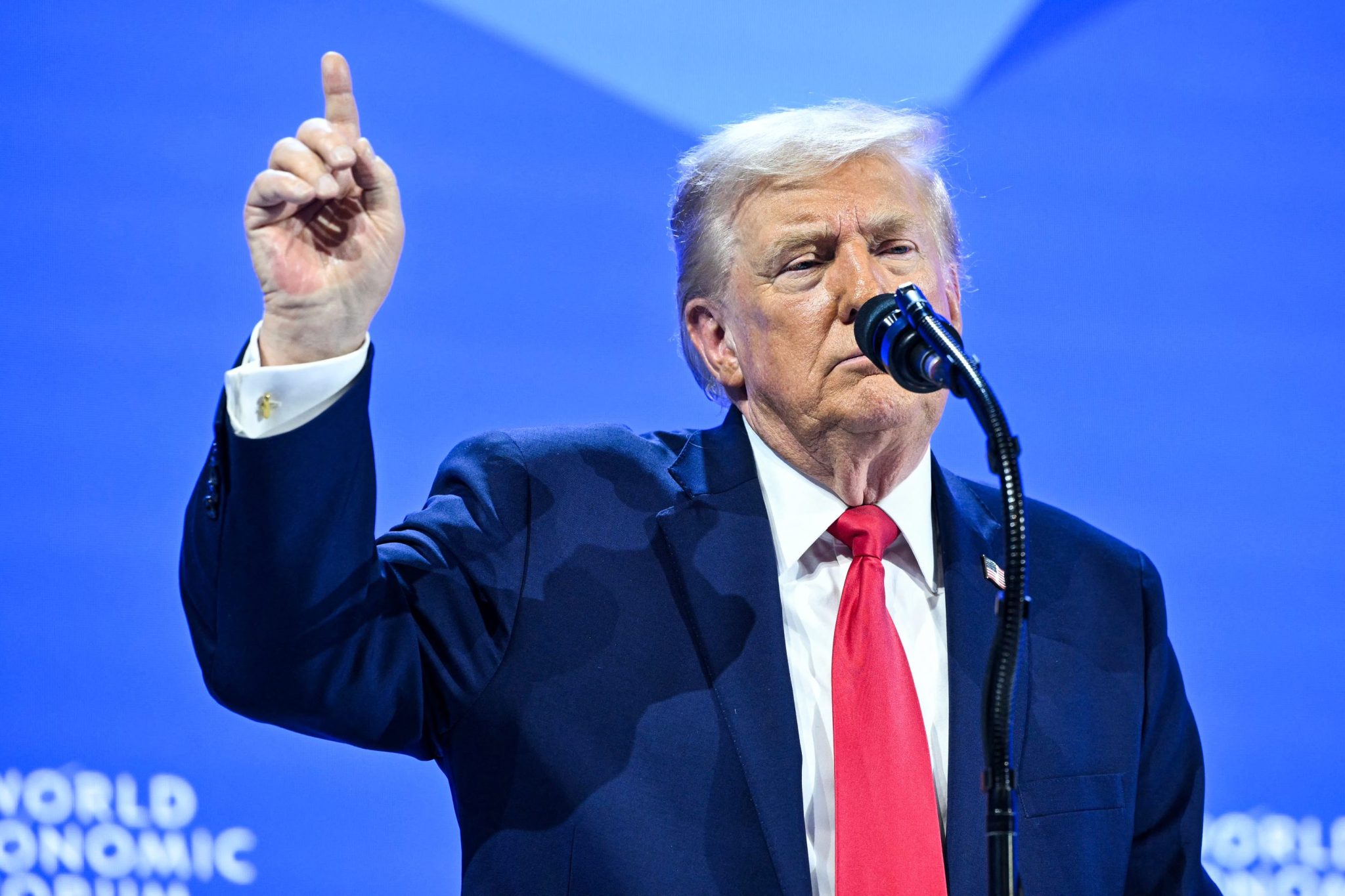
What happened in Davos this year was not just a message for presidents and prime ministers. This is a warning for chief executives. The World Economic Forum has long served as a venue for diplomatic signaling, but this time the implications landed squarely in the boardroom.
In Davos, Canadian prime minister Mark Carney warned that the “post-Cold War rules-based international order” no longer holds, and that countries must “take the world as it is, not the world we want to see.” That admonition applies especially strongly to CEOs. Their corporate strategies built for yesterday’s order are now exposed to risks they no longer control.
For three decades, American multinationals have operated on a tacit assumption: that geopolitics will remain outside of commercial decision-making. That assumption survived the 1990s and 2000s even as cracks appeared in the global trading system. Today, it is not only outdated but dangerous. What companies are experiencing is not a sudden crash, but the cumulative effect of trends seen over many years. What’s surprising is how many companies remain organized as if trends don’t matter.
Davos has crystallized a shift that can no longer be dismissed as diplomatic theater. Europe and Canada are deepening economic engagement with China, and China is actively reciprocating. This comes as the United States uses tariffs, industrial policy and clear retaliation to make clear that economic alignment is no longer inherited by default. It will be negotiated, implemented and repeated.
Our allies are not rejecting the United States. They are hedging. Their response is a logical adaptation to a world where trade, technology and capital are the obvious instruments of state power. China did not reach this position by accident. Under Xi Jinping, Beijing has systematically reduced its reliance on Western goodwill while building asymmetric leverage over industrial capacity, critical inputs and market access. Europe and Canada are not considered enemies; they are considered strategic options. When Washington stopped pretending that the old system still worked, the options became more valuable.
The data reinforces what the rhetoric now confirms. More than half of America’s merchandise trade deficit is with allies, not China. China, on the other hand, remains Europe’s largest or second largest trading partner, with bilateral trade measured in the hundreds of billions of dollars. These standards are not transitional. They are structural. Allies approaching China do not involve a neutral market actor; They created a mercantilist system designed to absorb demand while exporting excess capacity. For American companies, the result is not only competitive pressure abroad but a steady decline in domestic industrial strength.
The central challenge for CEOs is not tariffs or export controls alone. This is a strategic mismatch. Most American multinationals are still designed for a world with strong alliances, predictable currencies and relatively undisturbed capital flows. That world is gone. Yet organizational structures, incentive systems and growth targets continue to assume this. Strategy, in too many companies, remains backward – anchored in nostalgia rather than possibility.
Western multinational corporations must now redesign for a world where alignment is fluid, currencies are volatile and allies do not move in lockstep. That requires decisions that many companies put off for too long.
First, CEOs must build scenarios that assume that some allies will continue to come into orbit of the Chinese economy. This is no longer an academic exercise. Leaders must model growth opportunities and structural risks as trade patterns change: competing in many small markets instead of a few markets; detecting China’s export pressure in fractional quantities where subsidies and price aggression are difficult to detect; operates in more volatile currencies rather than relying on dollar-centric assumptions; and redesigning organizations so that unfiltered market intelligence reaches the top. Above all, it requires a relentless focus on cost, productivity and relevance. Products must compete with Chinese offerings after accounting for the devaluation of the currency and state support, not before.
Second, companies must decide clearly where to play – and where not to play. With Xi exercising direct control over China’s supply chains, ambiguity is no longer a strategy. Selectivity is. Companies that delay making hard choices will be outdone by those that make them early.
Third, CEOs should reset goals to what is possible rather than familiar. Growth targets built on yesterday’s assumptions will destroy tomorrow’s capital. Discipline is now more important than optimism.
Fourth, capital formation and allocation must be reconsidered from the first principles. In what currencies will the income be earned? What buffers are needed against political and financial shocks? These are no longer technical questions for finance groups only; they are core strategic decisions.
Fifth, sunk costs must be dealt with honestly. Footprints will be reduced. Facilities will close. The delay only increases the future price.
Ultimately, geopolitical judgment must move out of the silos of government affairs and into the CEO’s office and the boardroom. It requires real war room thinking. Geopolitical exposure is now shaping growth trajectories, margin stability and corporate valuation. It’s a strategy.
Many allies who are now accumulating reserves are doing so behind open American markets. That openness is no longer unconditional, nor is it eternal. Davos made that clear – not just to governments, but to anyone responsible for allocating capital and setting direction.
My argument is not about ideology. This is an argument about adaptation. Companies that decide to do this now will continue to grow. Those who do not discover that the alignment of risk is faster than the financial risk ever.
The opinions expressed in Fortune.com commentary pieces are solely the views of their authors and do not necessarily reflect the opinions and beliefs of luck.