itstargetnews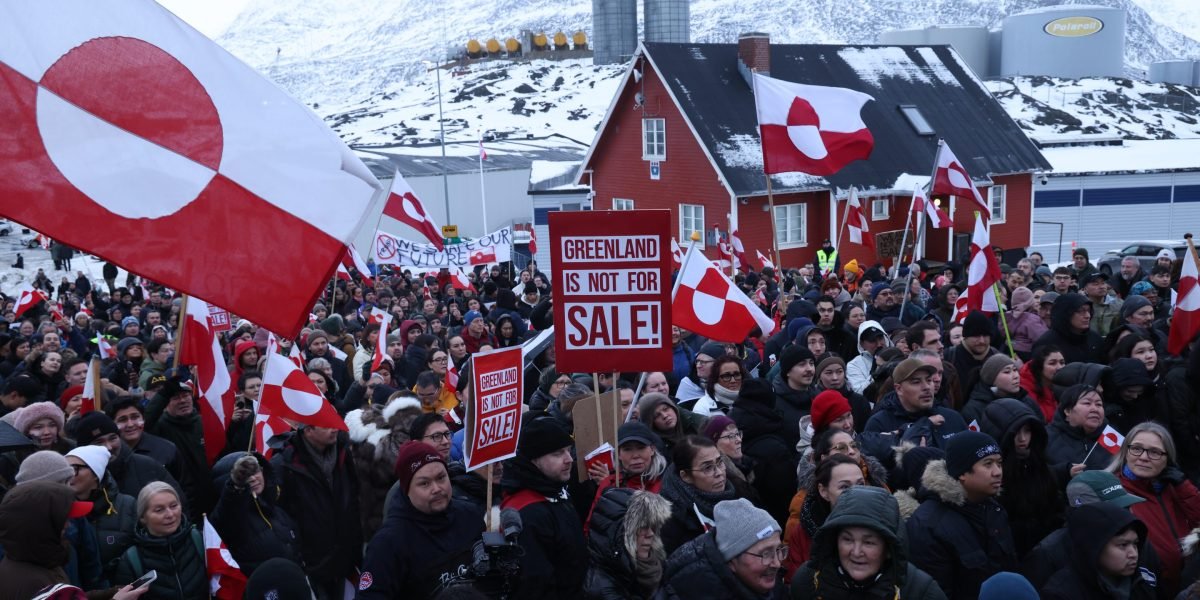
European allies and Canada have poured billions of dollars into helping Ukraine, and they have pledged greatly increasing their budgets to protect their territories.
But despite those efforts, NATO’s credibility as a united force under US leadership took a big hit last year as trust within the 32-nation military organization eroded.
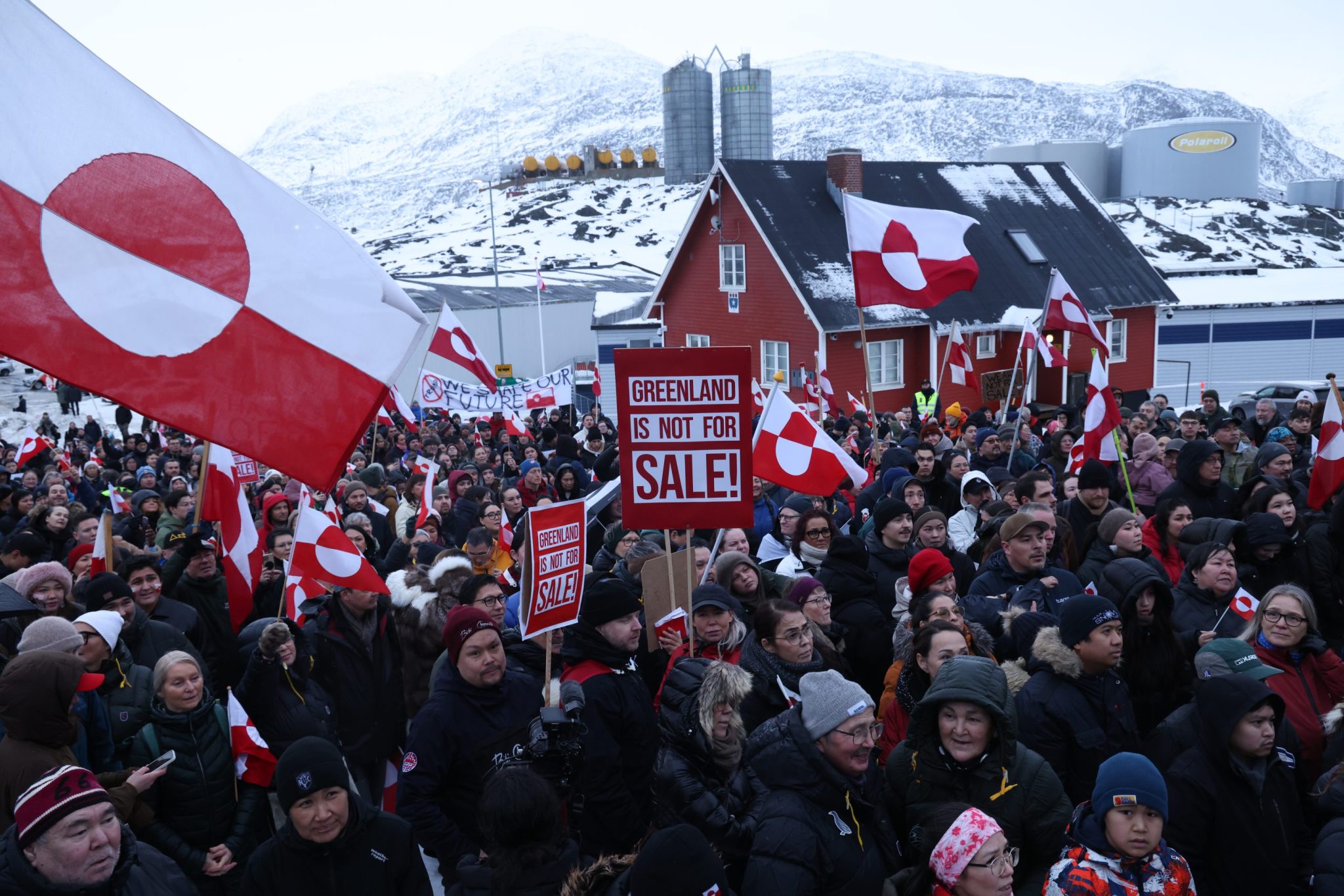
The dispute is the most glaring of US President Donald Trump’s repeated threats seize Greenlanda semiautonomous territory of NATO ally Denmark. Recently, Trump joked about the troops of his NATO allies in Afghanistan took another shout.
While the heat in Greenland exhausted so far, infighting has seriously undermined the ability of the world’s largest security alliance to contain adversaries, analysts say.
“The episode is important because it crosses a line that cannot be crossed,” Sophia Besch from the Carnegie Europe think tank said in a report on the Greenland crisis. “Even without force or sanctions, that violation weakens the alliance in a lasting way.”
The tensions have not gone unnoticed by Russia, NATO’s biggest threat.
Any deterrence of Russia depends on ensuring that President Vladimir Putin is convinced that NATO will retaliate if he expands his war. Ukraine. At the moment, that doesn’t seem to be the case.
“This is a big mess for Europe, and we are looking at it,” Russian Foreign Minister Sergey Lavrov said last week.
Filling the bucket
Criticized by US leaders for decades for low defense spending, and hammered relentlessly under Trump, European allies and Canada agreed in July to step up their game and begin investing 5% of their gross domestic product in defense.
The pledge was aimed at taking the whip out of Trump’s hand. The allies will spend as much of their economic output on core defense as the United States – about 3.5% of GDP – in 2035, plus 1.5% on security-related projects such as upgrading bridges, air and ports.
NATO Secretary-General Mark Rutte hailed the pledges as a sign of NATO’s strong military health and strength. He recently said that “fundamentally thanks to Donald J. Trump, NATO is stronger than ever.”
Although a large part of his job is to ensure that Trump does not pull the US out of NATO, as Trump has sometimes threatened, his flattering the American leader sometimes causing anxiety. Rutte clearly refuses to talk about the unrest in Greenland.
Article 5 at stake
The North Atlantic Treaty Organization was formed in 1949 to counter the security threat posed by the Soviet Union during the Cold War, and its containment was backed by a strong American troop presence in Europe.
The alliance is built on the political promise that an attack by one ally must be met with a response from all of them — the collective security guarantee included in Article 5 in its rulebook.
It rests on the belief that the territories of all 32 allies must remain inviolable. Trump’s plans in Greenland attack the same principle, although Article 5 does not apply to internal disputes because it can only be triggered unanimously.
“Instead of strengthening our alliances, threats against Greenland and NATO undermine America’s own interests,” wrote two US senators, Democrat Jeanne Shaheen and Republican Lisa Murkowski, in a New York Times op-ed.
“The proposals that the United States seize or force allies to sell territory do not show strength. They announce unpredictability, weaken control and give our enemies exactly what they want: proof that democratic alliances are weak and unreliable,” they said.
Even before Trump escalated his threats to seize control of Greenland, his European allies were never fully convinced that he would defend them if they were attacked.
Trump has said he doesn’t believe allies can help him either, and he recently drew further ire when he questioned the role of European and Canadian troops who have fought and died alongside Americans in Afghanistan. The president later partially reversed his remarks.
In testimony to the Senate Foreign Relations Committee, US Secretary of State Marco Rubio was dismissed criticism that Trump undermined the alliance.
“The stronger our NATO partners are, the more flexibility the United States needs to secure our interests in different parts of the world,” he said. “That is not a departure from NATO. That is a reality of the 21st century and a world that is changing now.”
A Russia that is not easily deterred
Despite NATO’s talk of increased spending, Moscow seems undeterred. The EU’s foreign policy chief, Kaja Kallas, said this week that “it has become painfully clear that Russia will remain a major security threat in the long term.”
“We prevent cyberattacks, sabotage against critical infrastructure, foreign interference and manipulation of information, military threats, territorial threats and political interference,” he said on Wednesday.
Officials across Europe reported the works of sabotage and mysterious drone flights over airports and military bases. Identifying the perpetrators is difficult, and Russia denies responsibility.
In a speech at the end of the year, Rutte warned that Europe was in imminent danger.
“Russia is bringing the war back to Europe, and we must be prepared for the scale of the war that our grandfathers or great-grandfathers endured,” he said.
While in Russia, Lavrov said that the Greenland dispute heralded a “deep crisis” for NATO.
“It is hard to imagine before such a thing happened,” Lavrov told reporters, as he considered the possibility that “a NATO member would attack another NATO member.”
Russia’s state media is mocked Europe’s “impotent anger” at Trump’s plans in Greenland, and Putin’s presidential envoy declared that “trans-Atlantic unity is over.”
Doubts about US troops
US Defense Secretary Pete Hegseth is due to meet with his NATO counterparts on February 12. A year ago, he shocked allies by warning that America’s security priorities lie somewhere else and that Europe must take care of itself now.
The security of the Arctic region, where Greenland is located, will be high on the agenda. It’s unclear whether Hegseth will announce a new drawdown of US troops in Europe, which is central to NATO’s deterrence.
The lack of clarity about this has also cast doubt on the US’s commitment to its allies. In October, NATO announced that up to 1,500 American troops would be withdrawn from a border area in Ukraine, resentful ally of Romania.
A report from the European Union Institute for Security Studies warned last week that although US troops are unlikely to disappear overnight, doubts about US commitment to European security mean “the deterrence edifice will become stronger.”
“Europe is forced to face a harsher reality,” wrote the authors, Veronica Anghel and Giuseppe Spatafora. “Opponents begin to believe that they can investigate, sabotage and advance without prompting a unified response.”