itstargetnews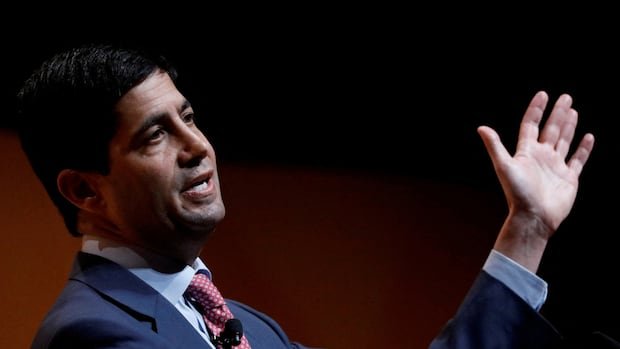
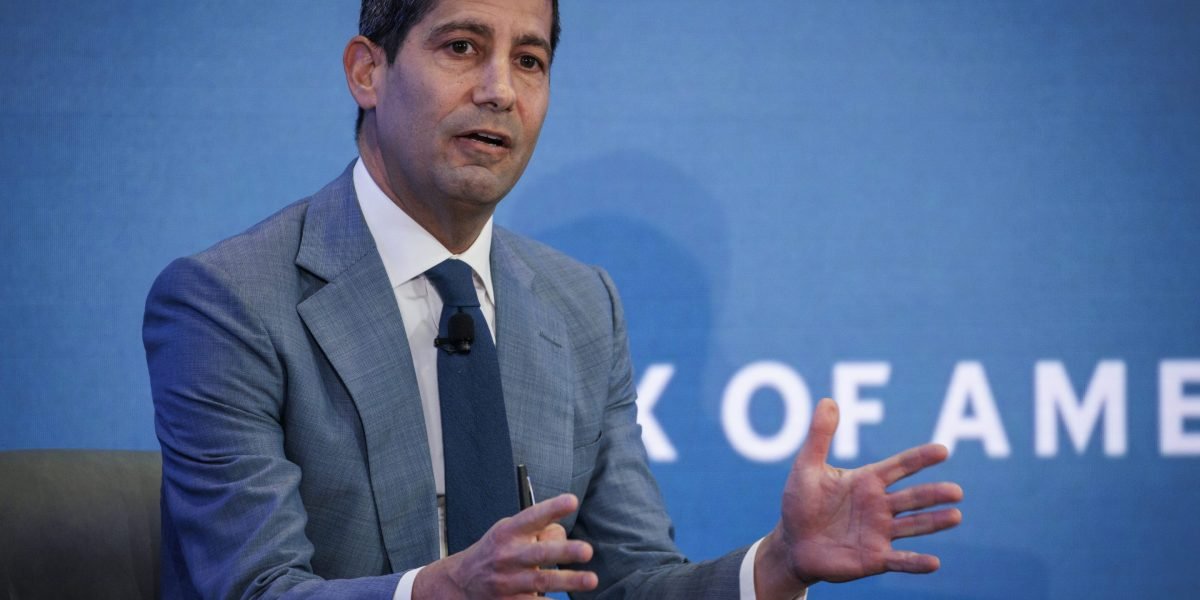
US President Donald Trump said on Friday he would nominate former Federal Reserve official Kevin Warsh to be the next Fed chairman – a decision likely to result in sharp changes at the powerful agency that could bring it closer to the White House.
Warsh would replace incumbent Jerome Powell when his term expires in May. Trump picked Powell to lead the Fed in 2017, but this year has attacked him relentlessly for not cutting interest rates fast enough.
“I have known Kevin for a long time and I have no doubt that he will become one of the GREAT Fed Chairs, perhaps the best,” Trump posted on his Truth Social page. “On top of that, he is ‘central casting’ and will never let you down.”
The appointment, which requires Senate confirmation, marks a return trip for Warsh, 55, who served on the Fed’s board from 2006 to 2011. He was the youngest governor in history when he was appointed at age 35. He is currently a fellow at the right-leaning Hoover Institution and a lecturer at the Stanford Graduate School of Business.
In some ways, Warsh is an unlikely choice for a Republican president, as he has long been a hawk in the Fed’s language, or someone who typically supports higher interest rates to control inflation. Trump has said the Fed’s key rate should be just one percent, well below the current level of about 3.6 percent, a view supported by several economists.
While governor, Warsh opposed some of the Fed’s low interest rate policies during and after the 2008-09 financial crisis. He also frequently expressed concern at the time that inflation would soon accelerate, even though it remained at low levels for many years after that recession ended.
More recently, however, in speeches and opinion columns, Warsh has said he supports lower rates.
Warsh beat out several other contenders, including Trump’s chief economic adviser Kevin Hassett, investment manager Rick Rieder and current Fed governor Christopher Waller.
Early reaction
After Friday’s announcement, Prime Minister Mark Carney called Trump’s nomination of Warsh a “fantastic choice” to lead the world’s most important central bank at this crucial time, in a post on X.
In the US Congress, the initial reaction was along party lines. Senator Tim Scott, Republican of South Carolina and chairman of the Banking Committee that will consider Warsh’s nomination, praised Trump’s choice.
“The Federal Reserve’s independence remains paramount, and I am confident that Kevin will work to instill confidence and credibility in the Fed’s monetary policy,” Scott said.

Democratic Sen. Elizabeth Warren of Massachusetts, the highest-ranking Democrat on the committee, said: “Kevin Warsh — who cared more about helping Wall Street after the 2008 crash than millions of unemployed Americans — has clearly passed the loyalty test.”
Meanwhile, Sen. Thom Tillis, Republican of North Carolina who is retiring, reiterated that he would oppose “any” appointment to a Ministry of Justice investigation Powell was “completely and transparently” resolved.
Department earlier this month subpoenaed the US central bank and threatened it with criminal charges over Powell’s testimony this summer about the renovation of the Fed buildings.
Controlling the Fed
Warsh’s appointment would be a major step toward Trump establishing more control over the Fed, one of the few remaining independent federal agencies. While all presidents influence Fed policy through appointments, Trump’s rhetorical attacks on the central bank have raised concerns about its status as an independent institution.
The announcement comes after an extended and unusually public search that has highlighted the importance of the decision to Trump and the potential impact it could have on the economy.
The chairman of the Federal Reserve is one of the most powerful economic officials in the world, charged with fighting inflation in the United States while supporting maximum employment. The Fed is also the nation’s main banking regulator.

The opening of a criminal investigation into Federal Reserve Chairman Jerome Powell has left politicians everywhere wondering what it could mean for the independence of the institution in charge of the country’s monetary policy.
The Fed’s rate decisions over time affect the cost of borrowing throughout the economy, including mortgages, auto loans and credit cards.
For the time being, Warsh would likely fill the seat on the Fed’s board of governors that was being held temporarily by Stephen Miran, a White House adviser appointed by Trump in September. Once a member of the board, Trump could elevate Warsh to the chairmanship when Powell’s term ends in May.
Trump’s economic policies
Since Trump’s re-election, Warsh has expressed support for the president’s economic policies, despite a history as a more conventional free-trade Republican.
In a January 2025 column in The Wall Street Journal, Warsh wrote that “the Trump administration’s strong deregulatory policies, if implemented, would be disinflationary. Cuts in government spending—inspired by the Department of Government Efficiency—would also significantly reduce inflationary pressures.”
Lower inflation would allow the Fed to achieve the rate cuts the president wants.
Trump has sought to exert more control over the Fed. In August, he tried to fire Lisa Cook, one of the seven governors on the Fed’s board, in an effort to secure a majority on the board. Cook, however, sued to keep her job, and the Supreme Court at a hearing last week appeared inclined to allow her to remain in her position until her dispute is resolved.
Economic research has shown that independent central banks have better results in controlling inflation. Elected officials, such as Trump, often demand lower interest rates to boost growth and employment, which can push prices higher.

Trump has said he will name a Fed chief who will cut interest rates to lower the government’s borrowing costs and mortgage rates, although the Fed does not directly decide those costs.
If confirmed by the Senate, Warsh would face challenges in pushing interest rates significantly lower. The president is just one member of the Fed’s 19-person rate-setting committee, of which 12 officials vote on every rate decision.
The board is already split between those worried about persistent inflation, who would like to keep rates unchanged, and those who think recent increases in unemployment point to a struggling economy that needs lower interest rates to stimulate employment.
Financial markets could also pull back. If the Fed cuts its short-term interest rate too aggressively, and if it is perceived to be doing so for political reasons, then Wall Street investors may sell US Treasuries out of fear that inflation will rise. Such sales would raise long-term interest rates, including mortgage rates.
Trump considered nominating Warsh as Fed chairman during his first term, but ultimately settled on Powell. Warsh’s father-in-law is Ronald Lauder, heir to the cosmetics fortune of Estée Lauder and a long-time donor and confidant of Trump.
Who is Warsh?
Before becoming a member of the Fed’s board of governors in 2006, Warsh was an economic aide in the Republican administration of George W. Bush and an investment banker at Morgan Stanley.
Warsh worked closely with then-Chairman Ben Bernanke in 2008-09. during the central bank’s efforts to combat the financial crisis. Bernanke later wrote in his memoirs that Warsh was “one of my closest advisers and confidants” and added that his “political and market savvy and extensive Wall Street contacts would prove invaluable.”
Warsh, however, raised concerns in 2008, as the economy slipped into a deep recession, that further interest rate cuts by the Fed could fuel inflation. Yet even after the Fed cut rates to near zero, inflation remained low.
Recently, Warsh has sharply criticized the Fed, calling for “regime change” and attacking Powell for engaging in issues like climate change and diversity, equity and inclusion, which Warsh said are outside the Fed’s mandate.