itstargetnews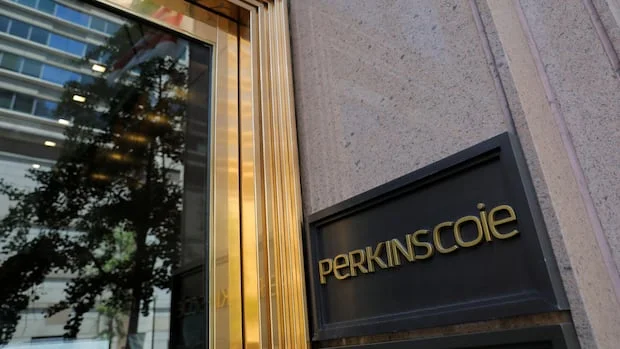

Listen to this article
Estimated 4 minutes
The audio version of this article was generated using artificial intelligence-based technology. Mistakes in pronunciation may occur. We work with our partners to constantly review and improve results.
The U.S. Justice Department has dropped a legal bid to revive President Donald Trump’s executive orders targeting four prominent law firms because of their past legal work, diversity policies and political ties.
In a court filing Monday, the Justice Department asked the U.S. Court of Appeals for the District of Columbia Circuit to dismiss its appeals of federal judge rulings that the executive orders violate law firms’ rights under the U.S. Constitution.
The Trump administration faced a Friday deadline to present its appeals in cases filed by law firms Jenner & Block, WilmerHale, Perkins Coie and Susman Godfrey. The filing did not say why the appeals were dismissed.
“As we have said from the beginning, our challenge to the unlawful executive order was about defending our clients’ constitutional right to retain counsel of their choice and defending the rule of law,” WilmerHale said in a statement.
Jenner & Block said the government’s move solidifies court rulings that Trump’s orders were unconstitutional. “Our partnership is proud to have stood strong on behalf of its clients,” the firm said.
The decision to drop the appeal marks a significant retreat from the courtroom for Trump, whose orders punishing companies have rattled the legal industry and prompted cries that the president has tried to chill the independence of lawyers and neutralize potential legal challenges to his program from the private bar.
The administration argued that the executive orders were lawful under the president’s broad executive powers.
Susman Godfrey said “the government has capitulated, a fitting end to its blatantly unconstitutional attack on Susman Godfrey and the rule of law.”
Perkins Coie said his lower court victory protected “fundamental constitutional liberties such as free speech, due process and the right to choose an attorney without fear of retaliation.”
“In a chilling twist on the theatrical phrase ‘Let’s kill all the lawyers,’ (Executive Order) 14230 takes a ‘Let’s kill the lawyers I don’t like’ approach, sending a clear message: lawyers must toe the party line or else,” Judge Beryl Howell, a Barack Obama appointee, wrote last year in ruling for Perkins Coie.
The White House referred a request for comment on the status of the appeal to the Justice Department, which did not immediately respond.
Front burner26:24Trump’s campaign of legal revenge
Targeted diversity, political work
Trump issued executive orders early last year, accusing law firms of workplace discrimination in the name of diversity and of “weaponizing” the justice system against him and his allies.
The orders sought to limit the company’s access to federal buildings and end government contracts held by its clients, citing the company’s ties to its legal and political enemies.
Four federal judges — appointed by both Democratic and Republican presidents — struck down the orders last year, finding they violated the companies’ free speech rights and other protections under the Constitution.
“It casts a chill over the entire legal profession, leaving lawyers across the country weighing the need for strong advocacy against the danger of federal government overreach,” George W. Bush appointee Judge John Bates wrote in a ruling in the Jenner & Block case.

In a statement, Rep. Jamie Raskin, the top Democrat on the House Judiciary Committee, called the withdrawal of the government’s appeal “a significant victory for the rule of law over Trump’s reign of lawlessness and a reminder that those who fight authoritarianism are winning.”
Nine prominent law firms, including Paul Weiss, Skadden Arps, Latham & Watkins and Kirkland & Ellis, settled with the White House last year to reverse or avoid similar actions against them by the administration.
As part of those deals, the companies have cumulatively pledged nearly $1 billion in pro bono legal services for mutually agreed-upon goals with the White House.
They defended the agreements as consistent with their principles.