itstargetnews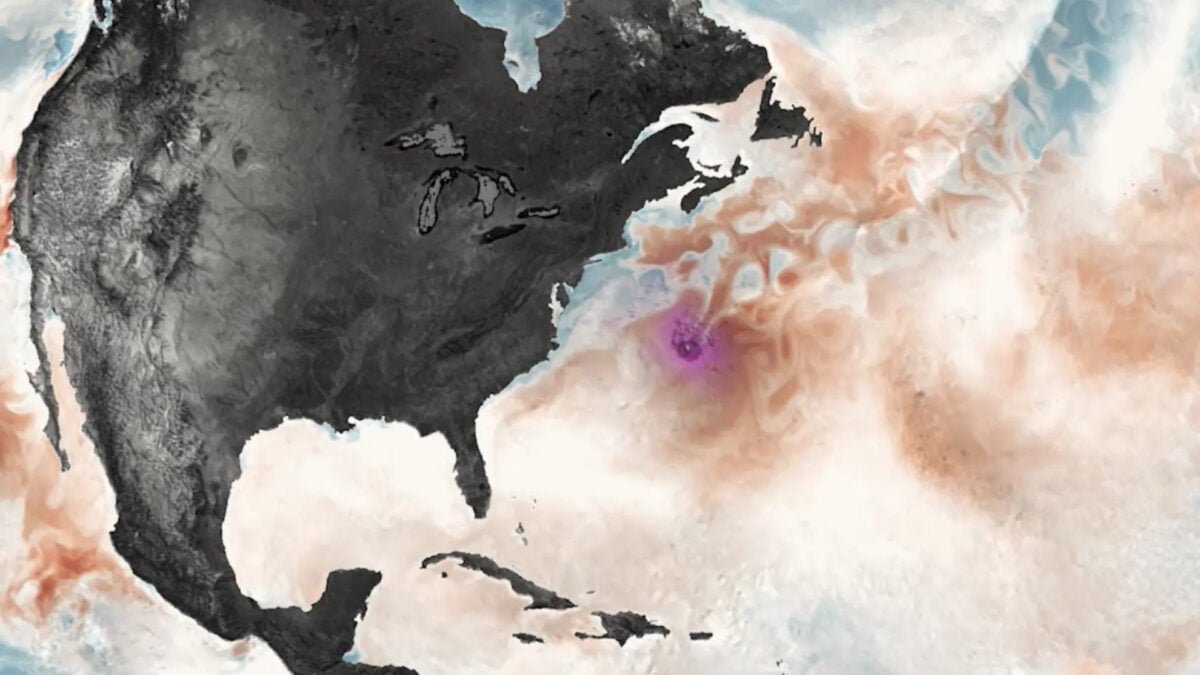

What follows in the wake of tropical storms—strong, swirling storms that form over tropical oceans? Many people probably think of destruction, if not even death. Hurricane Katrina, for example, was a tropical storm. New research, however, highlights a lesser-known effect on the ocean.
A team of researchers used computer models to simulate tropical cyclones at high resolutions and investigate their effect on the exchange of carbon between the oceans and the atmosphere. Their results carry implications for understanding how global warming affects these storms.
High resolution computer models
“Earth system models usually work with a spatial resolution of 100 to 200 km (62 to 224 miles). This is too severe for the representation of small-scale mechanisms and extreme events, such as severe tropical cyclones (i.e. hurricanes),” the researchers wrote in a study published last week in the journal PNAS. “We present a (kilometer) scale global Earth system model simulation that resolves the interactions between extremely strong storms and the ocean carbon cycle with high resolution (5 km (2.7 miles) ocean and atmosphere).”
The team studied the two strongest tropical storms in a one-year simulation in the western North Atlantic, both with wind speeds of more than 124 miles per hour (more than 200 kilometers per hour), and the changes that occurred in their wake. Both are hurricanes—a tropical storm is considered such if its surface winds reach 73.8 miles per hour (118.8 km/h) or faster, according to researchers. The second storm formed about a week after the first.
By churning up ocean surface waters, tropical cyclones mix water masses and cause the oceans to exchange heat and carbon with the atmosphere. The simulations revealed that the storms caused the oceans to release carbon dioxide quickly into the atmosphere, an event 20 to 40 times more powerful than would occur under normal weather conditions. Storms also lower sea surface temperatures, increasing the water’s absorption of carbon dioxide for weeks after storms. Combined, the end result is a slight increase in absorption.
“It is exciting to know that as a consequence, hurricanes also increase the amount of organic carbon that sinks into the ocean, which contributes to the long-term storage of carbon in the deeper layers of the ocean,” Tatiana Ilyina, a co-author of study and a group leader at the Max Planck Institute for Meteorology, said in a Max Planck statement.
More phytoplankton
Additionally, the researchers found that the mixing effect of storms pulls nutrients up, with simulations showing phytoplankton growing tenfold. This bloom lasted for several weeks after the storms passed and spread throughout significant areas of the western North Atlantic in local currents, where the storms, in part, intensified.
While researchers have previously observed some of these dynamics, “this simulation allows us to study them in detail and link them to a global scale, which is important if we want to understand how tropical storms can respond and impact our climate under global warming,” said David Nielsen, first author of the study and postdoc at the Max Planck Institute for Meteorology.
Going forward, Nielsen and his colleagues will also investigate other kilometer-scale processes and the consequences of the carbon cycle in the oceans, including the polar regions.