itstargetnews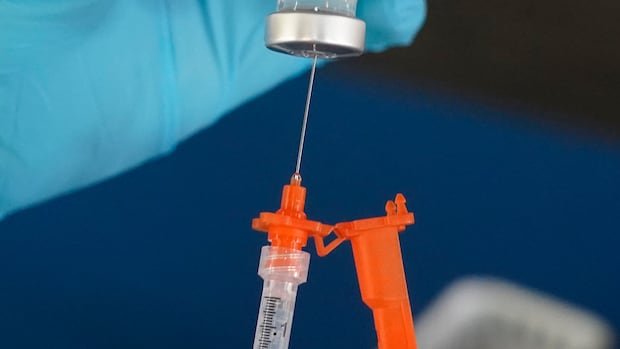

Listen to this article
Estimated 3 minutes
The audio version of this article was generated using artificial intelligence-based technology. Mistakes in pronunciation may occur. We work with our partners to constantly review and improve results.
The U.S. Food and Drug Administration is declining to review Moderna’s application for a new flu vaccine made with Nobel Prize-winning mRNA technology, the company announced Tuesday.
The news is the latest sign of increased FDA oversight of vaccines under Health Secretary Robert F. Kennedy Jr., particularly those using mRNA technology, which he has criticized — both before and after becoming the nation’s top health official.
Moderna received a so-called “refusal” letter from the FDA objecting to how the company conducted a 40,000-person clinical trial comparing its new vaccine to one of the standard flu shots in use today. That trial concluded that the new vaccine was slightly more effective in adults 50 and older than the standard vaccine.
The letter from FDA director of vaccines Dr. Vinay Prasad said the agency did not believe the application contained an “adequate and well-controlled trial” because it did not compare the new injection to “the best available standard of care in the United States at the time of the study.” Prasad’s letter pointed to some advice FDA officials gave Moderna in 2024, during the Biden administration, that Moderna did not follow.

According to Moderna, that feedback said it was acceptable to use the standard dose of flu vaccine the company had chosen — but that a different brand specifically recommended for the elderly would be preferable for anyone in the study over 65. However, Moderna said, the FDA agreed to continue the study according to the original plan.
The company said it also shared with the FDA additional data from a separate trial comparing the new vaccine to a licensed high dose used in the elderly.
The FDA “has not identified any concerns regarding the safety or efficacy of our product.” Moderna CEO Stephane Bancel said in a statement.
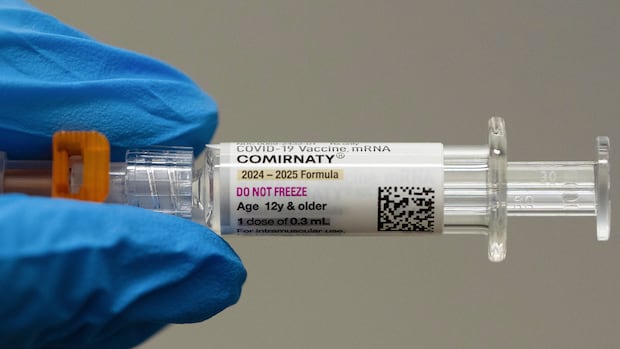
US Minister of Health Robert F. Kennedy Jr. canceled $500 million in funding for mNRA vaccine technology development. For The National, CBC’s Heather Hiscox asks infectious disease expert Dr. Allison McGeer and health researcher Bradley Wouters to shed some light on what effect this could have on fighting the disease in Canada and around the world.
It is rare for the FDA to deny an application, especially for a new vaccine, requiring companies and FDA staff to engage in months or years of debate.
Moderna requested an urgent meeting with the FDA and noted that it has filed for approval of the vaccine in Europe, Canada and Australia.
Officials working under Kennedy have passed years canceled the recommendations regarding vaccination against COVID-19he added additional warnings on the two leading vaccines against COVID — which are made with mRNA technology — i removed the critics administrative approach of the FDA advisory board.
Kennedy announced last year that his department would cancel more than $500 million in contracts and financing the development of vaccines that use mRNA.
For decades, the FDA has allowed vaccine makers to quickly update their annual flu shots to target the latest strains shown to trigger an immune response in patients. This is a far more effective approach than conducting long-term studies that track whether patients get the flu and how they fare.
In an internal memo last year, Prasad wrote that the simplified method would no longer be allowed — prompting more than a dozen former FDA commissioners to write an editorial condemning the statements.