itstargetnews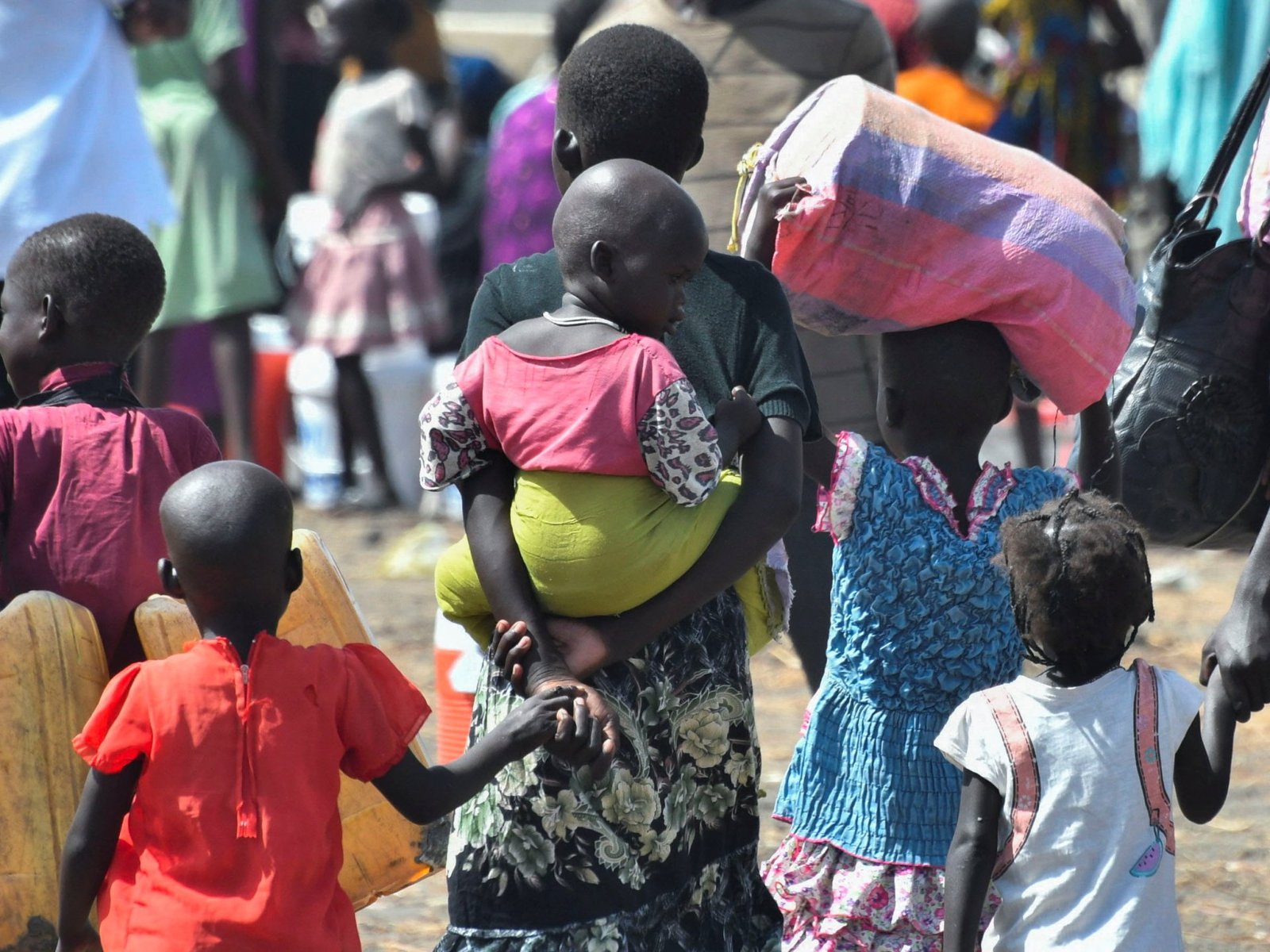
Sudan has been at the forefront of the global humanitarian field, currently experiencing the world’s largest internal displacement crisis. According to the United Nations Refugee Agency (UNHCR), approximately 14 million people in the country have been forced from their homes.
These shocking figures in Sudan are part of a global surge in forced displacement. The United Nations Refugee Agency estimates that by the first half of 2025, the number of forcibly displaced people worldwide will exceed 122 million.
However, amidst the geopolitical changes sweeping the Middle East, the opposite trend is emerging. By mid-2025, the number of displaced people globally will fall by 5.9 million for the first time in a decade. This shift raises key questions: What drives people back to conflict zones, and how do they survive in the ruins?
Al Jazeera Arabic Talk to an expertofficials and returnees know about the “Khartoum Affair” – a phenomenon in which nostalgia and a fragile sense of stability drive civilians back to Sudan’s capital despite the destruction following the government’s recent return to the city.

Changing region
While global numbers are down slightly, the regional reality remains grim. The conflict between the Sudanese army and the Rapid Support Forces (RSF) that broke out in April 2023 put great pressure on the infrastructure of Sudan’s states.
The situation is equally dire elsewhere in the region. In the Gaza Strip, internal displacement affects nearly 2 million people – the vast majority of the region’s population. Many people have been displaced multiple times as a result of the Israeli offensive that began in October 2023.
Adnan Abu Hasna, media adviser to the United Nations agency for Palestinian refugees (UNRWA), said the situation in Gaza is unique. Abu Hasna noted that 90 percent of homes, schools and infrastructure have been destroyed, 2.5 million Palestinians are effectively homeless, and it is “virtually impossible” to return to normality amidst the total devastation.
Meanwhile, protracted conflicts continue to increase displacement in Syria, where 12 million people remain displaced, and in Yemen, where more than 5 million people are displaced.
khartoum experiment
Khartoum presents a unique case study on the dynamics of return. The recent resumption of government operations in the capital has sent a signal of underlying stability.
Adel El-Baz, director general of the African Advisory Center, believes the government’s return is a “direct invitation” for citizens to follow suit. Major General Osama Abdul Salam, former director of the Center for Strategic Studies, believes that the return of civilians will naturally enhance security.
“Placing residents in abandoned neighborhoods reduces the risk of negative phenomena, prevents theft and creates an atmosphere of peace of mind,” Abdel Salam explains.
However, the infrastructure challenges are enormous. Khartoum state spokesman Saad al-Din Tayeb told Al Jazeera the government had spent more than a year trying to clear away the debris of the war.
“We started by clearing the city of dead bodies and burned vehicles, restarting water stations and repairing power distribution lines,” El-Tayeb said.
He stressed that Khartoum’s electricity infrastructure had suffered “the largest robbery” in history. About 15,000 transformers were stripped, with looters targeting copper in underground cables and motors. Nonetheless, Tayeb noted that authorities are diverting available power to critical facilities such as hospitals and water stations, while encouraging the use of solar energy.
“Nostalgia” among the ruins
For displaced people, the decision to return is often more emotional than practical. Dentist and journalist Rimah Hamed fled Khartoum for Gezira state and later to Egypt when hospitals closed and security collapsed.
She recently returned home to Khartoum. “The main motivation is nostalgia,” Hamid told Al Jazeera. “The Sudanese character is sentimental. People come back because they miss their homeland.”
Hamid found her community transformed. Her house is empty, stripped of basic items and has no running water or electricity.
“There was only one water source nearby and everyone went to fill it up,” she recalled. “But gradually, neighbors started to come back. The community started to resume its social functions and life gradually returned.”
Hamid observed that communities have developed a “psychological immunity” to harsh conditions, adapting to shortages through grassroots initiatives.
prerequisites for peace
While emotional ties motivate some to return, sustainable reintegration requires tangible resources. Rwanda genocide researcher Tom Ndahiro said “relative peace” was the basic requirement – a sense that the situation had improved enough to get through the night.
Experts interviewed by Al Jazeera outlined the hierarchy of needs for a sustainable return:
- Safety: Trusted leadership can organize migration and prevent chaos.
- Shelter: Even temporary structures like tents, as long as they are safe.
- Key points: Food security and access to clean water are non-negotiable.
- strength: Electricity is seen as a decisive factor in economic stability.
Journalist Rami Mahkar stressed that safety must come first. “Without security, displaced people will be forced to move again,” he said, adding that functioning food and supply stores were crucial for those trying to rebuild their lives.
As Sudan attempts to turn the tide on the world’s largest displacement crisis, the durability of this return remains untested. As Hamid points out, returnees are currently filled with resilience and a desire to rebuild what the war destroyed.