itstargetnews
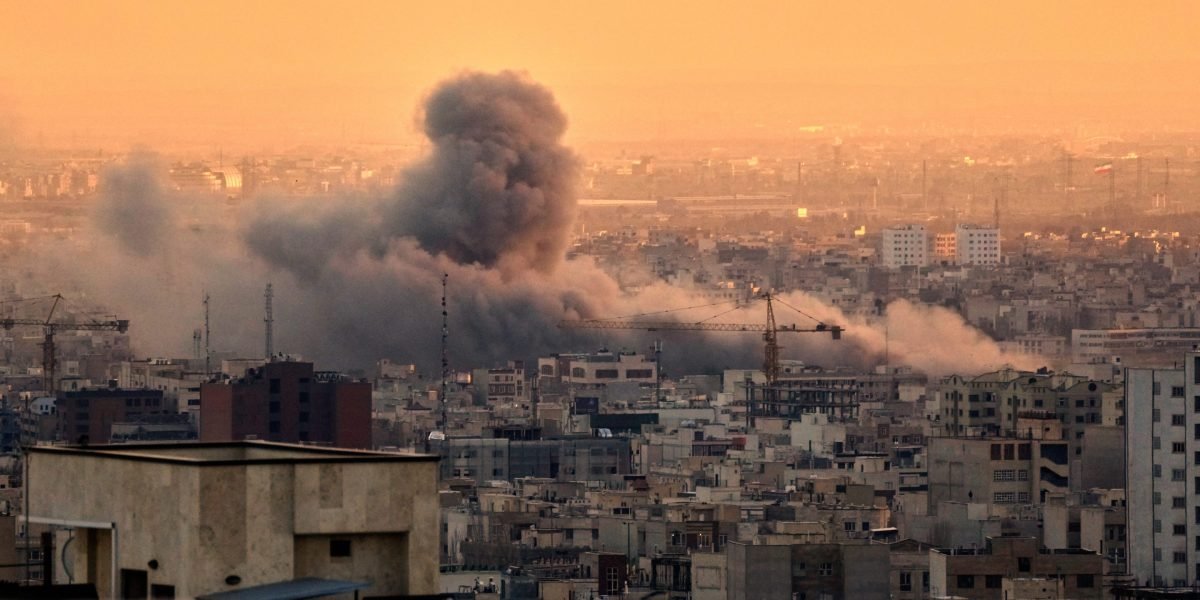
U.S. stock futures pointed to heavy losses on Tuesday as investors eyed threats to global energy supplies from Iran was. Oil prices rose on worries that the war could plug it the global flow of crude oil.
S&P 500 futures point to a 1.5% drop in Tuesday’s open, while Dow Jones Industrial Average futures point to a 1.6% drop. On Monday, stocks first fell due to concerns about the impact of the war on energy prices rejection and ending more for a day as investors dismissed those concerns.
Benchmark US crude rose by $3.24 to $74.47 per barrel. Brent crude oil, the international standard, rose $3.56 to $81.30 a barrel.
Airline stocks including American Airlines, United and Delta were some of the biggest losers on Wall Street Monday, with shares of all three sliding about 3% in premarket trading Tuesday. Higher oil prices threaten airlines’ already high fuel bills, while fighting in the Middle East has also closed airports and left travelers stranded.
“After the war in the Middle East hit its stride on Monday, jitters in the market rose overnight,” Adam Crisafulli, an analyst at Vital Knowledge, said in a March 3 research note.
Investors are increasingly worried that “Iran’s decapitated government and leaderless military will mount a protracted response aimed at sowing chaos across the region by targeting key economic and energy infrastructure in the coming weeks,” he added.
Despite the pullback in many markets, reactions to the war have been tempered by the fact that past military conflicts in the Middle East have not caused long-term declines. For this war to bring down US stocks in a significant and sustainable way, the price of oil may need to rise above $100 a barrel, according to Morgan Stanley strategists led by Michael Wilson.
“Since 2000, there have been 22 one-day jumps in oil prices of more than 10%,” said Stephen Innes, managing partner at SPI Asset Management. “In other words, energy shocks don’t automatically derail stocks unless they’re severe and long-lasting. The market is aware of that.”
Asian airline stocks also fell, with ANA shares down 3.3% and Japan Airlines down 6.4%. Korean Air fell 10.3% and Qantas Airways fell 1.8%.
Global stocks also fell on Tuesday, with France’s CAC 40 down 2.2% to 8,207.10. In Germany, the DAX sank 2.9% to 23,935.62, while Britain’s FTSE 100 fell 2.2% to 10,546.30.
Japan’s benchmark Nikkei 225 index sank 3.1% to end at 56,279.05. Like other resource-poor countries in the region, Japan could be particularly affected by a lack of access to the Strait of Hormuz, since most of its oil and natural gas is imported there.
In South Korea, a major energy importer, the Kospi fell 7.2% as markets reopened after the holiday on Monday, closing at 5,791.91.
In currency trading early Tuesday, the US dollar rose to 157.53 Japanese yen from 157.47 yen. The euro cost $1.1627, compared to $1.1692.
Japan’s benchmark Nikkei 225 index sank 3.1% to end at 56,279.05. Like other resource-poor countries in the region, Japan could be particularly affected by a lack of access to the Strait of Hormuz, since most of its oil and natural gas is imported there.