itstargetnews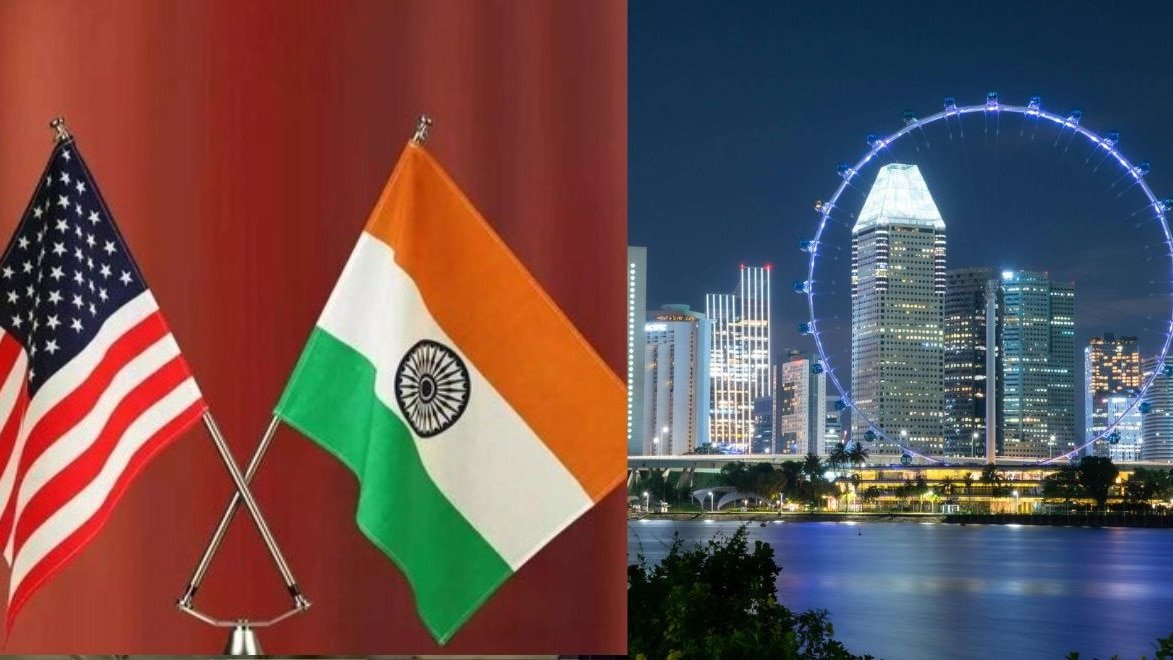
The geostrategist Brahma Chellaney questioned on Monday the structure of the India-US Interim Trade Agreementarguing that India ended immediate and monitored commitments while the United States secured expanded access to the Indian market.
Speaking at a panel discussion in India Today, he compared India’s 18% reciprocal tariff with the 10% benchmark tariff imposed by the US on Singapore and asked why a smaller country seemed to have negotiated better terms.
“How come tiny Singapore only faces a 10% tariff from the US. And India, after all these concessions as part of the interim trade deal, will face an 18% tariff. Why?” he asked He invoked what he called a cardinal principle of the negotiations. “In fact, one of the cardinal principles of international negotiations is that you don’t negotiate at gunpoint. You don’t negotiate when the other side has imposed sanctions or disclosed threats against you.”
Chellaney, a professor of strategic studies at the Center for Policy Research in New Delhi, noted that the United States negotiated with India while India was under 50 percent punitive tariffs for six months. “It was in this 6-month period that India made these concessions,” he said. He called for attention to the structure of the pact.
“But now look at the structure of the agreement. The structure is very important in this agreement. India’s concessions are immediate and quantified. US concessions are conditional or largely remedial, such as a reduction in previously imposed sanctions. Indian commitments must be monitored. US commitments are reversible,” he said.
According to him, for India, the agreement restores access that had been withdrawn, while for the United States it opens up new opportunities. He further sharpened the comparison: “Washington today is essentially charging India an 18% tariff to enter the American market while demanding that India open its own market for zero tariff. That is the essence of the deal.”
Returning to Singapore, the professor asked, “How come Singapore is a better negotiator than India? Why don’t we learn from smaller countries how to negotiate?”
Chellaney argued that negotiating under pressure limited India’s influence. “How do you negotiate with America when you’re under 50% tariffs? You try to be a good guy. You refuse to have counter-tariffs imposed on the US. You decide you’re going to negotiate while it’s under these draconian tariffs. The result is what we see today.”
What the provisional agreement says
On February 7, Washington and New Delhi announced a framework for a reciprocal and mutually beneficial interim agreement.
Under the terms mentioned in the joint statement, India will eliminate or reduce tariffs on all US industrial products and a wide range of US food and agricultural products, including dried distillers grains (DDG), red sorghum for animal feed, nuts, fresh and processed fruit, soybean oil, wine and spirits, and additional products.
In return, the United States will apply a reciprocal tariff rate of 18 percent, down from 25 percent, on goods originating in India. New Delhi has also signaled its intention to buy $500 billion worth of energy products, aircraft and aircraft parts, precious metals, technology products and coking coal from the United States over the next five years. The two sides will significantly increase trade in technology products, including graphics processing units (GPUs) and other goods used in data centers, and expand joint technology cooperation.
The Singapore comparison
The United States has imposed a 10% benchmark tariff on Singaporean imports. By contrast, India, a much larger economy, faces a reciprocal tariff of 18% under the interim framework.