itstargetnews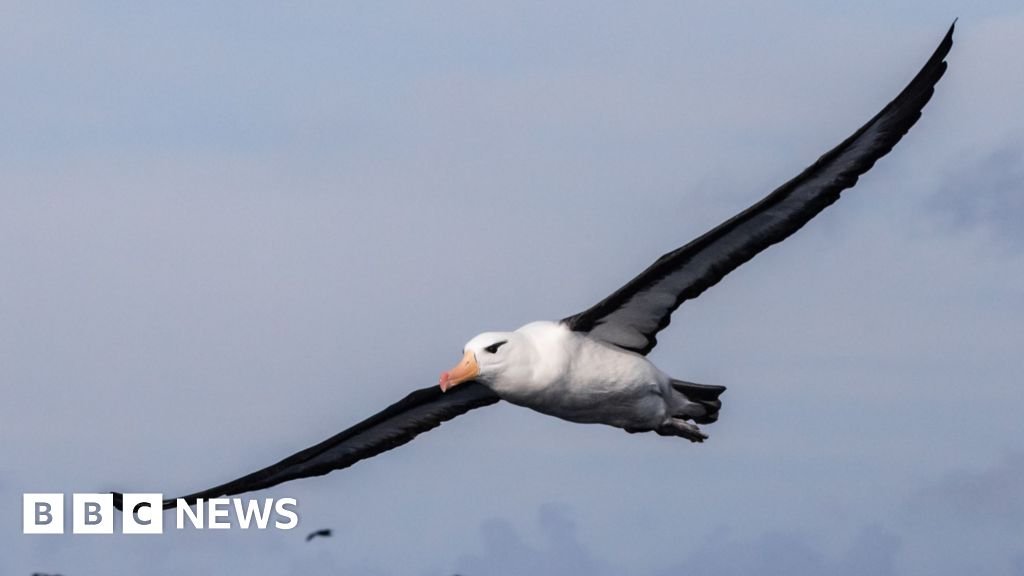
Hey Jonesafrica correspondent cape town

 cape ocean
On a small boat in the Atlantic Ocean about 27 nautical miles (50 kilometers) off Cape Point, South Africa, a group of birdwatchers were calling out the names of seabirds: “Atlantic Yellow-nosed! Black-browed Albatross!”
The boat takes birdwatchers from Cape Town to view endangered seabirds, including albatrosses, which are hard to find on the mainland.
It was a warm summer day with clear blue skies, perfect for bird watching. The captain was speaking over the radio – he was looking for the trawler.
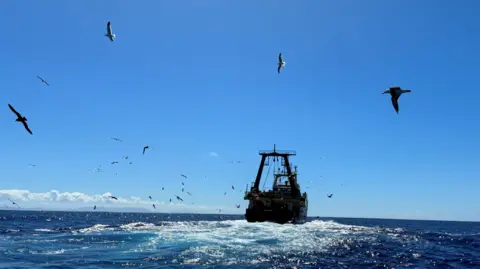
He quickly found one and headed straight for it. The closer the boat, operated by non-profit Cape Town Pelagics, gets to fishing boats, the more seabirds appear.
As he pulled up next to the fishing boat, he was followed by hundreds of birds.
They have learned to associate these boats with food. They follow trawlers and wait for discarded fish heads and guts that fishermen throw into the sea as they sort and process their catch.
The birds will fight over discarded debris and occasionally dive into the net to catch some fish. But searching for food in this way can cost these seabirds their lives.
“They’re caught on what’s called a longline,” explains Tim Appleton, a British conservationist and founder of the Global Bird Expo, referring to a commercial fishing method that uses long lines studded with hooks to catch large fish like tuna.
“Some of the long ropes that stick out from the back of the fishing boats are 100 kilometers (62 miles) long. They have 4,000 fish hooks on them. Every 4,000 fish hooks have some squid or fish on them as bait, and of course the birds try to grab the bait and end up getting hooked and dragged underwater and drowned.”
The accidental death of animals by fishing vessels is called bycatch. It’s not just longlines that kill these birds: they can also get tangled in the cables that pull the nets toward ships.
Albatrosses spend almost half their lives on the high seas, making them particularly vulnerable to being injured or killed by fishing boats.
 Meet Jones/BBC
“Of all the bird species in the world, seabirds are among the most endangered,” said Andrea Angell.
She works for Birdlife South Africa, a conservation organization, where she leads the albatrosses task force. The organization has been working for the past 20 years to prevent these birds from being killed by trawlers.
“There are only 22 species of albatrosses in the world, and 15 of them are threatened by fishing activities. Albatrosses roam the oceans and feed only on squid, fish and what they catch in the ocean. So they spend most of their lives at sea, which means they encounter fishing boats more than any other bird.”
She added that albatrosses’ mating habits also make them more vulnerable to extinction. They mate for life, lay only one egg every two years, and are raised on breeding islands. Parents share the responsibility of feeding the chicks.
“It takes a huge investment to raise that chick, and that investment is made by both parents. So when one of the parents goes out chasing a fishing boat, and one of them is injured or dies, then the chick back on the island dies as well, because one parent doesn’t have enough money to continue feeding the chick, and the investment they took two years to lay is completely gone.”
To make matters worse, since albatrosses are monogamous and pair up for life, it can take up to four years for them to bond with a mate.
“Once the bond is broken by the death of one of the partners, it takes at least four or five years before they form another bond and restart the egg-laying ritual. So the devastation of a bird lost at sea is enormous.”
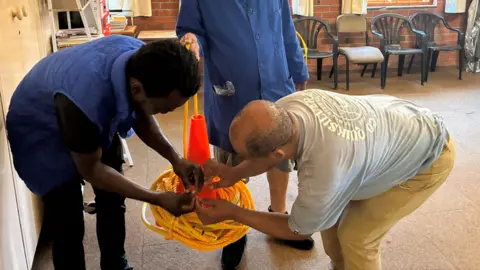
One way to prevent accidental albatross deaths at sea is to use bird scare lines: They are essentially nautical scarecrows that scare birds away from fishing nets and lines.
Colorful plastic streamers hang above fishing nets and lines, blowing in the wind to prevent birds from getting trapped in them. Made from plastic tubing and string, they are cheap and easy to make.
 Meet Jones/BBC
BirdLife has been working with disabled workers from Seaview Disability Association, training them to make bird scaring ropes.
“Seaview Society started out as a fishing community,” said Deborah Gonsalves, manager of the society, which provides day care workshops for people with physical and intellectual disabilities.
“Some of our members were fishermen before developing disabilities. So it’s amazing to see BirdLife working with them and the members have grown tremendously.”
She said establishing bird scare lines has been an inspiration to the association’s members.
“It actually keeps them productive and gives them self-worth. Right now, I’m sure much of the world is starved of money. The economy is taking a hit. The work they do here supplements their disability benefits and gives their loved ones the opportunity to work while being cared for.”
But Andrea Angell said deploying bird lines on fishing vessels not only benefits workers and conservation efforts, but also creates an economic incentive for the fishing industry.
“We call them bird scare lines because it’s a very evocative name. It says exactly what they do. But originally they were called tori lines. Tori means bird in Japanese. They were invented in the late ’90s by a Japanese fisherman who got tired of catching so many birds with a fishhook and losing his catch. The fisherman would rather catch a big tuna than a single bird. A single tuna is worth about $10,000 ($7,400) sterling) and a bird so the financial incentive for them is huge.”
But she acknowledged that some fishermen, faced with time constraints, safety concerns and fishing quotas, don’t always use the lines.
“They don’t always post bird scare lines for various reasons. So it’s always a negotiation and a reminder to them to please do this because they are literally saving tens of thousands of bird lives.”
Since the Albatross Task Force was established in 2004, the number of seabirds killed by fisheries in southern Africa has dropped by 90%. It is hoped that its success will be replicated in other parts of the world to ensure these majestic birds can continue to breed for years to come.
You may also be interested in:
 Getty Images/BBC