itstargetnews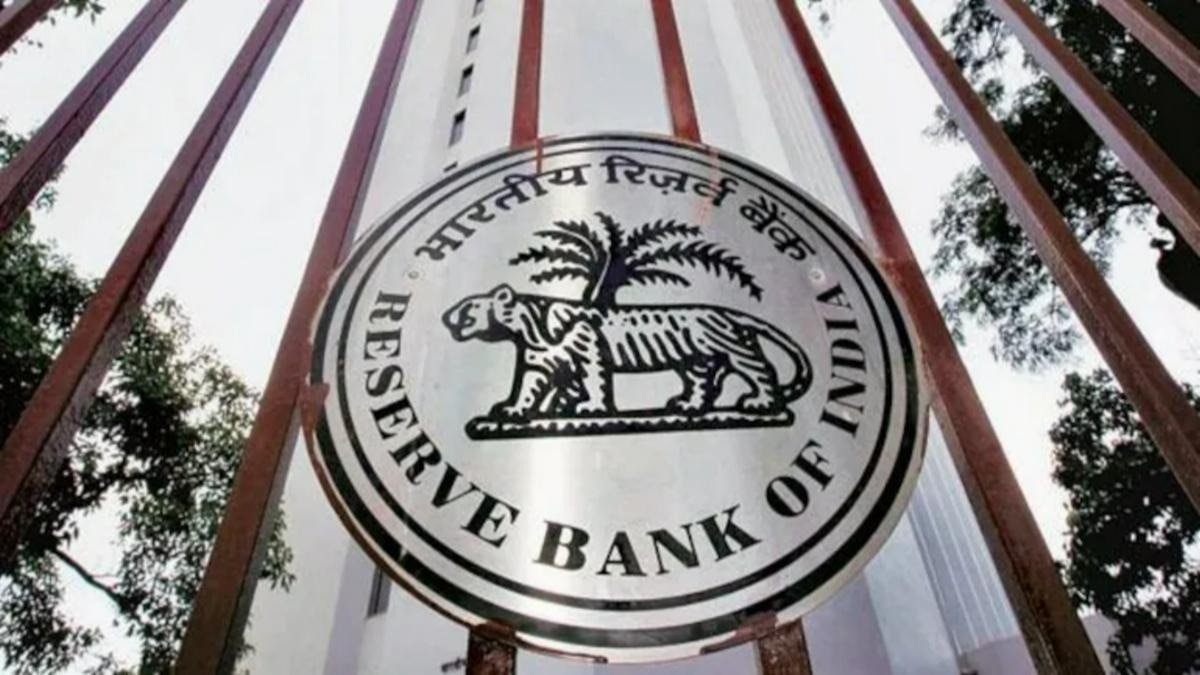
The Reserve Bank of India (RBI) it is widely expected to hold interest rates at the Monetary Policy Committee (MPC) meeting on February 4-6, maintaining the current position despite the substantial easing that has already taken place. SBI Research has explicitly pointed to February’s policy as one headed towards the status quo, citing high global uncertainty and the uneven transmission of past monetary actions. Despite cumulative repo rate cuts of 125 basis points and record infusion of liquidity, bond yields have remained sticky, suggesting diminishing marginal yields for further rate action at this stage.
Global uncertainty vs trade agreements
The political pause comes even as India benefits from a significant external tailwind. The recent India-US and India-EU trade agreements have reduced tariffs on Indian exports from 50% to 18%, restoring export competitiveness and placing India among the Asian economies with the lowest tariffs. However, the SBI’s Geo-Economic Stress Index indicates that global uncertainty remains high, with stress typically being transmitted to real economic activity with a lag of three to four months. This delayed impact strengthens the case for policy caution rather than premature relaxation.
Beyond these two central factors, several other macro signals reinforce expectations of a stable political outcome.
In terms of inflation, the near-term outlook is complicated by the transition to a new CPI base year (2024). While food inflation has remained in negative territory for several months, the SBI estimates that headline CPI could see a marginal upward shift of 20-30 basis points under the new unchanged index weighting structure. This statistical rebalancing, while not demand-driven, limits the RBI’s comfort in the inflation outlook ahead of FY27.
Liquidity conditions
Meanwhile, liquidity conditions have eased substantially, with the banking system returning to surplus from the end of December 2025. Average excess liquidity stood at around Rs 0.6 trillion in January and has expanded further in February. In total, the RBI has injected nearly Rs 6.6 trillion through open market operations (OMOs), CRR cuts, term repos and swaps during the current fiscal. However, despite this unprecedented infusion, government bond yields have tightened, highlighting frictions in monetary transmission.
SBI Research points to the structure and choice of OMO securities as a potential reason for this disconnect. It argues that liquidity-only interventions may not be sufficient in the current environment and that a more targeted or duration-supporting OMO approach might be required to ease long-term yields without altering the policy rate.
Rupee volatility
Currency dynamics are emerging as a critical constraint for the RBI ahead of February policy. The rupee has rallied in a wide range of 89 to 92 rupees to the dollar over the past two months, reflecting global risk aversion and increased offshore activity. Since April 2, 2025, when the US announced major rate hikes among economies, the Indian rupee has depreciated by 5.8% against the US dollar, making it the most depreciated currency among major economies, according to SBI Research.
While the rupee staged a strong recovery of over Rs 1 following the India-US trade deal that cut tariffs on Indian exports to 18%, the relief proved temporary. SBI Research notes that while the rupee is the most depreciated, it is not the most volatile, suggesting persistent directional pressure rather than episodic stress. Improved offshore trading in the non-deliverable futures (NDF) market has further amplified intraday swings and played a larger role in price discovery during periods of low onshore liquidity.
Futures market indicators point to continued pressure. Interbank forward premiums stand at around 2.5% in terms of 1, 3 and 6 months from mid-January 2026, indicating expectations for further depreciation. In particular, six-month premiums are lower than three-month premiums, indicating near-term stress, while longer-term expectations remain relatively more anchored.
Globally, the research noted that monetary policy has entered a pause phase, with most central banks choosing to wait despite growing expectations of US Federal Reserve rate cuts by the end of 2026. In this context, the RBI appears inclined to conserve policy space, monitor transmission and rely more on liquidity and communication tools than on general rate changes.
Overall, the balance of risks suggests that the February MPC meeting will prioritize stability over stimulus, reinforcing the message that policy effectiveness now depends more on transmission mechanics than additional rate cuts.