itstargetnews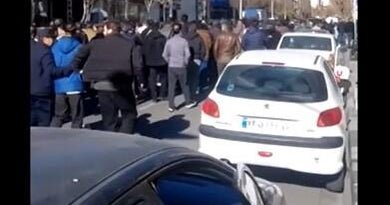
Tehran – Iran’s chief prosecutor said on Wednesday that the economic protests sweeping the country were legitimate, but warned that any attempt to create insecurity would be met with a “decisive response”, as the Islamic Republic’s rulers tried to quell unrest for a fourth day.
“Protests for peaceful livelihoods are part of a social and understandable reality,” Mohammad Movahedi-Azad told state media after protests started by traders in the capital Tehran and joined by students and others in several cities across the country.
“Any attempt to turn economic protests into a tool of insecurity, destruction of public property or the implementation of externally designed scenarios will inevitably be met with a legal, proportionate and decisive response,” Movahedi-Azad warned.
His comments came days after the Mossad intelligence agency IranIsrael’s arch-enemy announced on social media that it is “with you on the ground,” in a message to Iranian protesters. Posting on its Persian-language X account, the spy agency urged Iranians to “take to the streets together.”
Reuters 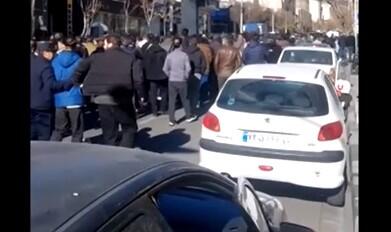
In a post shared via its own Farsi-language account on X, the US State Department said on Wednesday it was “deeply concerned by reports and videos that peaceful protesters in Iran are facing intimidation, violence and arrests”.
“Demanding fundamental rights is not a crime. The Islamic Republic must respect the rights of the Iranian people and end the repression,” the US government said in a statement.
“First the bazaars. Then the students. Now the whole country. Iranians are united. Different lives, one demand: respect our voices and our rights,” the State Department said in a subsequent post.
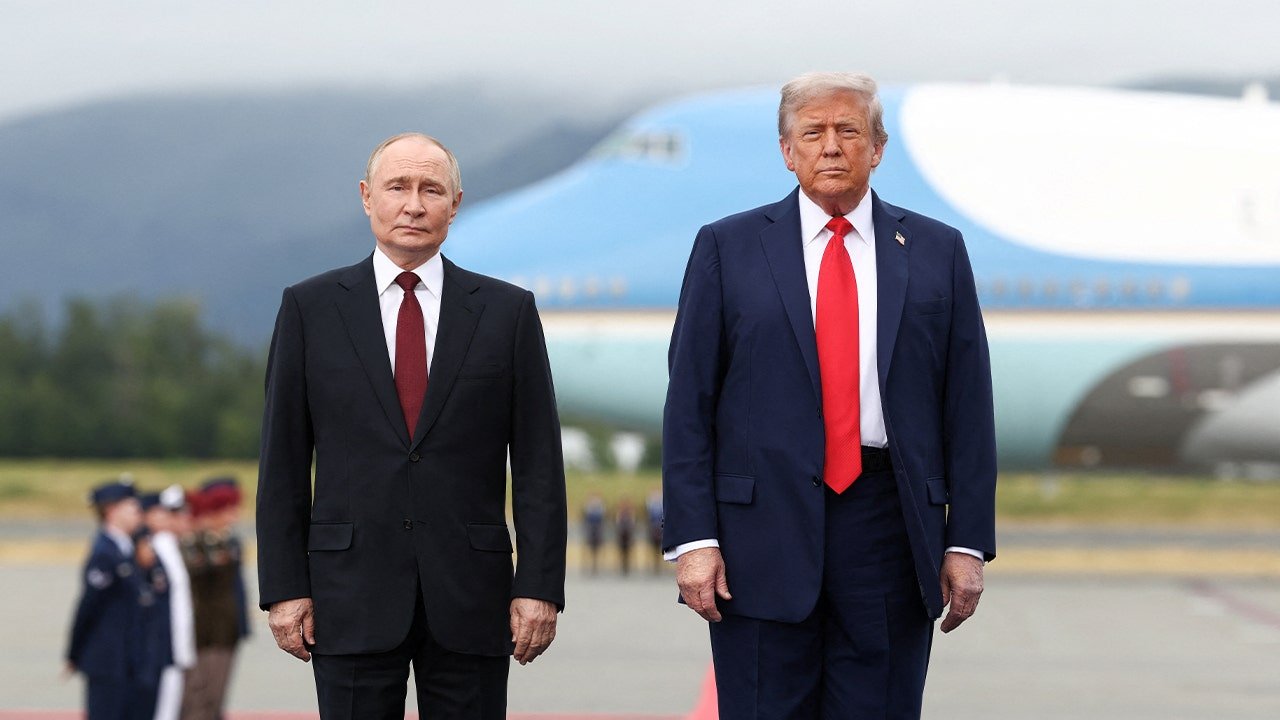
The protests come amid rising tensions between the US and Iran after Pres Trump said he heardafter a meeting with Israeli Prime Minister Benjamin Netanyahu, that Iran may try to revive its nuclear program after the unprecedented US attacks on its enrichment facilities in June. Mr. Trump warned that if Iran tries to rebuild, “we’re going to knock them down. We’re going to knock the hell out of them. But we hope that doesn’t happen.”
on Tuesday, the Iranian president said Tehran would respond “to any cruel aggression” with unspecified “harsh and discouraging” measures.
The protests, driven by dissatisfaction with Iran’s economic stagnation and galloping hyperinflation, began Sunday in Tehran’s largest mobile phone market, where shopkeepers closed their businesses. They gained momentum by Tuesday, joined by students at 10 universities in the capital and other cities, including Iran’s most prestigious institutions.
Despite this, the protests are limited in number and concentrated in the center of Tehran, while shops elsewhere in the metropolis of 10 million people were not affected. The government appeared to be quelling the unrest, both on the streets with a heavy security presence and by declaring holidays at the last minute to prompt the closure of schools and businesses.
Iran’s economy has been at a standstill for years, s heavy US and international sanctions because of Tehran’s nuclear program, which is weighing heavily on it. The currency, the rial, has also fallen in recent months, losing more than a third of its value against the US dollar since last year.
Videos posted on social media showed crowds chanting anti-government slogans as they marched through the streets, while others showed security forces using tear gas and alleged live ammunition. CBS News was unable to independently verify the video clips posted online, some of which show heavily armed security forces detaining multiple people, including students, and others that apparently show gunfire.
The Tehran University Guild Council said six students were detained but later released. There were unconfirmed reports that at least one student was seriously injured during clashes with security services in Tehran.
Last minute vacation
The streets of Tehran were quiet early Wednesday, instead of the usual chaotic and suffocating traffic, after authorities declared a national holiday with just a day’s notice. Many schools, banks and public institutions are closed, and officials say the order is due to the cold weather and the need to conserve energy.
Majid Asgaripour/WANA via Reuters 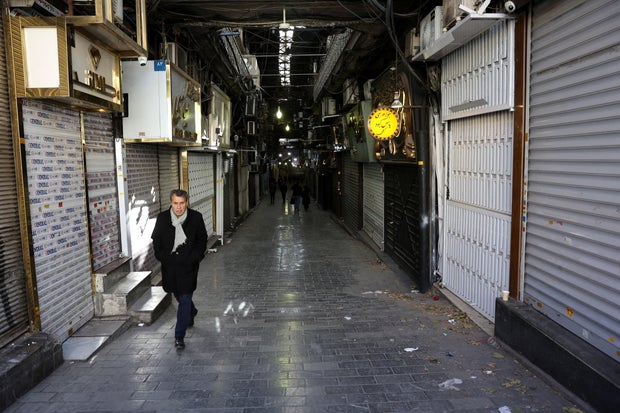
The prestigious Beheshti and Allameh Tabataba’i universities in the capital have announced that classes will be held online all next week for the same reason, state news agency IRNA reported.
The authorities did not connect the holidays with the protests. Tehran experiences daytime temperatures close to freezing, which is not unusual for this time of year.
Weekends in Iran start on Thursdays, while this Saturday marks a long-standing public holiday.
Iran is no stranger to protests across the country, but the latest demonstrations did not come close to the last major outbreak in 2022, which sparked the death in police custody of Mahsa Aminia young Iranian woman.
Her death in custody after she was arrested for allegedly violating the country’s strict dress code for women sparked outrage across the country. Several hundred people were killed, including dozens of members of the security forces, who responded by launching a dramatic crackdown arresting hundreds of people.
2019 also saw widespread protests, fueled by a sharp increase in gasoline prices.