itstargetnews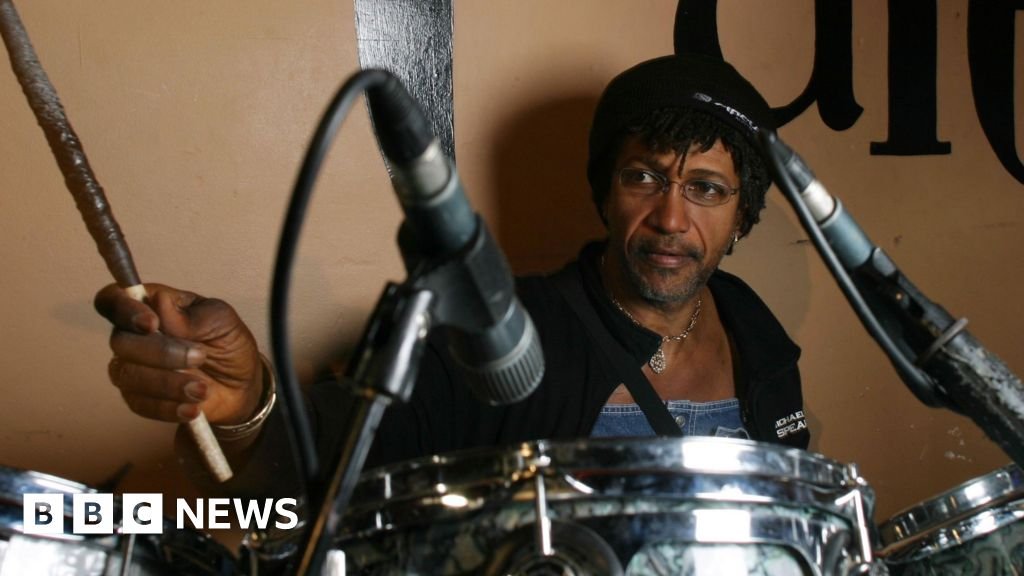
Reggae legend Sly Dunbar, who worked with everyone from Bob Marley to The Rolling Stones, has died aged 73.
One of the most respected drummers in the genre, he has played on tracks like Bob Marley’s Punky Reggae Party and Dave and Ansell Collins’ classic “Double Barrel.”
However, he is better known as a member of the Sly & Robbie production team, who produced seminal hits for non-reggae artists ranging from Peter Tosh and Black Uhuru to Bob Dylan, Grace Jones and Ian Dury.
Dunbar’s death was first reported by his wife Thelma, who told the Jamaican newspaper The Gleaner that she found Dunbar unresponsive on Monday morning. The musician’s agent and publicist confirmed the news to the BBC.
Born Lowell Fillmore Dunbar in Kingston, Jamaica, he began playing tin cans after watching Lloyd Knibbs and the Skatalites on television.
“I saw (Nibbs) playing and I thought, ‘I want to be a drummer,’ because he was the hardest working guy in the band,” he said in a 1997 interview.
“He’s my idol! In some ways, I’m self-taught, but I got a lot of help from watching other drummers play.”
As a teenager, Dunbar met bassist Robbie Shakespeare and formed the rhythm section of the band The Revolutionaries, later becoming a regular musician at the famed Channel One Recording Studios.
Their sound departed from Bob Marley’s melodically rich music and was more beat-focused – including seminal “rock” rhythms that introduced more syncopation and energy to the music.
They played with major reggae bands in the 1970s such as Gregory Isaacs, Dennis Brown and Barrington Levy, and toured the United States with Peter Tosh.
According to legend, the two were living on bread and water, hoping to save enough money to start their own production company.
Taxi Records was officially established in 1980 and has cultivated a new generation of Jamaican artists such as Shaggy, Shabba Ranks, Skip Marley, Beenie Man and Red Dragon.
Around the same time, they provided the thunderous rhythms for Grace Jones’s 1981 hit album Nightclubbing, which opened the door for them to work with some of rock and pop’s biggest stars – from Dylan and Joe Cocker, to singers like Marianne Faithfull, Madonna and Sinead O’Connor.
Domestically, they gained a reputation for updating the sound of reggae music by incorporating more electronic instruments and textures.
They later teamed up with duo Chaka Demus & Pliers to bring a bright and melodic style to the dancehall scene, and had hits like “Tease Me” and “Murder She Wrote” in the early 1990s.
Shakespeare (who died in 2021) estimated that he and Dunbar were involved in more than 200,000 recordings at one point, either on their own or as backup musicians or producers for other artists.
“When you buy a reggae record, there’s a 90 percent chance that the drummer is Sly Dunbar,” producer Brian Eno said at the New York New Music Festival in 1979.
“You would think Sly Dunbar was locked in a seat in a studio somewhere in Jamaica, but in fact his drum sounds were so interesting that they were used time and time again.”
Dunbar’s wife said she found him unresponsive in bed around 07:00 on Monday, January 26.
“I went to wake him up and he didn’t respond, so I called the doctor and that was the news,” she said.
No exact cause of death was given, although Dunbar had reportedly been ill for some time.
“Yesterday was a really good day for him,” Thelma told the Jamaican Gleaner newspaper.
“He had friends come visit him and we all had a great time. He ate well yesterday…sometimes he doesn’t like to eat. I knew he was sick…but I didn’t know he was this sick.”
British DJ David Rodigan was among them, calling Dunbar “a true icon” and “one of the greatest drummers of all time.”