As Europe accelerates its industrial decarbonisation agenda, offshore carbon capture and storage (CCS) is moving from pilot initiatives to full-scale infrastructure development. The focus is shifting to integrated transport and storage systems capable of handling millions of tonnes of carbon dioxide (CO₂) annually.
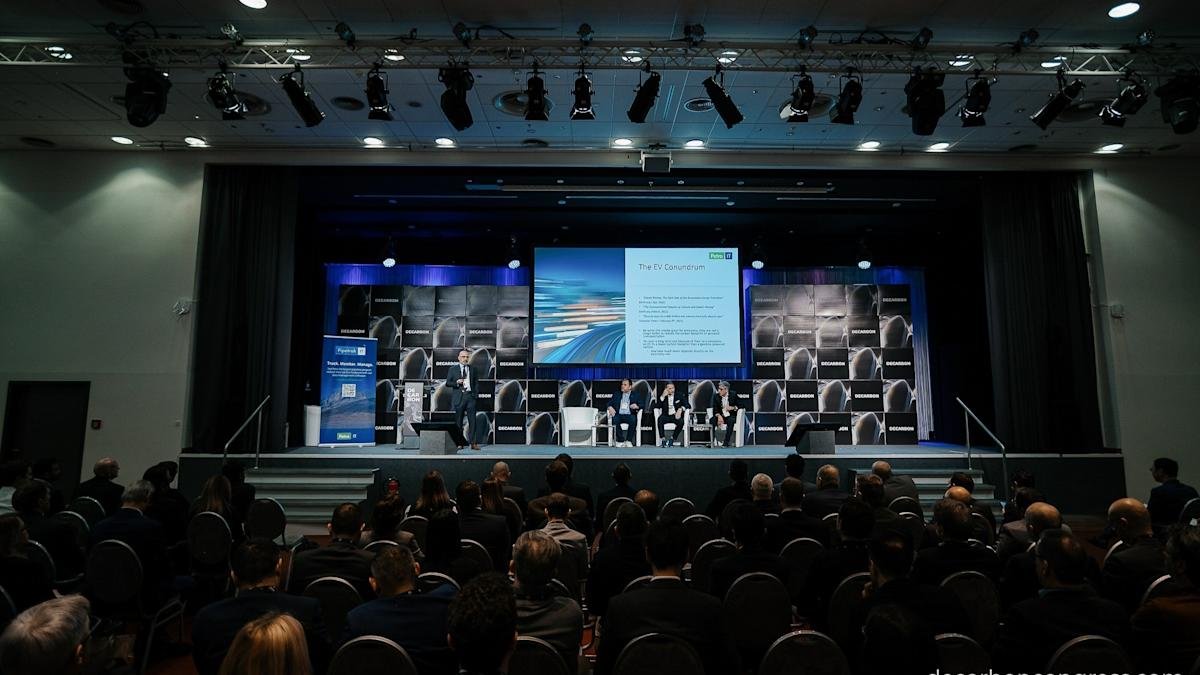
Several current projects illustrate how offshore CCS is being deployed in Europe using different technical and commercial models. From trunk pipeline networks to open access storage centres, the developments will be a key topic of discussion at the Decarbonisation of Oil and Gas Congress (DECARBON) 2026, taking place in Vösendorf, Austria on 9-10 February. Key representatives from upstream, midstream and downstream operations will meet at the congress to assess progress and remaining challenges.
The Aramis project represents one of the most ambitious offshore CCS infrastructure developments in continental Europe.
Philip Cooper, Project Manager at Petrofac, says: “The project demonstrates the critical importance of integrated working, early supply chain involvement and effective technical interfaces across the CCS value chain, supported by a highly experienced and collaborative client organisation.”
At the end of 2023, the Aramis consortium (formed by TotalEnergies, Shell, Gasunie and EBN) awarded UK-based Petrofac a 12-month front-end engineering design (FEED) contract to develop the project’s CO₂ transport and offshore storage system.
Petrofac has since led FEED for the 200km 32in offshore CO₂ pipeline, which links onshore compression facilities in the Port of Rotterdam to multiple depleted gas reservoirs in the Dutch North Sea, with a design capacity of 22 million tonnes per annum (mtpa) operating in dense phase. The work was delivered through a fully co-located joint team, enabling close integration between process design, flow assurance, control systems, safety concepts and material selection across the entire CCS value chain.
Key engineering challenges addressed during the FEED phase included routing an onshore CO₂ pipeline through a highly congested port environment, while meeting a strict program of standards and the requirements of the Royal Netherlands Institute for Standardization, as well as developing a bespoke ground and tunnel solution using microtunneling techniques. Offshore, Petrofac’s scope covered complex pipe routing and mechanical design in mobile seabed conditions, along with stability, protection and buckling considerations, subsea connection arrangements, structural and platform safety design and enhanced pre-commissioning strategies.
Cooper will present the results of Petrofac’s work at DECARBON 2026, where he will highlight the integrated, multidisciplinary approach required to deliver large-scale CCS infrastructure.
Petrofac continues to support the project as Aramis enters the bidding phase.
Norway’s Northern Lights project has become a global benchmark for open access offshore CCS. Developed by Equinor, Shell and TotalEnergies, Northern Lights demonstrates a scalable ship-based model that lowers the barriers to entry for CCS adoption, with Shell playing a key role in developing and scaling up its transport and storage infrastructure.
At the Northern Lights terminal, liquefied CO₂ is delivered by ship and transferred to a series of storage tanks, before being pumped through a 110km submarine pipeline that crosses a fjord and into the North Sea. There, it is permanently stored in a deep saline aquifer under 330 m of seawater and approximately 2,600 m of seabed.
Shell’s participation supports the project’s flexible ship-based model, which is designed to lower barriers for industrial emitters seeking access to offshore CO₂ storage. From 2026, Northern Lights will receive CO₂ from Yara’s ammonia production facilities in the Netherlands, as well as biomass power plants operated by Ørsted. Additional volumes are expected from the Hafslund Celsio waste heat plant in Norway by the end of the decade.
Under its second phase of expansion, the Northern Lights project will see transport and storage capacity scaled to at least 5mtpa of CO₂, with customers such as Stockholm Exergi already contracted. This places the project at the center of Europe’s emerging offshore CCS network.
Shell Deutschland’s Andreas Grobler, manager of strategic partnerships for energy transition in Germany, will share the company’s CCS strategy at DECARBON 2026. He is expected to discuss projects such as Northern Lights, the Deltra Rhine Corridor, Co2Next, Aramis and others.
Offshore CCS development in Europe has traditionally focused on the North Sea. However, the APOLLOCO₂ project represents a step towards the establishment of a large-scale CCS infrastructure in southern Europe. Led by Greek gas transport operator DESFA, the project is being developed as an open access CO₂ transport and export network for Greece and the wider Eastern Mediterranean region.
In 2025, APOLLOCO₂ secured €169.3 million ($201.9 million) in funding from the EU Innovation Fund, positioning it as Greece’s first large-scale midstream CCS project and one of the most important CCS transport initiatives currently under development in Europe.
DESFA’s Senior Director of Strategic Planning, Kleopatra Avraam, will present the results of APOLLOCO₂ at DECARBON 2026 and share the company’s future plans.
A central element of the project is the development of a CO₂ liquefaction, temporary storage and export terminal on Revithoussa Island, where DESFA plans to integrate CO₂ liquefaction with the existing LNG regasification terminal.
Recognized as a project of common interest, APOLLOCO₂ provides the missing middle link in Greece’s emerging CCS value chain, connecting land-based capture projects with offshore geological storage sites such as the Prinos offshore field, while enabling future cross-border flows of CO₂ across the Mediterranean.
To connect Greek industrial emitters to the liquefaction terminal, DESFA is also advancing plans for an approximately 35 km CO₂ pipeline, designed to transport around 3mtpa of CO₂ in its initial phase, but with the potential to expand to handle up to 5mtpa by 2034. Together, these elements position APOLLOCO₂ as a new anchor project on the North European coast and a new anchorage project on the northern coast of Europe. CCS Corridor in the Eastern Mediterranean.
Together, these projects show that offshore CCS in Europe is moving beyond isolated developments towards a coordinated system led by pipeline infrastructure, shipping routes and offshore storage hubs. The diversity of models now emerging reflects both the technical maturity of offshore CCS and the need for flexible approaches to suit different industry clusters and regulatory environments.
As these systems scale up, their integration with broader oil and gas decarbonization strategies becomes more important. Issues such as the coupling of CCS with low-carbon hydrogen production, alternative fuels and feedstocks, regulatory alignment, cost reduction and operational efficiency are shaping investment decisions across the sector.
These challenges promise to be at the heart of discussions at DECARBON 2026. The Congress brings together decision-makers and technical leaders from across the value chain to focus on accelerating deployment, reducing risks and moving towards commercially sustainable CCS systems.
Sign up here to attend DECARBON 2026.
“DECARBON 2026: Projects driving carbon capture infrastructure in Europe” was originally created and published by Offshore technologya trademark owned by GlobalData.
The information on this site has been included in good faith for general informational purposes only. It is not intended to be advice on which you should rely, and we make no representations, warranties or guarantees, either express or implied, as to its accuracy or completeness. You should obtain professional or specialist advice before taking or refraining from any action based on the content of our site.
 itstargetnews