itstargetnews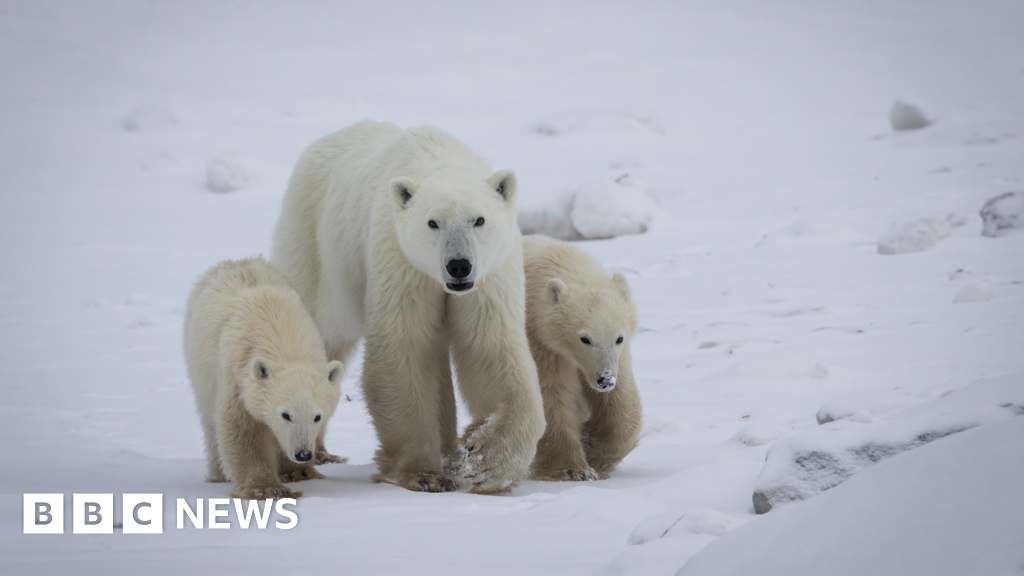
This fall, researchers tracking wild polar bears in northern Canada witnessed something extremely rare: a mother bear adopted a cub that was not her own.
The five-year-old female bear and her 10- to 11-month-old cub were observed and captured during the annual polar bear migration near West Hudson Bay, near Churchill, Manitoba, a town famous for its polar bear population.
“This is unusual,” Alyssa McCall, a scientist with Polar Bears International, said in the video. “We don’t really know why this happens…but we do know it doesn’t happen very often at all.”
Of the 4,600 bears studied in the area over nearly 50 years, this is only the 13th known adoption.
The female bear was captured for the first time this spring as she emerged from her maternity den. At the time, she had a cub, which scientists tagged as a research subject.
In the fall, she was seen again, but this time with two cubs—the original cub was tagged, and the other was untagged. Researchers are not sure what happened to the new cub’s biological mother, but they are trying to identify her through genetic samples.
“Polar bears need all the help they can get with climate change these days,” Evan Richardson, a polar bear scientist with Environment and Climate Change Canada, said in a video statement. “If the female is given the opportunity to pick up another cub and care for it and wean it successfully, that’s a good thing for Churchill’s bears.”
Polar bears in the wild have only a 50% chance of surviving to adulthood, but having a mother to care for them can increase their chances of survival.
Researchers say the cubs appear to be healthy and will likely stay with their mother until they are about two and a half years old.
Next, the family is expected to head to the sea ice, where the pups will learn from their mother how to hunt seals and survive on their own.
“It’s nice to know these bears are taking care of each other,” Richardson said.