itstargetnews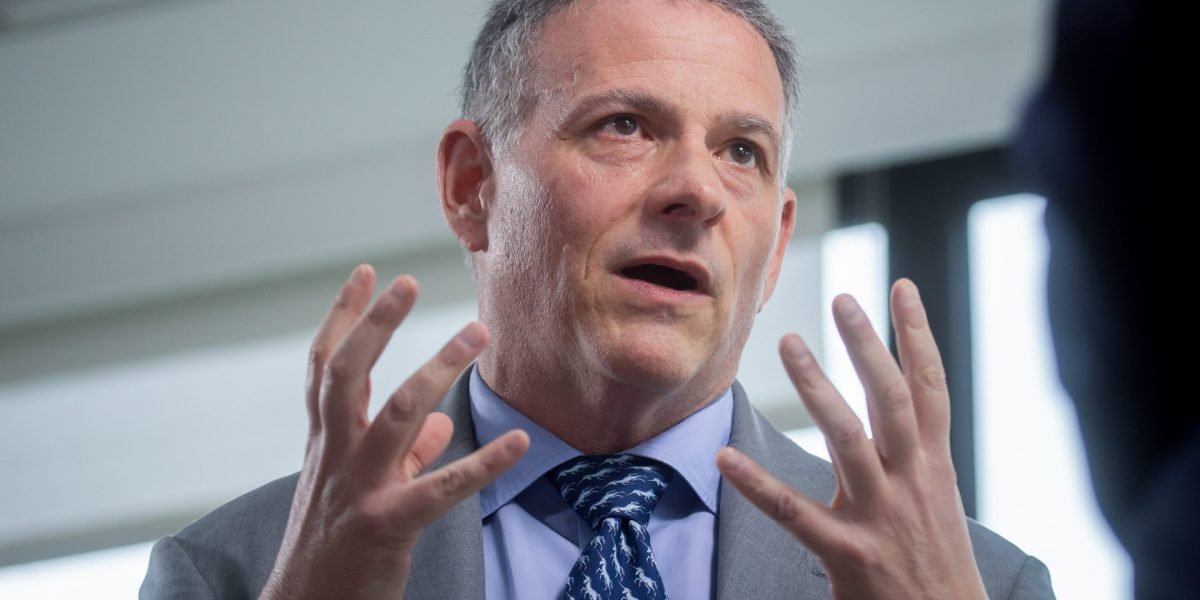
Gold exploded past $5,300 an ounce last month as President Donald Trump’s hawkish foreign policy and tariff threats sent investors to safer assets. At the same time, US deficit spending has grown to what the Congressional Budget Office calls an unsustainable $1.9 trillion, a scenario that erodes the dollar’s standing as the world’s leading reserve currency.
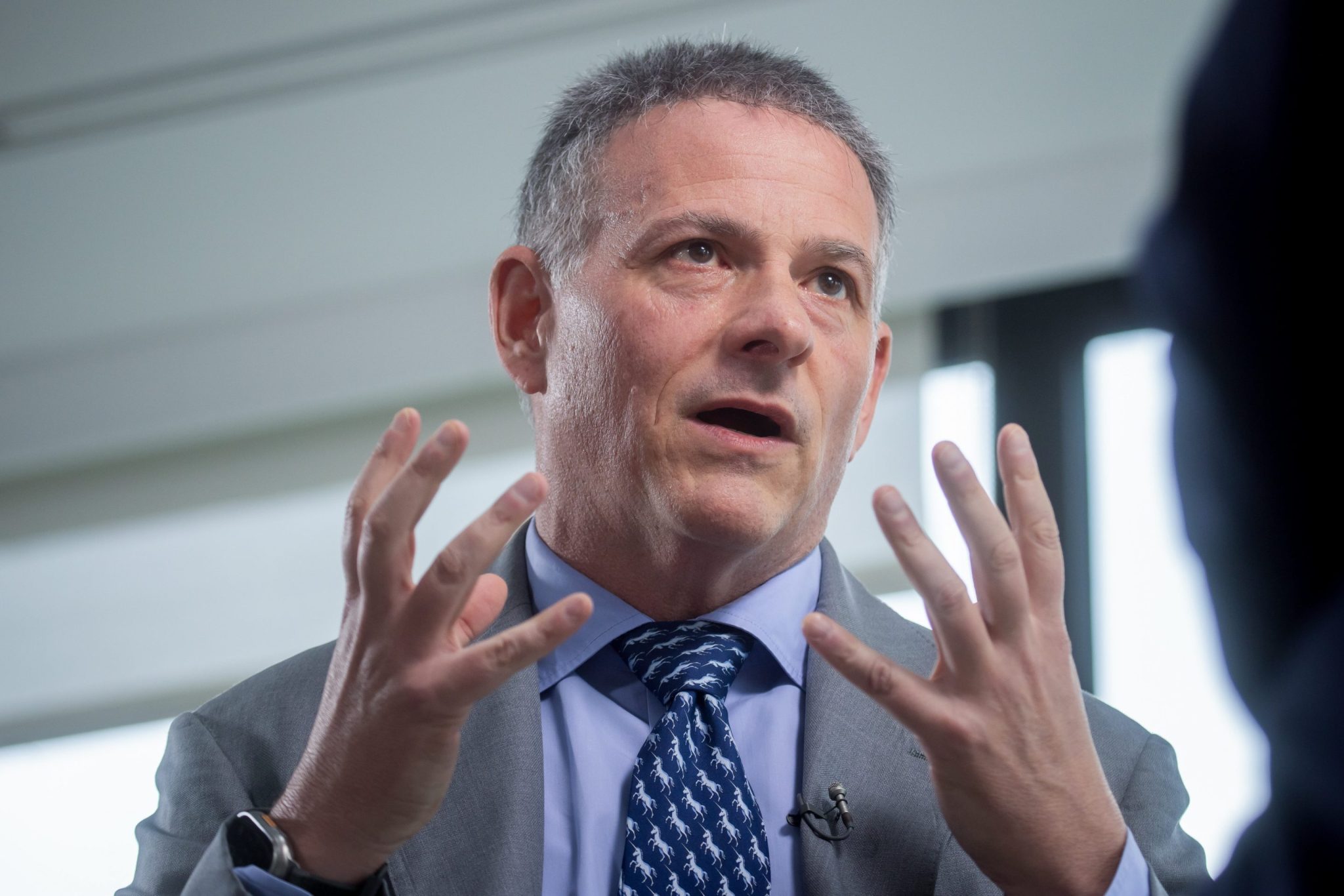
The meeting of these factors has some investors predicting the fall of Treasury securities as the only true global reserve. Greenlight Capital founder David Einhorn made the revelation in a recent conversation with CNBC. The investing legend predicts a huge change in global reserve assets, predicting that central banks will exchange the dollar for the yellow metal.
“Central banks around the world are buying gold,” Einhorn said. “Whereas a few years ago, it was mostly Treasuries.” He added that it “became a reserve asset” because the US trade policy “is not stable, and it causes other countries to say that we want to settle our trade in something other than the US dollar.”
To be sure, the dollar still dominates as the reserve currency of choice. While in the first half of last year, central banks dumped more than $48 billion in Treasuries, as of July 2025, the dollar will still account for nearly 58% of all foreign reserves, according to Philadelphia Federal Reserve Bank. And gold purchases by central banks actually fell in 2025 from highs between 2022 and 2024, according to data from World Gold Council.
Also, Einhorn has long predicted that the price of gold will rise due to fear of US monetary policy and fiscal policy. In an interview with CNBC last year, the hedge fund manager argued that “Gold is not about inflation. Gold is about confidence in fiscal policy and monetary policy.” While the investor is not advocating much for a return to the gold standard, he is a strong proponent of holding the metal as a hedge against US fiscal and monetary mismanagement.
On Wednesday, Einhorn added that US trade policy has sent jitters across global markets, fueling “sell America” trend and sending central banks to safer assets like gold. While gold prices have eased since their peak last month, the value of the currency remains high, around $5,100 per ounce on Thursday morning.
The Einhorn effect
Einhorn has made a name for himself spotting financial red flags. The hedge fund manager rose to investment prominence in 2002 after taking a short position in Allied Capital, a mid-cap financial company. After giving a speech about his stance at the Sohn Investment Research Conference, the company’s stock dropped 20% as Einhorn accused the company of defrauding the Small Business Administration.
Einhorn followed the same playbook in 2007 after bailing out Lehman Brothers, sharing his thesis on financial institution overexposure to subprime mortgage-backed securities at the Value Investing Congress. His prescient callouts to major companies through thoroughly researched presentations—and the resulting stock crashes they started—popularized the phrase “the Einhorn Effect,” which is used to highlight the hedge fund manager’s extraordinary influence on investor decisions. (This is not to be confused with “Einhorn revolving shotgun” from Call of Duty video games.)
Deficit fears are fueling a bet on gold
As his early brief calls exposed the cracks in major financial institutions, investors now see structural weaknesses in the government’s fiscal and monetary policies. Einhorn emphasized his gold philosophy Wednesday, saying “our gold thesis over the longer term is that our fiscal policy and our monetary policies are meaningless.” At current spending costs, the US deficit-to-GDP ratio is expected to reach 6.7% in 2036, annually. CBO. However, Einhorn also noted other major developed currencies that maintain high deficit-to-GDP ratios, which explains why gold, as opposed to a foreign currency, may be the preferred global reserve.
Part of Einhorn’s confidence in gold is based on his belief that the Federal Reserve will issue more interest rate cuts than currently expected. “I think one of the best trades right now is betting on more cuts this year than expected,” he said. “I think by the end of the year, it will be more than two cuts.”
Even so The January jobs report was better than expected made the reality of another rate cut seem distant, Einhorn bet that Warsh as Fed chair would be able to persuade the committee to tally rate cuts.
“He would make arguments that would persuade people,” Einhorn said.