itstargetnews
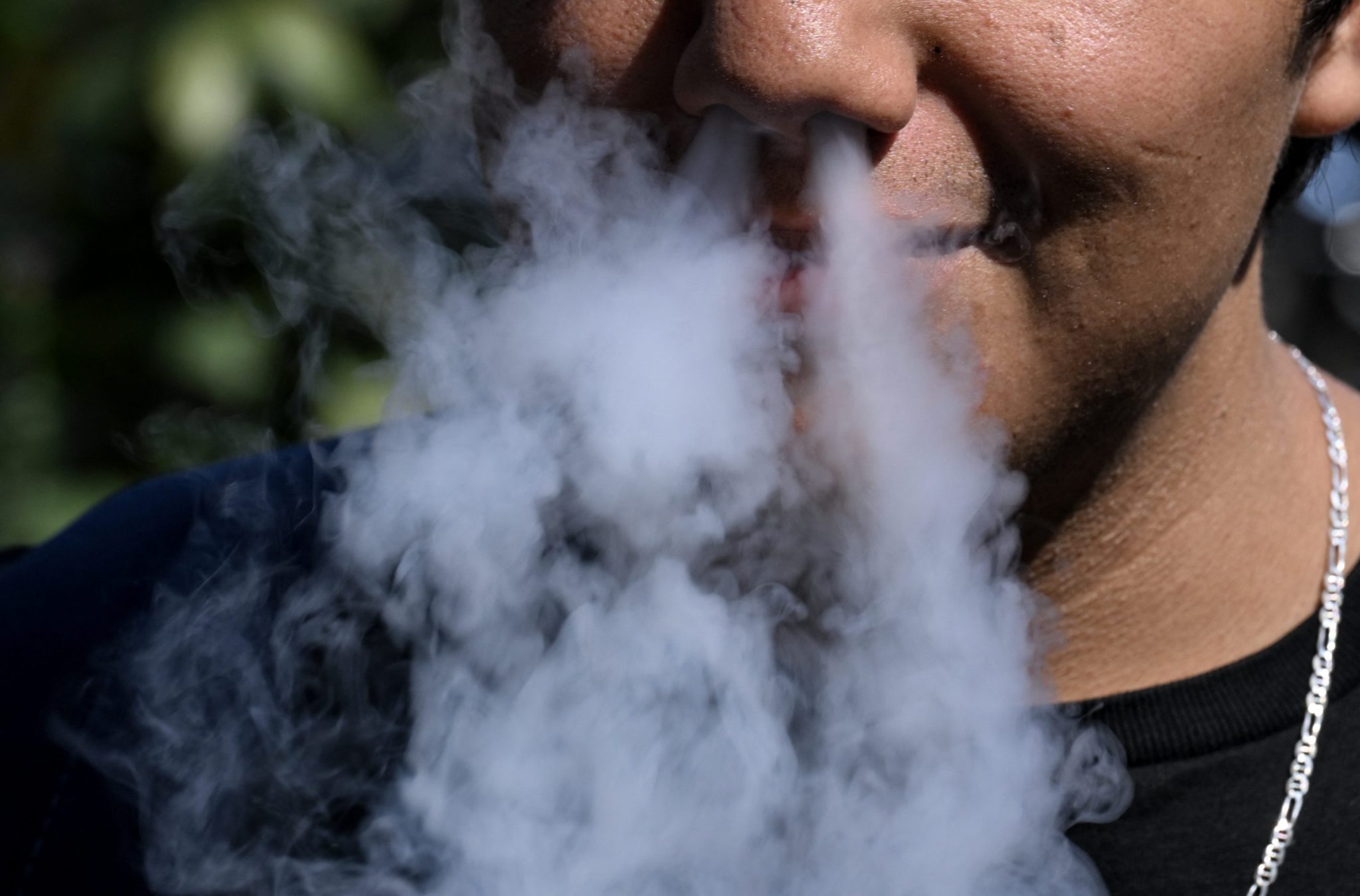
When a drug cartel comes calling at a store that sells vapes in the north Mexicothe owners know they are powerless.
The cartel kidnapped two employees, blindfolded them and asked them to speak to their bosses. The cartel said it seized the store, which is only allowed to sell online outside the state.
“They don’t come to ask if you want to (give them your business) or not, they come to tell you what’s going to happen,” one of the owners, now 27 and living in the United States, said on condition of anonymity for fear of retaliation.
That’s early 2022, when vapes is still legal in Mexico, a market worth $1.5 billion. But earlier this month, the country banned the sale — though not the use — of electronic cigarettes. Experts believe that organized crime will now consolidate its control over the sale of devices.
“By banning it, you give the market to non-state groups” in a country with high levels of corruption and violence tied to cartels, said Zara Snapp, director of the Mexico-based Ría Institute, which studies drug policy in Latin America.
The ban also could strengthen the cartels by giving them another revenue stream that is not a high priority for the United States government, since vapes are still legal there, said Alejandro Rosario, a lawyer who represents many vape shops.
Push to ban
Vaping is legal and regulated in the US and Europe, but it has been banned in at least eight Latin American countries. Some countries, such as Japan, have used e-cigarettes to reduce tobacco use, but regulation is increasing, supported by World Health Organizationwho are concerned about the growing use of teenagers.
Former Mexican President Andrés Manuel López Obrador, an outspoken critic of vaping, the import and sale of e-cigarettes is prohibited.
When Mexico’s Supreme Court declared the ban unconstitutional, López Obrador pushed for a constitutional amendment, passed in January 2025 under his successor, President Claudia Sheinbaum. Electronic cigarettes are now included alongside powerful synthetic opioids fentanylsomething many lawyers see as disproportionate.
However, the lack of a law to enforce the ban leaves a loophole, and vapes continue to enter Mexico from China – the main producer – and the US In December, they can still be found for sale in many stores and online.
However, the authorities carried out raids and seizures. In February, 130,000 electronic cigarettes were seized at the port of Lazaro Cardenas.
Aldo Martínez, 39, a store owner in Mexico City, was fined $38,000 for selling the tools, fought the decision and ultimately did not have to pay.
But in December, the legal loophole was closed. A new law prohibits almost everything about vapes except consumption, imposing fines and imprisonment of up to eight years. Martínez immediately stopped selling e-cigarettes, even though they accounted for an estimated two-thirds of his income. “I don’t want to go to jail,” he said.
Martínez and his friends will use up his remaining inventory, but he fears the authorities will raid his store and plant vapes there in an attempt to extort money from him.
Consumers are also worried that they could be extorted by the authorities because although it is not illegal to own vapes, the new law is unclear about the number of devices that can be considered personal use.
“If I create an ambiguous law … I give corrupt authorities the ability to interpret it in a way that extorts people,” said Juan José Cirión Lee, a lawyer and president of the collective Mexico and the World Vaping. He plans to challenge the new regulations in court, saying they are vague and full of contradictions.
Cartel market corner
While the prohibition in Mexico was carried out, organized crime expanded its share in the sector of the northern states and the largest cities of the country, Guadalajara and Mexico City. Sometimes, they even mark their product with stickers or stamps to identify their brand, reminiscent of their branded fentanyl pills.
Rosario, the lawyer, talked about the intimidation, extortion and violence that forced vendors in states like Sonora out of business. Others, like some of his former clients in Sinaloa, have decided to sell the vapes provided by the cartel, promising they won’t get in trouble with the authorities, he said.
“I lost about 40% of my clients,” Rosario said.
The owner of the store who now lives in the US said that he was quite lucky, because the cartel paid something for the business and sought the expertise of the owners on how it worked.
The cartel already knew everything about them, including addresses and names of relatives, he said. He and his co-owner are now closing their online business because they don’t want to choose between cartel sentences and jail time under the new ban.
A longtime seller in Mexico City, who also asked not to be identified to avoid retaliation, said some of his clients fear thieves for buying their vapes online, while one of his suppliers sells his inventory to organized crime groups.
The cheapest and most popular devices – the most interesting of the cartels – are available. Some countries ban them because of plastic, electronic and chemical waste.
According to Rosario, the cartels are already presenting themselves as suppliers and formal businesses, with some even buying disposable shells directly from Asian manufacturers to fill themselves. Due to the lack of regulation, that raises the potential for adulterated products from organizations that already manage all types of illegal drugs.
A recent report by the Mexican non-governmental organization Defensorxs states that the Jalisco New Generation Cartel has “businesses dedicated to the repackaging of vapes in Asia,” while other criminal organizations, including the Sinaloa cartel, and smaller criminal groups in Mexico City and Acapulco operate in the vape black market.
Mixed results
Mexico’s ban went into effect on January 16. The next day, authorities confiscated more than 50,000 vapes and displayed them in Mexico City’s central plaza. Mayor Clara Brugada framed the implementation as necessary to protect the youth.
For lawyer Cirión Lee, that doesn’t make sense. Illicit products attract young people, and now “those who sell cocaine, fentanyl, marijuana sell you vapes” and they don’t care if the buyer is a minor, he said.
Other countries have different experiences. Brazil banned vapes in 2009, but they are widely used by young people. In the US however, where they are not banned, Teen vaping falls by 2024 at the lowest level in a decade as regulation increased.
The US Food and Drug Administration and most scientists agree that, based on the available evidence, electronic cigarettes are less dangerous than traditional cigarettes.
Snapp, the drug policy researcher, insists that Mexico’s ban is a failure by removing a safer alternative to cigarettes.
Some consumers are asking their trusted suppliers to stay open, said the man who lost his business to a cartel in 2022. He said recently people have been making “panic buys” for months of supplies amid uncertainty about the future.
A young entrepreneur near Mexico’s northern border said he was able to operate under the radar because he didn’t have stores or a website. He did everything with his phone, through calls and messages, he said, asking not to be identified for safety.
He said that until now the cartels have left him alone because he does not sell disposable vapes, but he plans to be careful. He expects that sooner or later the entire market will be in the hands of organized crime.