itstargetnews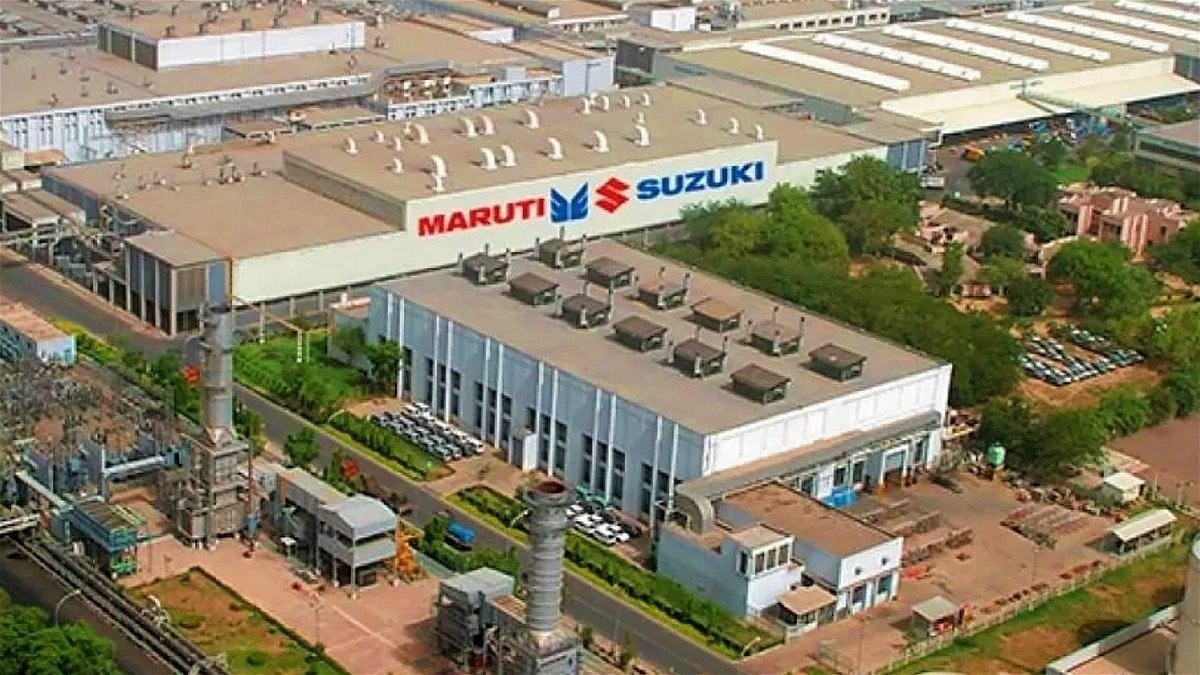
India’s largest carmaker by volume, Maruti Suzuki India Ltd, plans to “engage” with the domestic steel industry on issues related to misuse of safeguard duty to drive up prices. In December 2025, the government imposed a three-year safeguard duty of up to 12% on some steel imports to protect the domestic steel industry.
“It seems that the steel industry is using this opportunity to increase raw material prices. Although there was a clear message from the government that the steel industry should not use it for profiteering or increasing raw material prices. But there seems to be some such pressure,” Rahul Bharti, senior executive director of corporate affairs, Maruti Suzuki, said in an earnings call after the company announced its results with analytical
“We will engage with the steel industry and mention to them that the safeguard duty should not be misused to increase steel prices. There seem to be some signs that they want to increase prices,” Bharti said.
This comes at a time when automakers are seeing adverse commodity prices due to the recent rally in aluminum and copper prices. Maruti Suzuki also witnessed an adverse impact due to rare earth supply constraints.
“We are seeing some headwinds in commodities. In terms of rare earths, instead of importing just the magnets, we were forced to import larger aggregates or subassemblies of which the magnets were child parts,” Bharti said. “This will not be a long-term problem. Sooner or later, India will manufacture rare earth magnets,” he added.
On the historic free trade agreement between India and the EU, Bharti said he believes the government would have been extremely calibrated and sensitive to the domestic industry while bringing India into the global arena. “We have always supported liberalization. We export electric vehicles to Europe. We don’t know the specific clauses. It should be positive,” he said.
As South Africa slaps higher tariffs of up to 50% on “Made in India” cars, Maruti Suzuki India Ltd is looking to de-risk its exports. “We will try to de-risk as much as possible. But we are still exposed to all kinds of issues related to global trade and tariffs,” Bharti said.
“Exporting is always a mix. There are always some countries that take center stage and there are always some changes. The top countries always keep changing. It’s a dynamic scenario. The great thing is that we do broad-based exports in our broad portfolio of countries, and we have more than 100,” he explained.
Maruti Suzuki’s export revenue was Rs 8.2 billion in Q3FY26. “We are on track to achieve export guidance of 4 lakh units in FY26,” Bharti said.
India’s best-selling carmaker saw a one-time layoff due to the new labor code, which led to higher employee costs. “Unfavorable factors were partially offset by favorable operating leverage, lower discounts and a favorable product mix,” Bharti said.
After the GST rate cut in September last year, the carmaker is seeing strong demand across its portfolio. “There has been a 7% increase in first-time buyers. We are seeing a lot of helmets in our showrooms, which means there are positive signs that the two-wheeler owner is upgrading to small and compact cars,” said Bharti.
The Japanese automaker has no plans to raise prices anytime soon. “The landmark GST reform is an opportunity where we should build momentum. We always have time ahead where we can recover from cost pressures. It is unethical to have a price hike immediately after the government cuts taxes. Some manufacturers may be doing it, but we believe we should take the decision in favor of the consumer,” Bharti said.
On the company’s capacity expansion plans, Bharti said Maruti Suzuki’s second plant in Kharkhoda, Haryana will become operational by April 2026. “Within a few months, Suzuki Motor Gujarat’s fourth line should be operational. We have 2 plants of 250,000 each in the facility in a very short time,” he said.