itstargetnews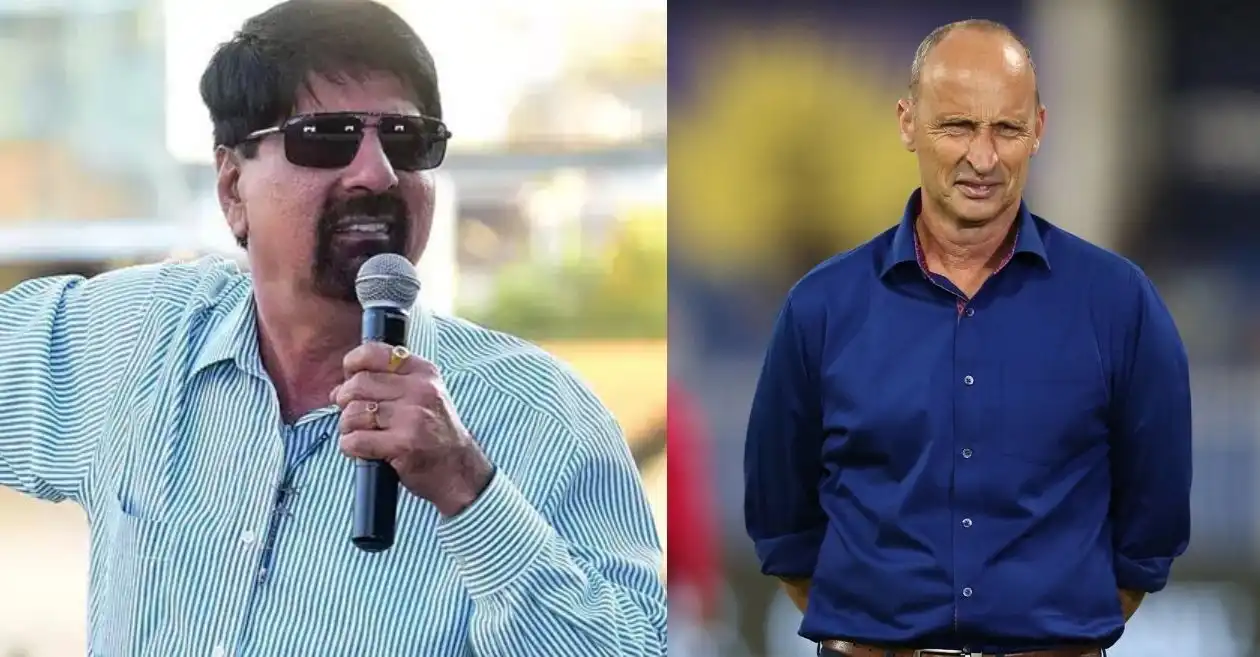

Tensions are rising around 2026 T20 World Cup New twist after former India opener Chris Srikanth Scoring attack on former England captain Nasser Hussein. and Bangladesh Exit the game early and Pakistan Hussain, who initially threatened to boycott their high-handed conflict against India, has questioned India’s approach. International Cricket Council (ICC) function, indicating that the body is seriously affected BCCI. However, Srikanth did not restrain his response and brought up England’s own controversial past to counter the criticism.
controversy sparking controversy
The 2026 T20 World Cup is filled with drama off the field. Bangladesh’s decision to withdraw from the tournament and Pakistan’s initial reluctance to face India added to an already tense atmosphere. During this time, Hussain reportedly said that the ICC seemed to be under the control of the BCCI and called for all participating teams to be treated equally.
These remarks did not sit well with Srikanth, who accused Hussain of selective memory. India’s former chief selector said such statements ignored cricket’s complex political and financial history.
Kris Srikkanth reminds Nasser Hussain of 2003 episode
Srikanth pointed out 2003 ODI World Cup Challenging Hussein’s position. That tournament was co-hosted by South Africa, Zimbabwe and Kenya, with England refusing to travel to Zimbabwe citing security concerns. The decision resulted in England losing the match, which dramatically changed the group standings and helped Kenya advance to the knockout stages.
Srikanth recalled that Hussain was the England captain in that edition and questioned why similar decisions taken in the past were not viewed through the same critical lens. At the time, he argued, Britain’s rejection was seen as a principled stance, but now India’s position is coming under greater scrutiny.
Srikanth, in his typically fiery style, said it was unfair to apply different standards depending on the cricketing nation involved.
“He was the captain of the 2003 World Cup when England refused to travel to Zimbabwe and Kenya. Why does he want to talk now? Even Australia agreed at the last minute. England got kicked out and that’s how Kenya got to the quarter-finals. You have a rule and we have a rule. England were the rulers that time,” Srikkanth said on YouTube.
The financial realities of global cricket
Another key point raised by Srikanth was the financial structure of world cricket. He highlighted that Indian fans contribute significantly to global cricket revenue through broadcast rights, sponsorship and ticket sales. While he did not endorse any undue influence, he acknowledged that such financial influence would inevitably give India a stronger voice within the ICC framework.
He believes that this is not a matter of “exerting pressure” but a reflection of economic reality. Cricket boards operate in a business ecosystem and revenue generation plays an important role in decision-making.
“They were shouting at that time. It’s not fair. If England or any other team does that, it doesn’t matter. No one wants to apply pressure. At the end of the day, the ICC’s huge revenue comes from Indian fans across the globe, so India has a little advantage. It happens in phases,” Srikanth added.
Pakistan’s Great Transformation and the Big Picture
Meanwhile, Pakistan eventually changed its boycott stance and agreed to play against India. Srikanth believes Pakistan will be the biggest loser – both economically and in terms of global reputation – if they choose not to participate. The India-Pakistan match remains one of the most anticipated events in world cricket, attracting record-breaking crowds.
Also read: Fans go wild as Justin and Anthony Mosca help Italy to historic win over Nepal in T20 World Cup 2026