itstargetnews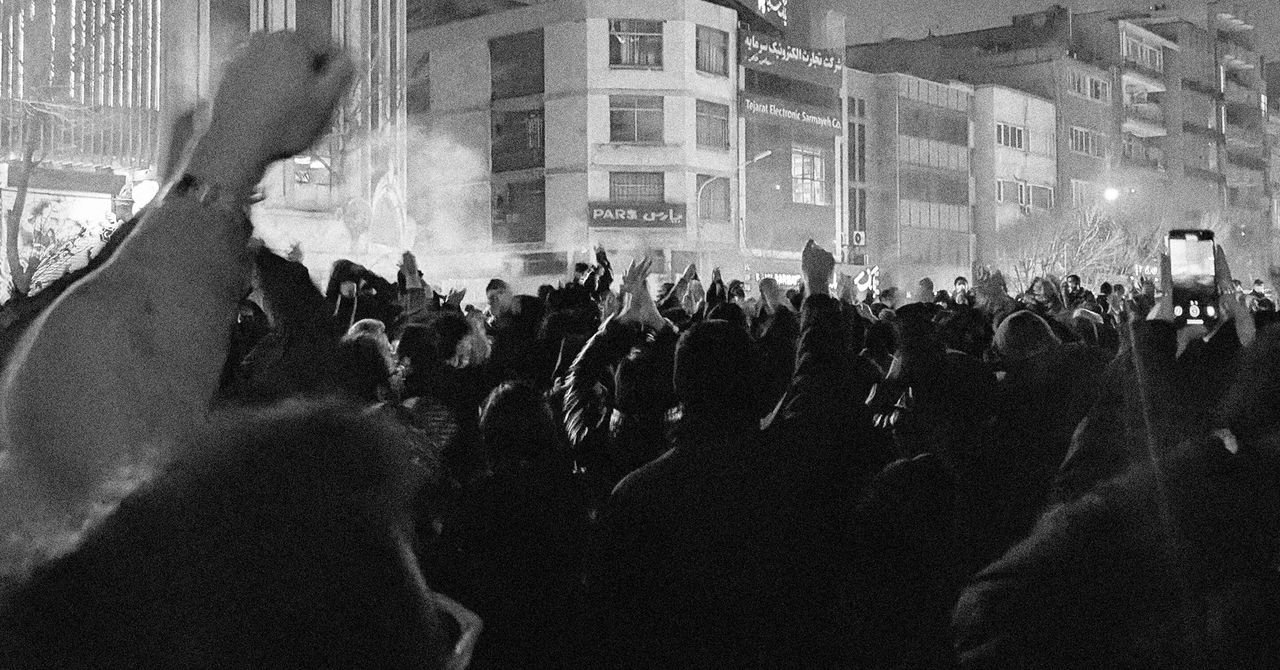
“CCTV networks, facial recognition systems, applications designed to capture or log private user messages, and systems that assess citizens’ lifestyle patterns and behavioral profiles collectively provide the Islamic Republic’s security agencies with the means for extensive and accurate population monitoring,” the analysis said.
Alternatively, Mahdi Saremifar of Holistic Resilience simply says, “They want to have a centralized system that monitors daily life—monitoring lifestyle.”
NIN was created as a core part of the Iranian regime’s control mechanisms, designed to provide Iran-specific apps, web services, and digital platforms to constantly monitor Iranians and control the information they have access to while simultaneously making it more difficult to get information out of the country to the international community. The NIN has an isolationist architecture that also restricts connections from outside Iran.
The first few days of January’s disconnection were so severe, however, that NIN itself went offline, disrupting government websites and household services. Several researchers told WIRED that NIN, landline phone networks, and even privileged access SIM cards are not connected.
“There are many things in Iran, but I would say that the blackout that we have now is unprecedented in the country,” said Doug Madory, director of internet analysis at the monitoring firm Kentik, “And I think this is one of the biggest outages in history, not just in Iran.”
Filterwatch, a project of the internet freedom organization Miaan Group, says that while some connections have been restored, including international connections, it believes that the Iranian regime has moved to a system of “whitelisting” – restricting internet access to certain organizations and websites or apps. In the middle of January, the group notesIran’s state-controlled media published a list of websites that use NIN, which includes Iranian search engines, maps, video services, and messaging applications.
“This architecture uses sophisticated service and customer segmentation to transform internet access from a public utility to a government-granted privilege, allowing the state to maintain critical business services while cutting off the public’s connection to the global web,” Filterwatch Explains.
Even if the connection is partially restored, the researchers emphasize that the innovation of the digital landscape is still surprising and opens the possibility that the current saga may rain. permanent amputation-O blindness—in Iran from the global internet.
So far, the analysis of signals from outside does not clarify the intentions of the regime. “I’ve seen this kind of traffic chaos, and I don’t know if that’s the intention – they want chaos – or if it’s the system not working properly,” said Madory of Kentik. Maybe “they started this internet blocking system that’s messed up or maybe they want it to go haywire. I can’t tell, but it’s nuts.”
Connection shutdowns, selective blocking, and other digital censorship can appeal to repressive governments when regimes feel a situation is getting out of control—locally and potentially in terms of optics on the global stage. But as researchers focused on Iran and other authoritarian governments have often noted, there are real limits to control through digital disconnection.
“If you completely disconnect everything, even people who don’t want to go out on the streets, because they can’t see what’s happening from just sitting in their homes,” another researcher of Project Ainita told WIRED. “So in terms of controlling the situation, a bunch of these decisions don’t make sense.”
As the Iranians slowly regained connectivity, however, they faced the hard truth that they had returned to a surveillance dragnet as intrusive and comprehensive as ever.