itstargetnews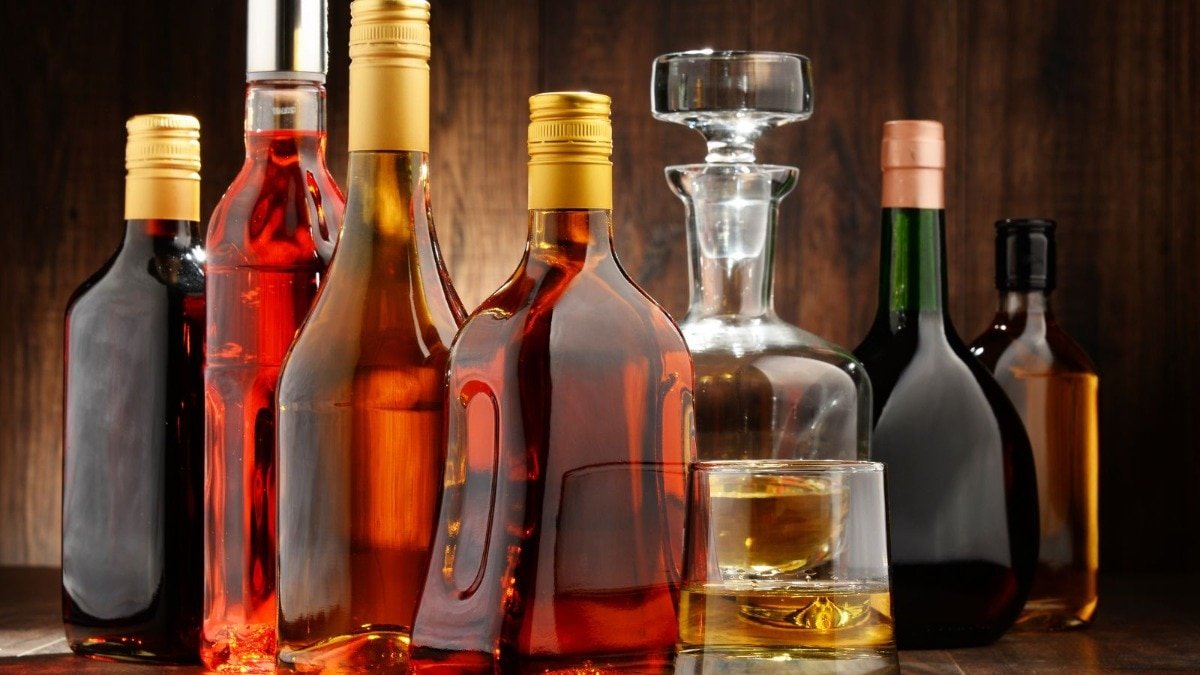
Under the interim bilateral trade framework announced by India and the United States, India has agreed in principle to “eliminate or reduce” tariffs on US wine and spirits, according to a joint statement released by the White House.
The move has raised questions about cheaper imports and stiffer competition for domestic distillers, but early industry responses suggest the immediate retail impact may be limited rather than disruptive.
Why do national brands think “tariff cuts” don’t translate into big retail cuts?
The first reality check is structural: even if customs duties are moved, India’s alcove prices are still made up of non-automatically smoothing layers, state excise regimes, local taxes, dealer structures and, above all, a floor that prevents deep discounting.
A PIB note on the deal stressed that “liquor has been offered at reduced tariffs along with MIP-based formulations,” a design meant to prevent imports from driving prices to the bottom.
This aligns with how the Indian Malt Whiskey Association (IMWA) is reading the moment: “Even with tariff reductions under the proposed India-US trade framework, the downward retail correction will be modest.”
“Even if nominal duties are reduced, the dealer and excise top-ups mean the consumer could see reductions in the 7-8% range at best, not deep cuts,” IMWA told Business Today.
From the producer side, implementation uncertainty is also key
Natwar Aggarwal, Chief Financial Officer, Piccadily Agro Industries Ltd., said, “The price correction is difficult to gauge at this point as it remains to be seen how the rate changes will be interpreted and implemented.” He pointed out the basic limitation: “In India’s alcobev industry, prices are governed at the state level, with each state operating under its own excise duty framework and tax structure.”
Bottom line: Tariff rationalization may change the headline math, but the street price still flows through India’s complex state-driven bottlenecks.
The problem with US stocks: It’s small and the taste isn’t neutral
The second reality check is the market structure. By volume, the Indian whiskey market is overwhelmingly domestic, and the American slice is still a niche.
According to a Times of India report, American whiskey accounts for only a very small portion of India’s whiskey market. With annual sales of approximately 229,000 nine-litre cases, it represents far less than 0.1% of the total volume of whiskey in the country.
Where the pressure might really show up: niches, not mass market
This does not mean that Indian premium players get a free pass. The Indian Malt Whiskey Association itself left room for selective pressure, especially in niche imported segments where tax cuts came first and where certain labels are replacing super-premium domestic offerings.
But even here, the industry’s preferred response is not discounting, but differentiation.
The association’s advice is explicit: “Indian brands should remain nimble, but not in a reactive discount mode.” And: “Deep discounting is not the most sustainable answer; instead, emphasizing authenticity, climate-driven ripening and local craftsmanship will help Indian premium brands maintain price integrity and consumer loyalty even as choice expands.”
Biggest change: Premiumization accelerates and ‘Made in India’ gets export leverage
Where the BTA could matter most is not in undercutting Indian brands, but in raising the premium bar and widening the global lane for Indian labels.
The Indian Malt Whiskey Association sees premiumisation continuing, but not as a US-only story: “Reduced tariffs and access to the wider global portfolio (from the EU, UK and potentially the US) will enrich consumer choice and stimulate demand for higher quality expressions overall.” He sees it as a catalyst that can also benefit the domestic premium categories.
This is also the backbone of the opinion of the CEO of the International Wine and Spirits Association of India, Sanjit Padhi, looking at both the domestic and overseas opportunity:
“The recently announced India-US trade agreement is an encouraging development. While the announcement indicates an intention to rationalize tariffs, we look forward to greater clarity on sector-specific provisions and their implications, particularly for alcoholic beverages.
“Enhanced market access and enhanced trade create new standards, with evolving categories such as Indian single malts now successfully competing with global benchmarks. This will further enable Indian brands and products bottled in India to access international markets, strengthen global partnerships and truly advance the ‘Make in India’ vision on the world stage,” said Padhi.
Indian brands are committed to standards and quality
For Indian spirits, this is the pivot: imports can expand the high-end menu, but Indian premium players increasingly believe they can compete on brand and liquids, without tariff protection.
The Indian Malt Whiskey Association said: “Premium and super-premium Indian whiskies, particularly single malts, have evolved from tariff-protected products to globally competitive spirits with strong quality credentials and distinctive identities.”
And producers are building portfolios that aren’t simple substitutes for American labels. Aggarwal described Piccadilly’s strategy as anchored in provenance-based differentiation, pointing to Indri, “made from indigenous six-row barley,” as well as spirits such as Cashmir and Camikara vodka, arguing, “Given the different provenance, raw materials and production philosophies behind these spirits, they occupy very distinct spaces within the premium and super segment.”