itstargetnews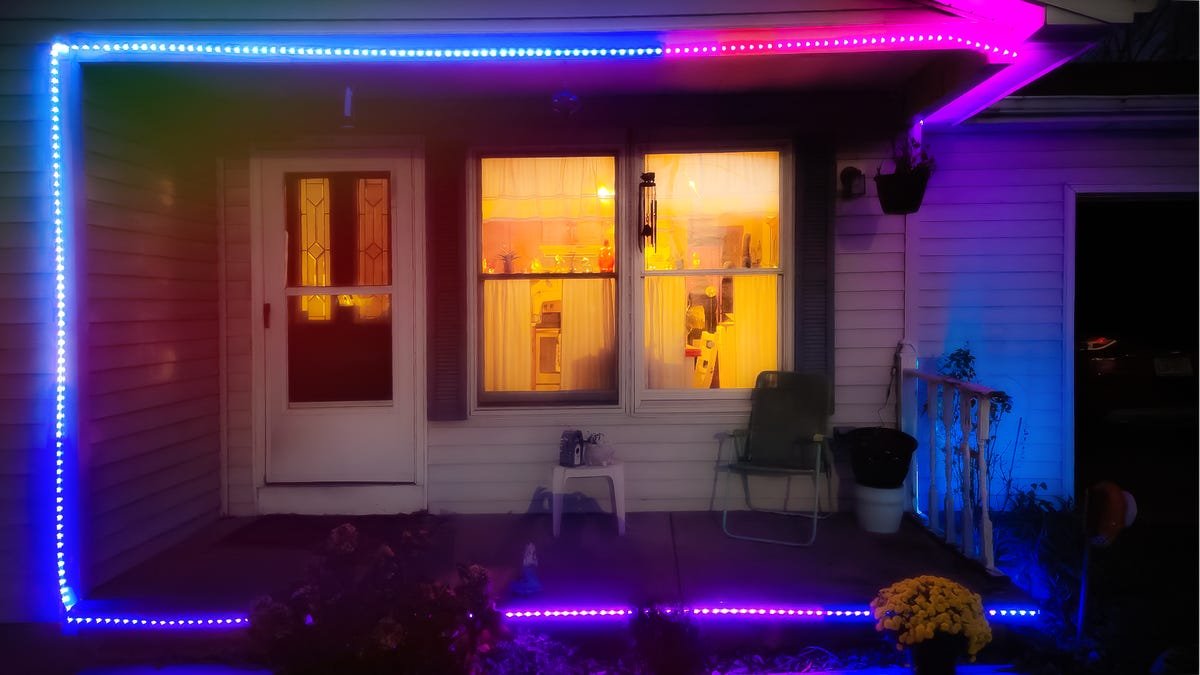
Outdoor lights not necessarily just for the holidays. I’ve been meaning to add some proper new lighting to my patio space, which used to be poorly lit, poorly functioning, solar lanterns. I bought them many years ago and, since then, they suffered the dangers of bad weather and wild animals “curiosity” for a long time.
I’m investigating smart LED strips for a while and decided now was the time to pull the trigger. Like many homeowners, I’ve heard mixed things about outdoor LED strips: some report that they’re surprisingly effective for outdoor lighting, while others say the opposite. In the end, I settled on a couple of sets $30 LED light strips from a relatively unknown brand so they are cheap enough that even if they don’t work as advertised, I won’t be a huge investment.
As it turned out, these ultra-cheap LED strips surprised me in many ways, most of them pleasant, some disappointing, some unexpectedly delightful. Here’s how.
- They are brighter than you expect
The lights were a bit brighter than I expected.
As mentioned earlier, I chose two inexpensive boxes smart LED strips from Amazonmaking sure they are weatherproof and offer the lighting modes I’m looking for (good holiday options as well as neutral ways for the patio strip).
It was a pain to install in places because the cheap plastic clips that the company included kept breaking when I used galvanized concrete nails to attach them to the concrete on my porch and patio. To be fair, clips are not meant to have nails hammered into them. It comes with small screws, which work well on softer surfaces, although the clip part itself isn’t great for snapping and holding the strip in place.
These lights work better for cooler colors than warmer colors, but some traditional lighting might also help.
Once they were on, however, I was very impressed with the brightness of the strips. While not very visible in photos, they are bright enough to shine even in full sunlight and they pop at night. Naturally, the brightness depends in part on the color you choose, with cooler colors really burning. If you desire more light, you can also install aluminum channels or diffusers to increase the light but, for my purposes, the light out of the box is sufficient and a good surprise.
Note that these are not flood lights. They serve well for lighting and mood ambience, but are not really suitable security lighting around the exterior cameras.
2. Weatherproof does not mean “set it and forget it.”
The installation is where I had some issues with the light strip, mostly due to the plastic clips.
The lights I chose are rated IP68 waterproof, meaning they are completely sealed against dust and other particles and should be able to withstand full immersion in water. However, as with anyone with outdoor-proven gear or furniture, this doesn’t mean “waterproof forever.” Even waterproof materials can rot over time. While I haven’t experienced any issues getting my lights to work due to the weather (despite a dramatic change in temperature and rain in the northeast), I have had issues with adhesion.
I used concrete tape to secure the strips during clip installation but over time the adhesive deteriorated and eventually failed, causing the strips to bulge from the surfaces they were attached to. Although not a failure of the light strip itself, it meant I had to go back and attach more clips.
The real issue is also not with the light strip itself but the clips, which deteriorate from exposure to the elements over time. Several of them cracked, so I finally gave in and bought higher quality, stronger metal clips to keep the strips secure. Another option that you can consider if you are installing it yourself is a channel, which has pre-drilled holes and is designed so that the LED light strip is perfectly flat, straight and snug.
3. Automation can be surprisingly addictive
I spent a lot of time playing with the settings and even syncing the lights to the music.
I spent more time than expected tweaking colors, modes and transitions. Especially in the first week, I spent a lot of time with Magic Lantern app which you use to set up lights, tweak settings and play with lighting patterns. You can also sync the lights to the music, so I spent a lot of time looking for playlists that make the best effects and trying things like videos of ambient noise or how the sound effect of a crackling fireplace on the strips. (Hot tip: The sounds of the wilderness produce the right lighting.)
That said, the app UI is terrible. The software is where you’ll find the most issues with a cheap, little-known brand LED strip. It is still easy to use but not attractive. Also, unlike some more expensive options, there is no option to sync these lights with a smart home platform, which is a welcome feature.
4. They change how the space works FELT
The LED light strips that I put outside my house do not draw much energy and they allow me to set the ambiance of my house.
Patio lights are very effective in shaping the mood of a space. The warm lights at dinner time match the sunset or the outdoor fireplace on my patio, while the cooler lights are great for movie night or while grilling. It’s hard to overstate how impactful a simple lighting change can be for outdoor parties, especially at sunset. You can also create a feeling of different zones in a space by changing the lighting profile of each one.
One disappointment, however, is the heat. Because the strips are LEDs, they lean toward brighter, cooler tones instead of warm, dark ones. While the shift in colors toward orange and yellow helps, it will never match the warmth of traditional incandescent lighting unless you spend more for the higher end. Hue or Govee light strip
5. Connectivity can be the weak link for cheap strips
The Magic Lantern app is functional enough, but the UI is not very good.
The only major issue, and the worst surprise, was the connection issues. While the strips have a dedicated remote in addition to app control, they sometimes struggle to register input. They often lost connection to the app while I was playing with it, and reconnecting was always a frustrating exercise in patience and perseverance. On the upside, once you set up a routine or pattern, or just choose a consistent color, almost universally they keep that setting until I change it.
An experiment I would happily repeat
The remote isn’t the best, but aside from that and a few minor installation and software issues, the lights are more than worth their $30 entry price.
Overall, I came away with a positive impression of the smart LED light strips. Aside from some installation and connection issues, I was impressed with their durability, lightness and size. Especially for how affordable it is, it’s an easy solution for upgrading your outdoor lighting or changing the vibe of an outdoor space.
I would say, the next step for me is to add back some traditional lighting fixtures, mostly to address the color temperature issue. For really warm spaces, which I always want for parties at dusk or in the early hours of the night, traditional lighting is definitely superior; Finally, LEDs are a great supplement for large spaces and for brighter lighting. They are also unequaled for control and customization. I hope that spending more on a brand-name product will also give you a better software installation experience.