itstargetnews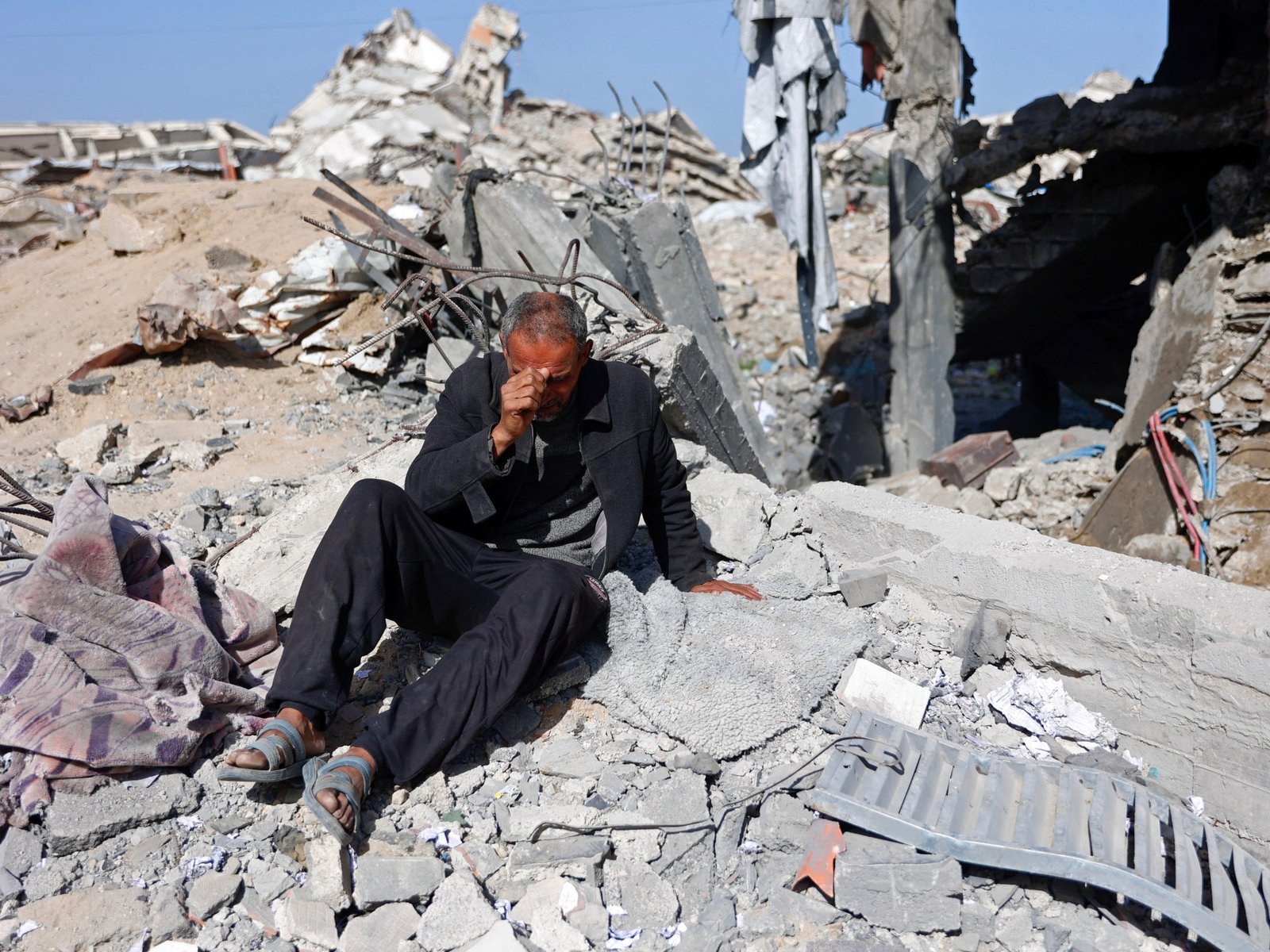
Jared Kushner, the real estate billionaire son-in-law of U.S. President Donald Trump, said at the World Economic Forum in Davos, Switzerland, last month: propose His vision for a “New Gaza”: gleaming skyscrapers, seaside tourism and logistical corridors connecting the demilitarized enclave to the world.
But 3,000 kilometers (1,864 miles) away, in the bombed, dusty landscape of Gaza, not a single brick has been laid, as the tragic reality of the Palestinian territories is now measured not in new buildings but in tons of ruins — specifically, 61 million tons its.
Israeli airstrikes may have abated following a fragile “ceasefire” between Israel and Hamas in October, but the killings have not stopped, signaling a new, calmer war.
Meanwhile, potential imports of cement and steel rods are unclear, and Israel has blocked access to these vital construction materials.

According to the United Nations, 92% of Gaza has been destroyed during Israel’s more than two years of genocidal war, and its reconstruction costs estimated $70 billion.
Yet analysts and urban planners warn that Gaza’s reconstruction is not about restoring Palestinian life but about “re-engineering” it – turning the basic human right of housing into a tool for political blackmail and so-called demographic change.
“Reconstruction is not the ‘second day’ of war; it is the continuation of the war through bureaucratic and economic means,” Ihab Jabalin, a researcher specializing in Israeli affairs, told Al Jazeera.
“cement faucet”
Jabarin believes that for the Israeli security establishment, reconstruction is the ultimate bargaining chip, allowing Israel to move from a strategy of direct military occupation to a strategy of “fluid sovereignty.”
“Whoever owns Gaza’s oxygen – the cement tap – owns its political and security shape,” he said, adding that Israel aimed to establish a unique system of “irresponsible control” in which it would have veto power over the way daily life in Gaza was conducted without the legal obligations of the occupier.
The system relies on translating the potential entry of building materials and aid into political decisions through what Jabareen calls three levels of extortion:
- Security ransomware: Linking material flows to “long-term surveillance” creates a permanent dependence in which Gaza will be rebuilt to a scale that can be “shut down” at any time.
- Political blackmail: Use reconstruction to determine who will rule. “Whoever distributes the cement distributes the legitimacy,” Jabarin said, suggesting that Israel would only allow reconstruction under a “technocratic” acting government that meets its security needs.
- Appeasement blackmail: Turning the basic hope of survival – having a roof over your head – into a “reward” for silence rather than a right.
“Phoenix Project”
Before these political struggles began, Gaza remained effectively buried under the rubble of two years of Israeli bombardment. A report released by the United Nations Development Program in November painted a grim picture: The debris from the war created “unprecedented obstacles” that could take seven years to clear — and only under “ideal conditions.”
“Gaza is one of the most affected places on earth,” the report said.
Faced with this reality, Palestinian experts rejected the top-down reconstruction model proposed in Davos. Abdel Rahman Kitana, professor of architecture at Birzeit University in the occupied West Bank, noted “Phoenix Project”a framework developed by the Alliance of Gaza Strip Cities as a viable local alternative.
“Reconstruction is not just about restoring what was destroyed, it is about rebuilding lives,” Kitana told Al Jazeera Arabic, warning that solutions to Gaza’s problems must be disjointed. Instead, he advocates a “comprehensive approach” rooted in the Phoenix Plan, whereby rubble is treated not as waste but as a resource that can be recycled for land reclamation.
Kitana insists that any successful reconstruction plan for Gaza must be bottom-up. “We cannot succeed without the people themselves. … They know their needs and their dreams,” he said, warning that ignoring local institutions would lead to a “fragile, alienating environment.”
Israel’s “Dual Use” Rules
However, both the United Nations’ seven-year reconstruction timetable and the Phoenix Plan face a key obstacle: Israel’s “dual purpose” List.
Historically, Israel has banned items such as fertilizers and steel pipes on the pretext that they could be used for military purposes. Today, that list has expanded to include more essentials, including oxygen bottles, cancer medications and water filters.
Jabalin said the lockdown was no longer an excuse for security but a “philosophy of governance”.
“Israel has turned the ‘dual use’ excuse into a mechanism for indefinite delay,” he said.
By requiring every bag of cement to be approved on a project-by-project basis, Jabalin said, Israel ensures that reconstruction remains a permanent “project,” which exhausts donor countries and agencies and leaves the Palestinian government in a “constant state of begging.”
“Silent population project”
Experts say that while Israel blocks key materials locally, the Trump administration has created a “political illusion” abroad. Driven by Trump, the Gaza Peace Council pledged to add $10 billion to Gaza’s GDP and build a “New Rafah” with 100,000 housing units.
Jabalin believes the plans, which include “waterfront properties” and “industrial estates,” are a form of “silent population engineering.”
“They are trying to shift the Palestinian cause from a national rights issue to a real estate issue,” he said. The goal, he argued, was to design a Gaza that would be “economically useful” to the region but “hollow out the state.”
Jabarin said that by focusing on “investment” and “tourism” while ignoring rubble and mass graves, the plan sought to “legitimize a political fantasy”. “If you can’t displace a Palestinian by force, you can displace his idea of home by redesigning his space.”
So who will ultimately build this “New Gaza”? Jabalin warned that “privatization of the occupation” would occur even if Israeli companies did not enter Gaza directly.
“Reconstruction is a series of indirect profits,” he noted, adding that the logistics of inspections, the security companies managing the crossings and the insurance companies underwriting the risks would all generate revenue for Israeli or allied companies.
The rebuilding contract itself became a political filter. “This creates an international ‘obedience market,'” Jabalin said. “Objective donors were excluded and contractors who raised sovereignty concerns were replaced.”
“Silent Transfer”
The most dangerous aspect of such a policy, Jabalin said, is the “weaponization of time itself.”
With UN assessments suggesting that debris clearance alone could last until 2032 and full reconstruction of Gaza until 2040, “waiting” becomes a displacement policy.
“Time breaks down society,” Jabalin said.
He said Israel was betting on “rational migration” – that after years of living in tents, Palestinians would leave not because they were forced by tanks but because they were exhausted by fear of the future.
“The international community did not condemn the long wait. Israel realized that bombing would bring condemnation, but bureaucratic delays would only bring silence,” Jabalin said. “If fighters fail to replace them, waiting may do the trick.”