itstargetnews
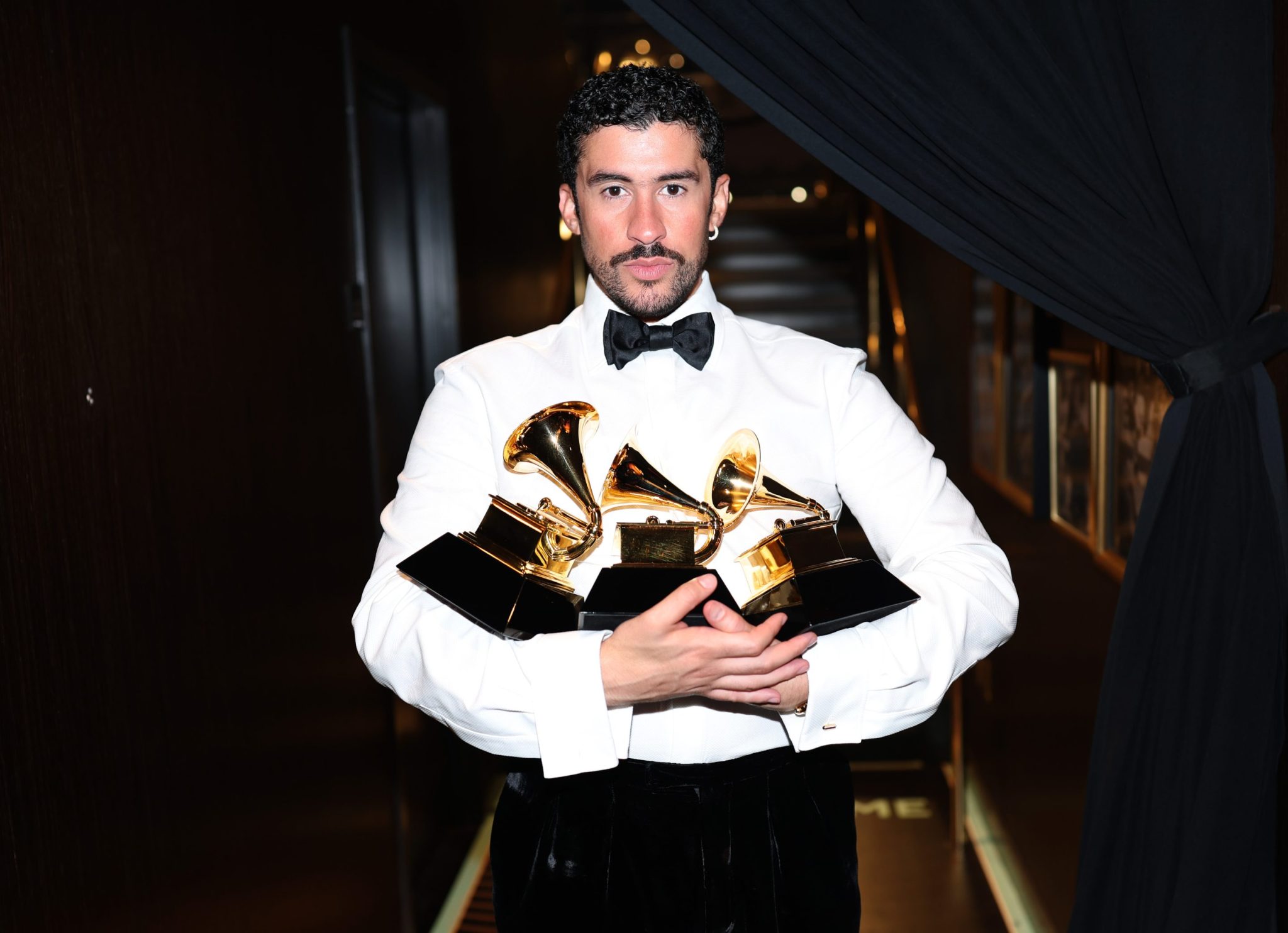
Bad Bunny’s momentum is reaching a fever pitch. Fresh off a historic night at the Grammys, the legendary Puerto Rican rapper, singer, and songwriter is set to take over America’s biggest stage at the Super Bowl, cementing a decade-long rise that has revolutionized the American music industry.
In just ten years, Bad Bunnywhose real name is Benito Antonio Martínez Ocasio, transformed from a SoundCloud rapper to a six-time Grammy winner, becoming the first Latin and Spanish-speaking artist to win album of the year. On his way to the Super Bowl, the artist made a record-breaking impact on the US economy.
Since 2018, the artist has embarked on six concert tours. His latest tour, No Me Quiero Ir de Aquí—”I don’t want to leave here” in English—hosted at the José Miguel Agrelot Coliseum in San Juan (known locally as “El Choli”), generated an estimated $400 million from 31 concerts, according to Wells Fargo. More than that ticket sales, the 600,000 attendees brought to the residency generated an estimated $733 million for Puerto Rico, according to Associated Press. The artist’s past concerts have also fetched huge sums. His Hottest World Tour BECOMES the highest-grossing tour of a calendar year, bringing in more than $435 million across 81 shows and 1.9 million ticket sales (although Taylor Swift broke the record the following year by nearly $600 million).
Bad Bunny has also repeatedly topped the Spotify charts as the most streamed artist worldwide, the latest to win the title of 2025 with almost 20 billion streams.
This is not the singer’s first appearance at the Super Bowl. In 2020, the Puerto Rican native performed with Shakira and Jennifer Lopez. But since then, the artist has transformed himself from a featured artist to an international phenomenon. reported value $100 million.
From SoundCloud to the Super Bowl
Born in Bayamón, Puerto Rico, a Municipality in the Outskirts of San Juan, Bad Bunny raised in a lower-middle-class household. His father is a truck driver and his mother is an English teacher. The singer worked at a grocery store in college. In his off time, he uploads songs he makes himself to SoundCloud, the world’s largest audio platform. In 2016, his song “Dile” got more than one million streams. The 22-year-old singer soon had producers blowing up her phone.
Bad Bunny’s path from SoundCloud artist to a global platform has been accelerated by strategic collaborations and a cultural environment ripe for Latino artists. The artist broke into a mainstream American audience through collaborations with artists such as Cardi B and Drake. The partnerships were a trade off for Bad Bunny and American artists, according to cultural historian Jared Bahir Browsh.
“They internationalized their fan base while gaining a footing in English-speaking countries through collaborations,” Browsh said. luck.
Leverage international fame for market expansion
The decision to have Bad Bunny perform at this year’s halftime show was a calculated move by the NFL and Roc Nation — Jay-Z’s entertainment company that has been running the halftime show since 2019 — to capitalize on the artist’s international appeal. International audiences make up a large portion of NFL viewing. In a conversation with ESPN in November, Marissa Solis, the NFL’s senior vice president of global brand and consumer marketing, said that the US Latino population is a “critical area of growth.”
Browsh refutes the idea that the NFL chose Bad Bunny as a political stunt. The artist sparked controversy last year for refusing to tour the US due to ICE concerns, angering critics and prompting the creation of a spinoff halftime show managed by Turning Point USA, the conservative nonprofit founded by Charlie Kirk. However, Browsh said the NFL and Roc Nation’s selection of Bad Bunny was purely a business decision.
“He’s coming off a big tour and he’s coming off as the top artist in terms of streaming and record sales last year,” Browsh said.
Latinos at home and abroad are the NFL’s fastest growing fanbase. And about one-third of NFL fans are from outside the US, according to Nielsen. The NFL is leaning on its fanbase’s shifting demographics, launching a global partnership program in 2022 to expand its international reach.
“It’s a business and so there’s always a tradeoff,” Browsh said of Bad Bunny’s halftime performance. “He got the visibility of the biggest sporting event in the US and they got access to new markets.”
This story was originally featured on Fortune.com