itstargetnews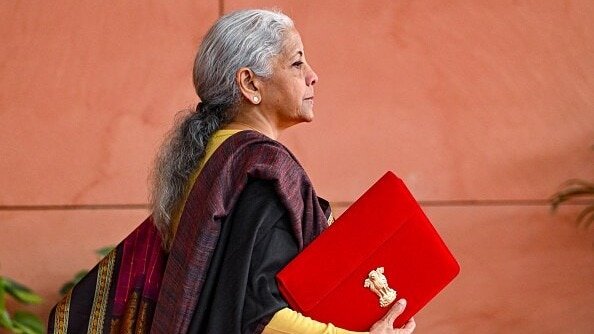
The government will transfer about Rs 25.44 billion to the states in FY27 through tax refund and other statutory communications, Union Finance Minister Nirmala Sitharaman said in the Lok Sabha on Tuesday.
Reject accusations of denying certain states Budget allocationsSitharaman said the Center has adhered to the recommendations of the 16th Finance Commission including during the period 2018-2019 and the period 2020-2023. He stressed that the transfers to the states are being made strictly as per the constitutional framework.
He added that in its report, the Finance Commission stated that during the years 2018-19 to 2022-23, the amounts required to be transferred from the Central Government to the State Governments were completely released. As a result, it was said that there is no room for any doubt on this issue for the states.
The Finance Minister said that the Union Budget 2026-2027 lays great emphasis on sectors like biopharmaceuticals, animal husbandry, agriculture and fisheries. He added that the Center is open to working with states to set up textile mega parks as part of its industrial development drive.
Sitharaman also highlighted the government’s efforts to expand access to technology and education, stating that opportunities to learn artificial intelligence are no longer limited to a privileged few.
“Total resources to be transferred to states, including transfer of states’ share of taxes and releases under centrally sponsored schemes in 2026-27, is estimated at Rs 25.44 billion,” he told the House.
Fee and surcharge
“States cannot have it both ways,” Union Finance Minister Nirmala Sitharaman told the Lok Sabha, stressing that states should assess whether they are getting their full share of the net revenue that makes up the divisible pool, rather than focusing on gross tax revenue. He clarified that the cess and surcharge are excluded from the divisible pool as mandated by the Constitution and therefore must be deducted from the gross receipts. The Centre, he said, collects cesses and surcharges strictly in accordance with constitutional provisions, with cesses collected for specific and earmarked purposes.