itstargetnews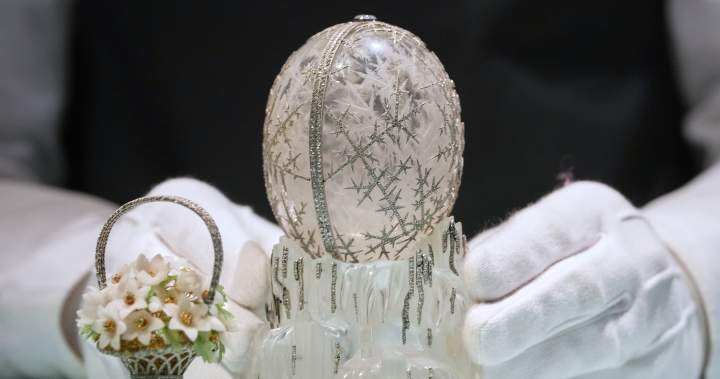
A rare crystal and diamond Fabergé egg made for Russia’s ruling family before it was toppled by the revolution broke records on Tuesday when it sold at auction for £22.9 million ($30.2 million).

The winter egg, which has been compared to the iconic Mona Lisa, is just one of seven sumptuous ovoids left in private hands, Christie’s auction house from London announced.
The 4-inch (10-centimeter) high egg is made of finely carved rock crystal, covered with a delicate platinum snowflake motif and 4,500 tiny diamonds. It opens to reveal a removable small basket with bejeweled quartz flowers that symbolize spring.
Faberge’s Winter Egg went on display at Christie’s auction rooms in London on Thursday, November 27, 2025, and is expected to fetch more than £20 million when it is auctioned on December 2.
AP Photo / Kirsty Wigglesworth
The sale price, which included a purchase premium, surpassed the $18.5 million paid at a 2007 Christie’s auction for another Fabergé egg created for the Rothschild banking family.
Craftsman Peter Carl Fabergé and his company created more than 50 eggs for the Russian Imperial Family between 1885 and 1917, each one particularly unique and containing a hidden surprise. Emperor Alexander III started the tradition by giving an egg to his wife every Easter. His successor, Nicholas II, gave away his wife and mother.

Get daily national news
Get the day’s top news, political, economic and current affairs headlines delivered to your inbox once a day.
Tsar Nicholas II ordered an egg for his mother, the Dowager Empress Maria Fyodorovna, as an Easter gift in 1913. It was one of two eggs made by designer Alma Pihl; her other egg is owned by the British royal family.


The Romanov royal family ruled Russia for 300 years before the 1917 revolution overthrew them. Nikola and his family were executed in 1918.
Bought by a London dealer for £450 when cash-strapped communist authorities sold off some of Russia’s art treasures in the 1920s, the egg changed hands several times. It was believed lost for two decades until Christie’s auctioned it in 1994 for more than 7 million Swiss francs ($5.6 million at the time). It was sold again in 2002 for $9.6 million.
Each time the egg was sold, it set a world record price for a Fabergé object, Christie’s said.
Margo Oganesian, head of Christie’s Russian art department, called the egg the “Mona Lisa” of decorative arts, a supreme example of craft and design.
There are 43 surviving imperial Fabergé eggs, most in museums, Christie’s said.
© 2025 The Canadian Press