itstargetnews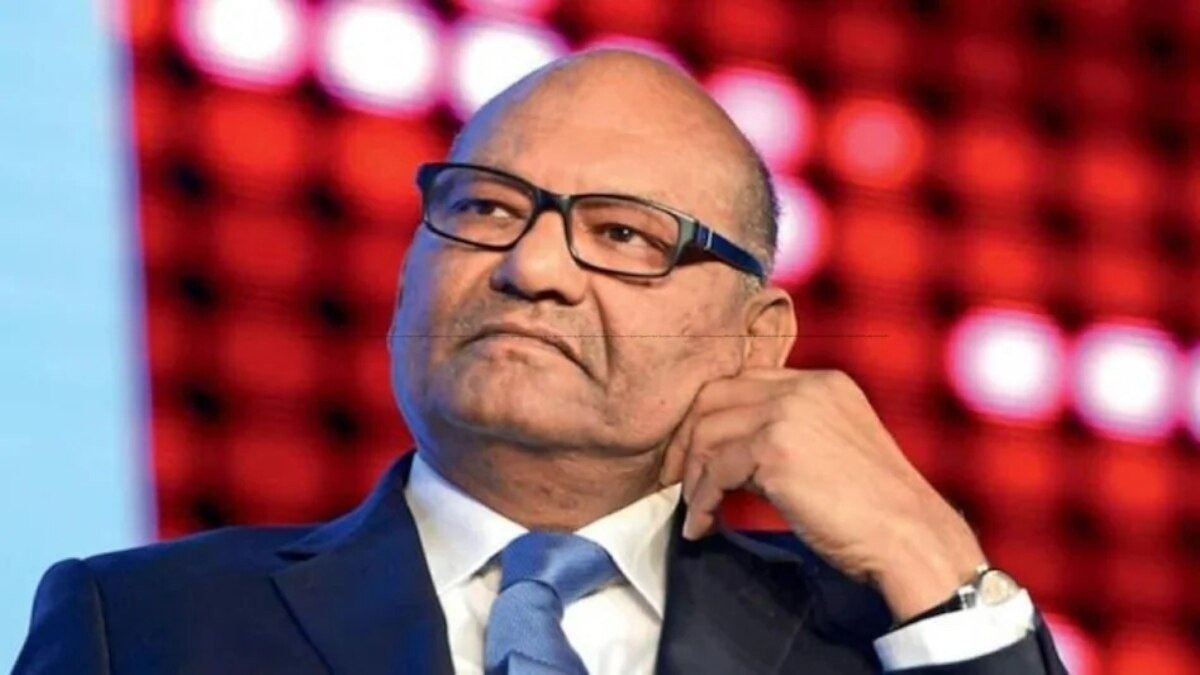
Against the backdrop of turbulent geopolitics in 2026 and India’s heavy reliance on energy security, Vedanta’s Anil Agrawal took to microblogging platform X, highlighting the need to liberalize India’s heavily regulated oil and gas sector with the need to streamline rules in the crude oil exploration and production (E&P) space.
He also stressed that to ensure energy independence the country needs thousands of drilling rigs that advocate to open the sector and lease rigs not only to startups and small businessmen, but also consider opening the doors to individuals and farmers, a model that was implemented by the United States, two decades ago, once an energy-dependent nation like India.
India currently imports nearly 90% of oil and gas, has a potential of nearly 300 billion barrels equivalent, which is more than 30 times Guyana’s potential, he said, can be unlocked by accelerating oil exploration, designing incentive schemes and doubling exploitation licenses for more private players.
“This sector is one of the few that does not have any protection or government incentives like PLI. To unlock India’s full potential, we need more exploration. Today, there are hardly 200 active licenses in India when there should be 2,000,” added Agarwal.
Regulations Quenching the Black Gold Rush
India’s oil and gas sector faces implementation hurdles that limit the pace of investors, with domestic production at around 600,000 bpd against demand of 5 million bpd. Policies such as NELP (1999-2019: profit-sharing tendering and allowances) led the way, followed by HELP (2016: revenue sharing for unified oil/gas licenses) and DSF (for small fields). HELP via OALP has awarded over 254 contracts in 9 rounds, with OALP-X (192,000 km²) ongoing until May 2026, but DGH approvals and MoEFCC clearances typically take 2-3 years. ONGC has 61% PEL acreage through legacy nominations, even as auctions widen opportunities amid evolving rules. Agarwal argues that this falls short: “Today, there are hardly 200 active licenses in India when there should be 2,000,” calling for deregulation to match the US-style scale and unlock the full potential of 300 billion barrels.
OMCs are increasing under the Ministry’s mandate, but the limits are showing
India’s oil marketing companies (OMCs), Hindustan Petroleum Corporation Limited (HPCL), Bharat Petroleum Corporation Limited (BPCL) and Indian Oil Corporation Limited (IOCL) have been ordered by the Oil Ministry to expand into upstream exploration and production (E&P) activities to strengthen energy security, although results remain mixed amid state dominance. ONGC, the national flagship, operates the KG-D5/98/2 cluster in the Krishna-Godavari basin, aiming to produce a maximum of 45,000 bpd of oil and 10 million standard cubic meters per day (MMSCMD) from new wells drilled in recent years. Oil India Limited advanced its upgrade of the Numaligarh-Siliguri pipeline to a capacity of 5.5 million metric tonnes per annum (MMTPA) by the end of 2025 while partnering with BPCL on a massive refinery and petrochemical complex in Andhra Pradesh. BPCL’s upstream arm Bharat PetroResources Limited (BPRL) is pursuing drilling in the Cambay Basin along with bids for international blocks; HPCL develops marginal fields like Hirapur and Sanganpur through tie-ups with ONGC.
Petroleum Minister Hardeep Singh Puri stated at India Energy Week 2026: “India’s energy strategy is anchored on diversification, resilience and forward-looking transitions…through successive OALP and DSF tender rounds, along with continued policy reforms.”
American Exploration Model from Oil Starvation to Oil Sufficient
Two decades ago, the US was heavily dependent on hydrocarbon imports and geopolitically exposed. Deregulation transformed this by allowing small entrepreneurs to even drill in backyards and farms through tax incentives, streamlined permits, and strong private land rights that fueled the shale fracking revolution, propelling the U.S. to net energy exporter status in 2019. Jobs exploded in rural areas; production costs plummeted, stabilizing prices for everyone.
Instead, highlighting India’s E&P output, Agrawal says, “India has the best talent, 10% of global E&P professionals are Indian, they work from Texas to the Middle East, and sedimentary resources dwarf Guyana’s discoveries.”
Just as India achieved food self-sufficiency through the push of Green Revolution policy and farmer incentives, energy calls for a similar bombardment. Open Surface Licensing Policy (OALP) rounds have granted more than 1 million square kilometers since 2019, but output growth is lagging: ONGC output has declined by around 5% annually as mature fields decline, while private assets such as Cairn’s Rajasthan block are nearing peak. Vedanta aims to quintuple production; domestically, production needs to increase tenfold to fuel Viksit Bharat’s ambitions.