itstargetnews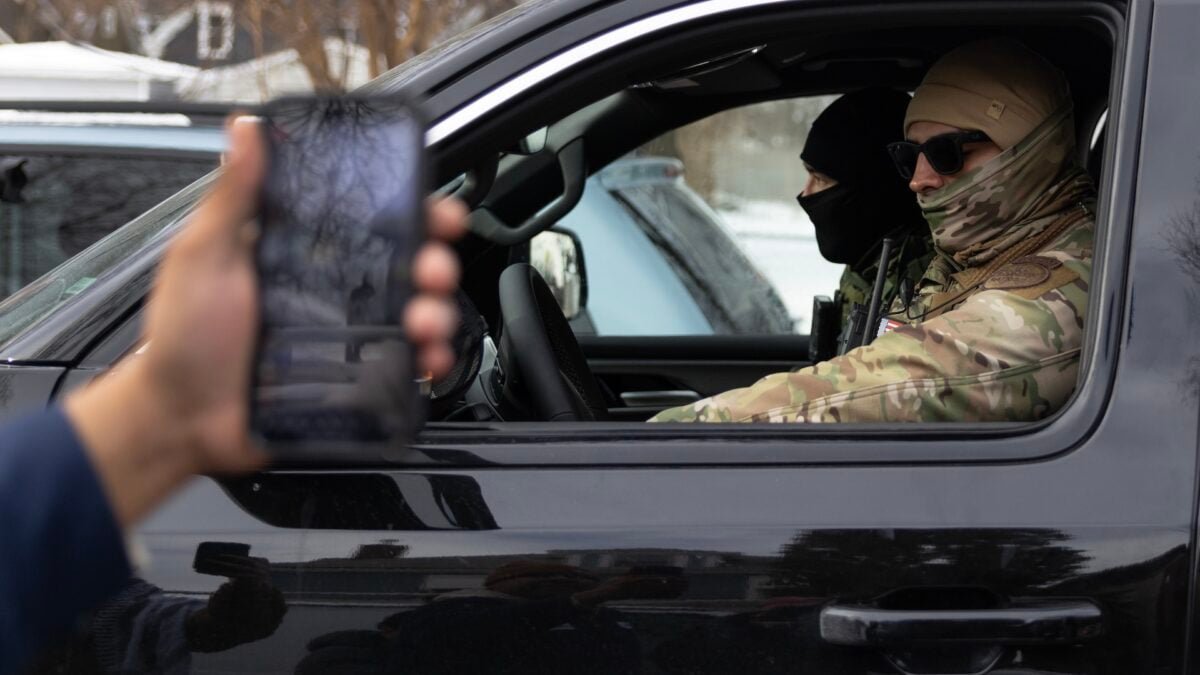
Rep. Ritchie Torres, a Democratic congressman from New York, said he would introduce legislation that would require all ICE and CBP agents to wear a QR code on their uniforms. The idea is that people on the street can scan the code to get information such as the officer’s name, badge number, and the agency they work for.
But the proposal has sparked debate online over whether such a rogue agency would comply with the rules. And perhaps more importantly, whether adding technology is the right solution when a requirement to simply add names to officer uniforms would be a more practical fix.
Axios first reported of the proposed legislation on Tuesday, and a representative for Torres told Gizmodo that the plan is to introduce the bill in the House next week.
“The concept is that it can limit confrontations with an official going south,” Benny Stanislawski, director of communications for Rep. Torres, told Gizmodzoo on Wednesday. “Someone can take a picture from a distance without having to interact with the officer, because we’ve seen instances of ICE hiding their faces and badges and not reacting positively to requests for identification.”
The law is called Quick Recognition (QR) Act, and it will require the Department of Homeland Security to create a verification page that lists:
- Full name of the officer
- Badge number
- Agency (ICE or CBP)
- Operational unit or office (field office or sector)
- Photo verification (optional)
- The verification timestamp confirming the active duty status
The law specifically states that the pages must not list the home address or phone number of the officers.
Many of the secret police officers currently on the streets of America do not wear badges or other means of identifying them easily to the public. President Donald Trump’s masked goons are terrorizing the nation today, arresting residents under false pretenses, attack on protestersand even shot a woman dead in Minneapolis. It’s all in the name of “immigration enforcement,” even though Trump’s real goal is to cleanse the country of anyone who isn’t white and brutally punish those who oppose him.
And it seems Torres genuinely thinks QR codes can help. Stanislawski pointed out some police uniforms in the Dominican Republic with QR codes for identification purposes. Below you can see the QR code on the left sleeve of the uniform.

© Shutterstock / Lev Radin
Notably, Dominican Republic police uniforms also include the officer’s agency, rank, and name, in addition to QR codes. And it seems that including that in Torres’ proposed legislation makes more sense than requiring the QR code alone. If officials only recognize members of the public who have phones to use—almost a sort of tech tax—where does that leave people who may not have access to a phone for one reason or another?
Torres’ proposal sparked a lot of debate on social media about what the law would actually do, with some people expressing extreme skepticism that it would provide more accountability. “Scanning officers’ QR codes while they bash my face and steal my phone,” one Bluesky user wrote in response to Torres.
That joke about a stolen phone probably refers to a new article from ProPublica about a 16-year-old in Houston, Texas, who was placed in a chokehold by federal agents and recorded most of the encounter. The agents took his phone, and he used the Find My feature to track it to a vending machine where people can sell used phones. The vending machine was near an ICE detention center, according to ProPublica, and agents apparently sold his phone.
The ICE agent who shot and killed 37-year-old Renee Good, identified by the Star Tribune as Jonathan Ross, had his face covered and did not appear to have any type of identification that could identify him individually. His chest and back read “police” in large letters and “federal agent” in smaller letters.
Ross was only identified in the local newspaper after DHS said he had a previous incident with an immigrant in a car. That allowed Star Tribune reporters to comb through federal court records to find who they were talking about. Without that detail, it’s unclear how long Ross’ identity has been known. And it remains to be seen if a QR code helps anything.