itstargetnews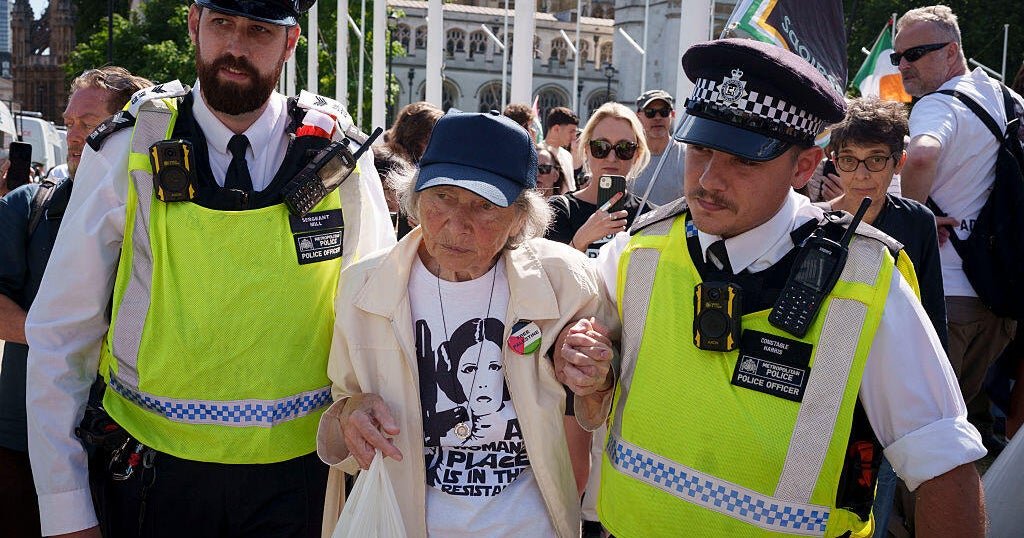
Britain’s two biggest police forces announced on Wednesday that officers would take an “enhanced approach” to combating anti-Semitism, arresting protesters who use certain slogans and phrases, in response to what they said was a rise in anti-Jewish hate crimes in the UK.
The announcement was the response, the London Metropolitan and Manchester police forces said on Sunday terrorist attack in Bondi BeachAustralia, targeting a Hanukkah event that killed 15 people. Police also cited a number of incidents on British soil, including a vehicle and a knife attack outside a synagogue in Manchester October in which two Jews died.
“Anti-Semitic hate crimes have increased, protests have intensified and online abuse has increased since 2023,” the police force said. “Increased fear in Jewish communities and the high number of terrorist attacks foiled in recent years calls for a heightened response.”
“The words and chants used, especially in protests, are important and have real-world consequences,” the statement said. “Now, in the context of an escalating threat, we will recalibrate to be more decisive.”
The force said British prosecutors had “consistently advised” officers that “many phrases that cause fear in Jewish communities do not meet the thresholds for prosecution” under current UK hate speech laws, so the new approach would largely work under the existing Public Order Act.
“We know communities are concerned about placards and chants such as ‘globalize the intifada’ and those using them at future protests or targeting them should expect the Met and GMP to take action,” police said. “Violent acts have occurred, the context has changed – words have meaning and consequence. We will act decisively and make arrests.”
Richard Baker/in pictures/Getty 
“Current laws are inadequate,” said a statement attributed to Metropolitan Police Commissioner Sir Mark Rowley and Manchester’s Chief Constable Sir Stephen Watson, adding that the force welcomed the government’s planned review of existing public order and hate crime legislation.
“Jewish communities across London, Greater Manchester and the rest of the UK are already worried and scared,” the police said in a statement, with the attacks in Australia and Manchester “only adding to this”.
Police said officers would be notified of the new approach, calling the measures “practical and immediate” but offering few details on what, other than the specific phrase about a global “intifada,” could now be considered illegal behavior.
Police patrols around synagogues, Jewish schools and community centers are said to have already been stepped up.
“Our intent is clear: to create a hostile environment for criminals and a safer environment for Jewish communities, while protecting legitimate protests,” police said. “It is possible to protest in support of the Palestinian people without intimidating Jewish communities or breaking the law.”
One of the leaders of pro-Palestinian protests in the United Kingdom, Ben Jamal, director of the Palestine Solidarity Campaign, criticized the announcement by British police, calling it “another low-level political crackdown on Palestinian rights protests,” according to CBS News partner BBC News.
He said there was no consultation with his organization “before making this far-reaching statement about our rights”.
“The horrific massacre in Sydney, Australia should not be used as justification for further suppression of the fundamental democratic rights of protest and free speech in this country,” Jamal said.
British Jewish advocacy group the Committee of MPs said in a social media post that its members “strongly welcome this necessary intervention” by the police force, which they said came “following repeated calls from the Committee of MPs and others”.
Australia has a different approach
Authorities in Australia are still in the early days of their investigation into the Bondi Beach attack, but they have faced harsh criticism of the Jewish community in Sydney and overseas due to a perceived shortage preparedness given the documented rise of anti-Semitism.
Prime Minister Anthony Albanese said that it was “motivated by the ideology of the Islamic State”, and he hastened to label it as “an act of evil anti-Semitism, terrorism”.
Albanese said just hours after the attack that his government was “ready to do whatever it takes. That includes the need for stricter gun laws.”
Police said the suspects – father and son – used rifles and shotguns legally owned by an elderly man. Albanese has proposed new laws that would limit the number of guns a licensed owner can acquire, and review how existing licenses can be renewed over time.
Chris Minns, the premier of New South Wales state, where Bondi Beach is located, said on Monday that the attack “requires a strong response”, announcing that more than 320 police officers would be “deployed today and we will continue to increase that number”.
He said on Tuesday that the country was considering reforms that could include denying permission for protests after terrorist events.
“I worry that mass demonstrations in this combustible situation with our multicultural community could ignite a flame that would be impossible to put out,” Minns told reporters, according to The Guardian newspaper. “In many cases, especially with restrictions on protests, there are constitutional issues. So it has to be drafted in a special way. We have to be very clear about the appointment and the reason for it. I’m absolutely clear about that. I’m concerned about the inflammatory situation and the harmony in the community. That’s why we would introduce this bill. It’s started, the drafting process has started. But when it’s done, I’ll let you know.”
The country’s prime minister added, however, that there were “many conflicts that the protests lead to violence because some kind of chanting is heard, but the events on Sunday are not connected to the protest at all.”
Saeed KHAN/AFP/Getty 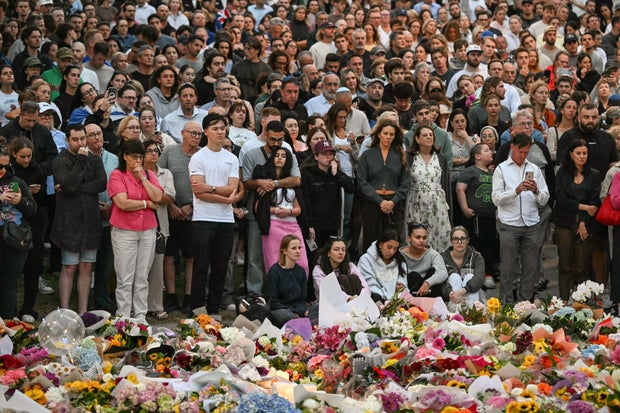
Minns said the newly enacted law would not target any specific group, but rather be a “general rule” only in the event of a terrorist incident.
Albanese, speaking in a radio interview on Wednesday, highlighted some of the measures his government has already taken to combat anti-Semitism, including appointing the first national envoy dedicated to the topic.
“We’ve strengthened legislation to tackle anti-Semitism and hateful behavior — criminalizing hate speech that advocates violence,” Albanese said, also noting “the turning point banning the Nazi salute and symbols of hatred” adopted last year.
“We have strengthened the protection of Jewish communities,” the prime minister said, adding at the end: “There is more to do.”