itstargetnews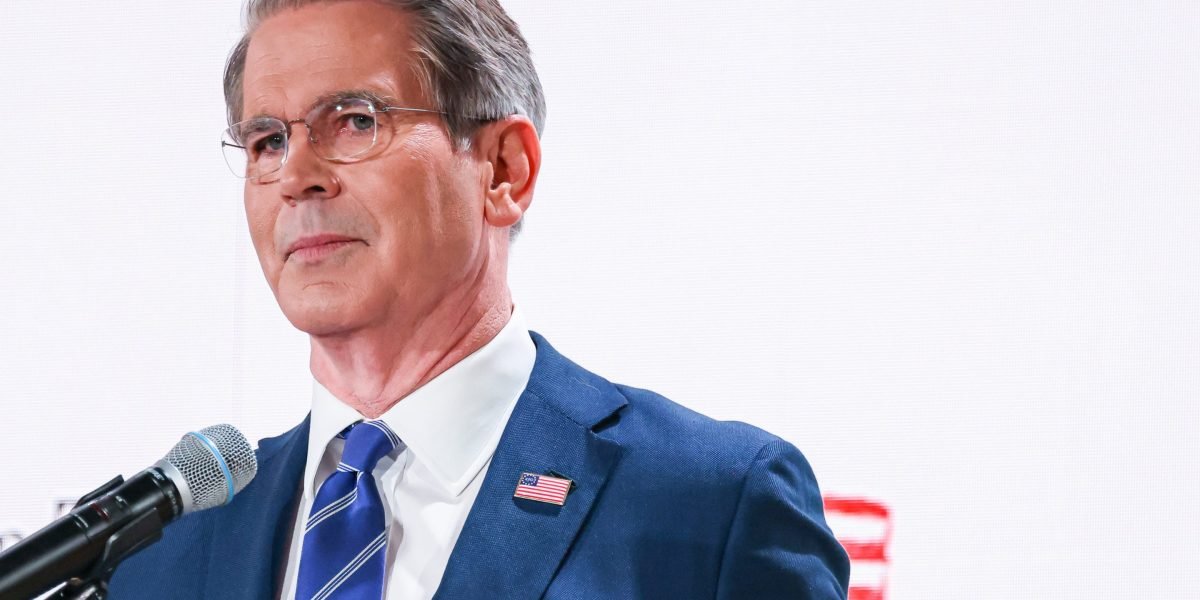
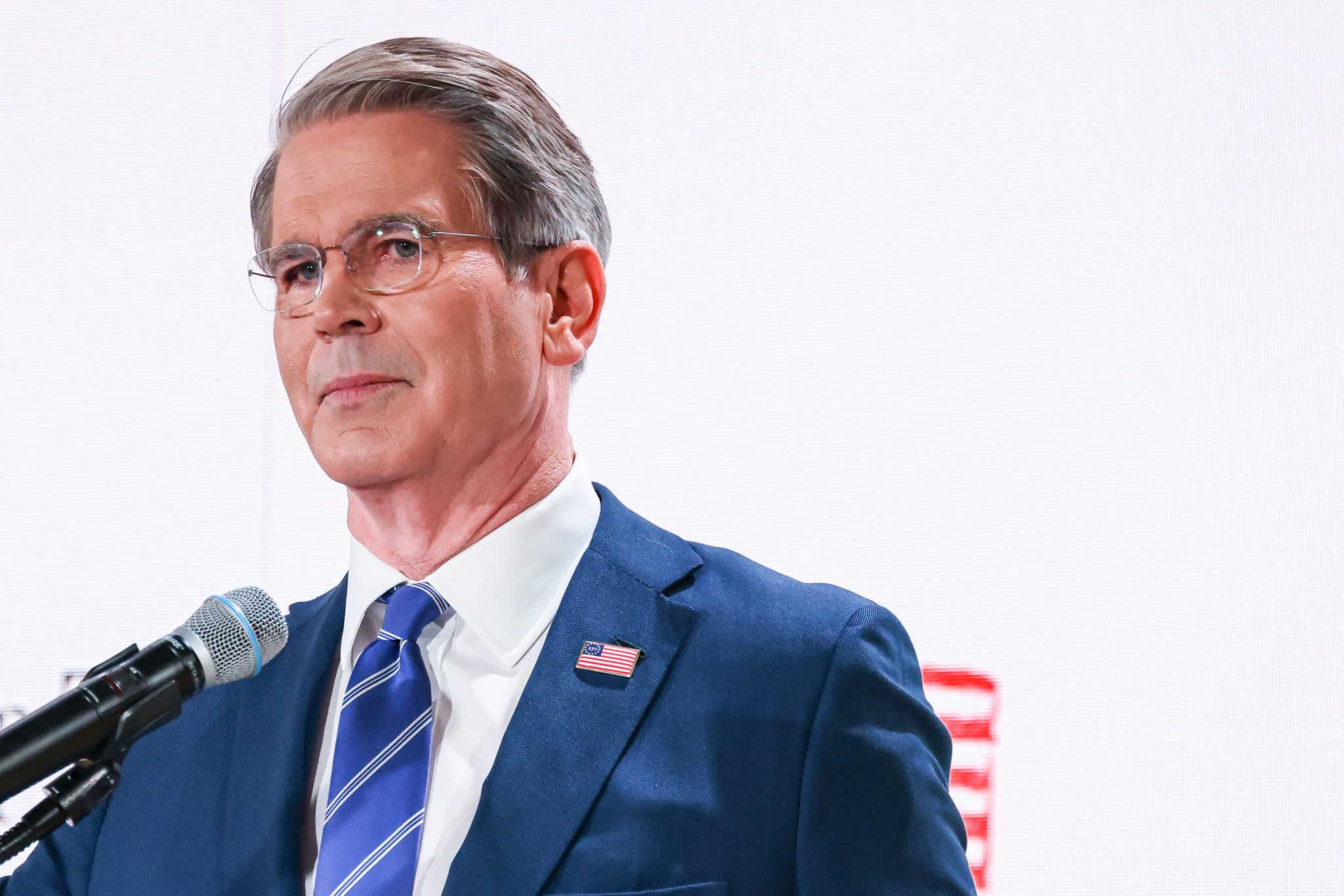
US Treasury Secretary Scott Bessent escalated his war of words with Canadian Prime Minister Mark Carney on Wednesday, urging the former central banker to “do what he thinks is best for the Canadian people, not his own virtue signaling,” as he recounted a tense post-Davos exchange, with fallout from Carney’s extraordinary speech at the World Economic Forum on a “destruction.”
Speaking in Washington, DC with CNBCby Sara Eisen in a “Squawk Box” interview on the sidelines of the administration’s “Trump Accounts” summit, Bessent said he was a participant in the follow-up call after Davos between Carney and President Donald Trump. This speech was described very differently in Ottawa and Washington, with Carney suggesting that he was “digging” and strengthening his message to Trump, while Bessent argued that the Canadian leader “walked” in what he said on the Davos stage.
“I’m on the call,” Bessent said, before launching into a remarkably personal critique of Carney’s political pivot from technocrat to elected leader. “In my investment career, I’ve seen what happens when a technocrat tries to pivot and become a politician—never succeeds.”
Carney turned his eyes to Ottawa when Bessent’s comments were presented and stated bluntly: “To be absolutely clear, and I said this to the president, I mean what I said in Davos,” he told reporters on the way to a Cabinet meeting. “Canada is the first country to understand the change in US trade policy that (Trump) has initiated, and we are responding to that.” He said he also explained Canada’s arrangement with China to Trump, explaining that it had secured 12 new deals on four continents in six months, and that Trump was “impressed.”
‘Virtue signaling’ and USMCA warnings
Bessent described Carney’s posture towards Trump as more about branding than the national interest, accusing the prime minister of rising to power with “an anti-American, anti-Trump message” that could return the United States–Mexico–Canada Agreement (USMCA) for renegotiation. “That’s not a good place to be when you’re dealing with an economy that’s bigger than you and your big, biggest trading partner. Ultimately, I think we’re going to be in a good place, maybe not a straight line.”
Bessent also issued a sharper warning: “I’m not going to pick a fight going to the USMCA to score some cheap political points. You’re either working for your own political career or you’re working for the people of Canada.
Bessent’s comments underscore Washington’s view that Ottawa has more to lose if the political theater around Trump overshadows the hard math of cross-border commerce. By emphasizing the size of the gap between the two economies and Canada’s dependence on access to the US market, he signaled any deterioration in personal or political relations could easily be seen at the negotiating table.
His remarks also linked the Davos dust-up to a broader criticism of allied leaders that Bessent saw as prioritizing image over results, echoing his separate attack on European governments for, he said, putting trade and cheap energy into Russia to end the war in Ukraine. That pattern, Bessent suggests, frees up U.S. partners when the United States is willing to use tariffs and market access as leverage.
The day after Bessent’s speech—and Carney’s response—there was another little gem that signaled or stood in America, depending on one’s perspective. German Chancellor Friedrich Merz praised the EU in a speech to his national parliament as an “alternative to imperialism and autocracy,” while defending Germany’s record against criticism from Trump that it does not fulfill NATO commitments by fighting with the US often enough. Noting that 59 German troops have died in Afghanistan in almost 20 years of deployment in the country of Afghanistan, he offered an indirect answer in a recent interview with Trump when the US president said that the other 31 countries in us remains “a little bit on the front lines” in Afghanistan. As Merz said, “we will not allow this deployment, which we are also doing in the interest of our ally, the United States of America, to be underestimated and degraded now.”
Domestic politics on both sides
For Carney, who built his political brand in part in opposition to Trump, the battle shows a problem: continuing to project distance from the US president may play well with Canadian voters, but Bessent is betting that the strategy will not be very sustainable once the USMCA talks begin in earnest. His language—”cheap political points,” “virtue signaling”—is meant to portray Carney as more focused on optics than getting the best economic deal for Canada.
Bessent, for his part, positioned Trump as ready to use the US economy unapologetically, from South Korean tariffs on a stalled trade ratification to European and Indian public disenchantment with Russian oil. Against that backdrop, his message to Ottawa was straightforward: The drama at Davos may be good politics at home, but in the coming trade negotiations, the US is looking to remember who picked the fight.
This story was originally featured on Fortune.com