itstargetnews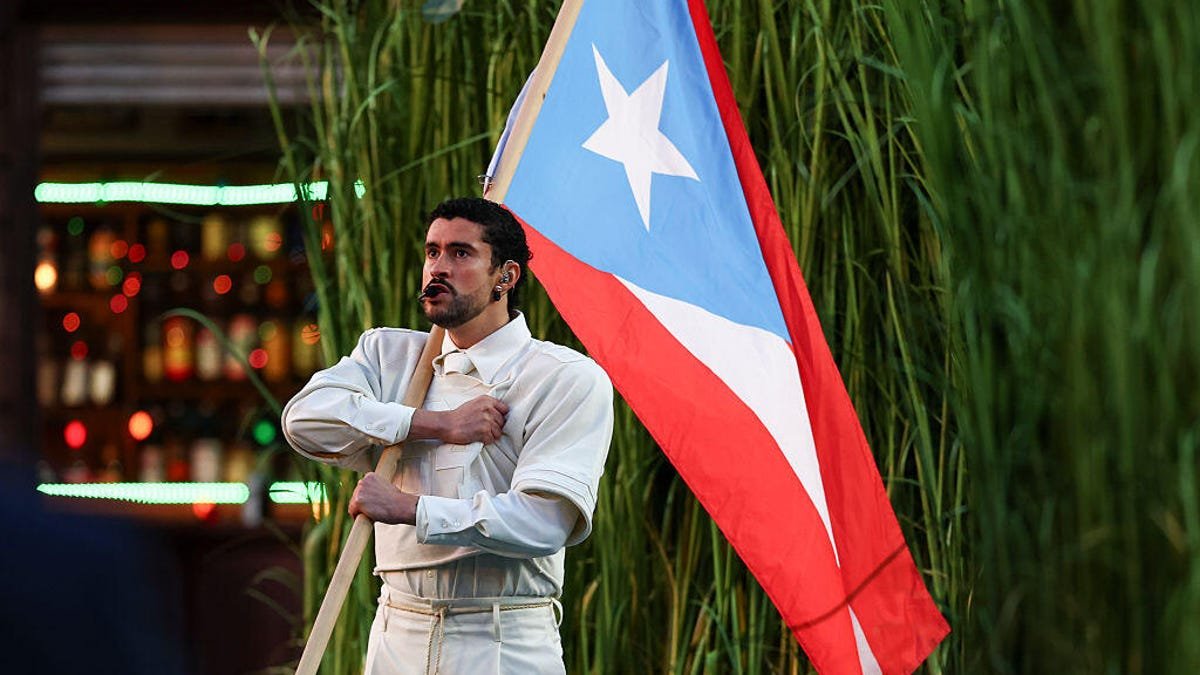
Bad Bunny’s Super Bowl halftime performance it looks like a non-stop party, but beneath the energetic play and dance is a densely layered visual essay on Puerto Rico’s history. While much of the online narrative focuses on whether the show is “understandable,” “entertaining” or “political,” deeper cultural storytelling is woven through the game.
From the farm itself to power poles to a baby sleeping in chairs, this halftime show is full of references and symbols. I grew up in Puerto Rico, and for my family and me, these references were immediate and obvious. But I realized that without the lived experience, those visual cues are easily forgotten.
Consider this your cheat sheet for moments that Latinos like me love and what they mean.
The sugar cane and the legacy of labor
The Puerto Rican superstar opened the halftime show by walking across a field of uneven, textured grass, referencing the history of sugarcane plantations. Sugarcane is inseparable from the island’s colonial history, from Spanish rule to US territory. Caribbean agricultural workers built an economy that exported wealth while extracting resources from the island.
While walking this field on the beat of Tití Me Preguntó, Bad Bunny also makes some cultural references. We saw old men playing dominoes next to the house, a long-standing tradition that can still be seen today in town squares. The singer also goes between two men boxing, which I think is a nod to Tito Trinidad, a former Puerto Rican professional boxer with several world championships.
All the big Latino stars in ‘La Casita’
We can’t ignore the many Latino celebrities who were there, dancing in the little pink-and-yellow house that accurately represented what the houses on the island looked like. I know Pedro Pascal (Chilean), Cardi B (Dominican), Karol G (Colombian) and Young Miko (Puerto Rican). For me, having all these artists from America here represents welcoming people of all nationalities to his “home.”
Electric poles during ‘El Apagón’
When he performed the song El Apagón, which translates to “blackout” or “power outage,” Bad Bunny and his backup dancers (referencing line workers) climbed the power poles. The landscape symbolizes the constant blackouts are the experiences of the island due to weak power grids and severe weather. You can even hear some of the transformers exploding, a sound Puerto Ricans know well. This means no power until further notice.
The toddler sleeping in the chairs at a (real!) wedding
It is said in the news that this couple, who got married on the farm, had previously invited Bad Bunny to their wedding. However, he allegedly invited them to get married during his halftime performance. So, yes. This is a real couple getting married, and Benito uses it to evoke a nostalgic memory that most Latino kids will have.
I vividly remember going to baby showers, quinceañeras and weddings as a child, and the parties would go on into the night, so I would sleep on a makeshift bed made of chairs. Our parents enjoyed these parties so much that even the tired kids couldn’t stop them from dancing.
The wedding is also perhaps the most famous celebration of love and happiness, a line we see throughout the show and a reference to Bad Bunny’s Grammys speech, where he said: “The only thing more powerful than hate is love.”
What happened in Hawaii with Ricky Martin
One of the most powerful moments for me was when Ricky Martin joined Benito in singing Lo que le pasó a Hawaii, which translates to “what happened in Hawaii.” This song touches on the history of the Pacific Islands and how we can see glimpses of history being repeated in the US relationship with Puerto Rico.
Ricky Martin singing this song is more than two Puerto Rican icons joining forces. It also acknowledges that Martin himself, who began his career in the boy band Menudo, navigated mainstream success years before Bad Bunny by assimilating North American culture to appease global audiences. Today, Martin’s success, along with Bad Bunny, allows both artists to express the culture and heritage of Puerto Rico instead of diluting it.
Giving a Grammy to a little kid
During the show, we saw a family watching Bad Bunny’s acceptance speech during the Grammys, and the superstar handed the Grammy to a little boy. I’ve seen speculation online that he was referring to Liam Ramos, the 5-year-old boy who was picked up by Immigration and Customs Enforcement agents, and later released. Another interpretation is that the little boy is meant to be a young version of Bad Bunny himself, and giving him the Grammy symbolizes what one can achieve when you follow your dreams. I will add that to me, this movement represents the singer who is paving the way for the next generation.
Toñita in ‘Nuevayol’
As the performers dance salsa to Nuevayol, you can see in the background some iconic Latino businesses, such as Los Angeles-based Villa’s Tacos, barber shop, and bar, where an old woman named Toñita appears to have shot him. Toñita is Puerto Rican and the owner of Caribbean Social Clublocated in the heart of Williamsburg, New York. It has been a small home for Puerto Ricans in the diaspora for the past 50 years.
God bless America
After a 13-minute almost exclusively Spanish performance, Bad Bunny said the show’s only English phrase, “God bless America” – a line traditionally tied to US patriotism at sporting events. Behind him, dancers carry flags representing countries from South, Central and North America.
At the end of the flag march, Bad Bunny raised a football with the phrase, “Together, we are America.” That football is a prop in the service of a unifying message, as the backdrop is a large sign that reads, “The only thing stronger than hate is love.”
For me, the show is a masterclass in storytelling. Every visual choice, choreography and song is carefully curated to convey the identity of Puerto Rico. Seeing it live on one of the biggest stages in the world made everyone in the diaspora feel seen and celebrated.