itstargetnews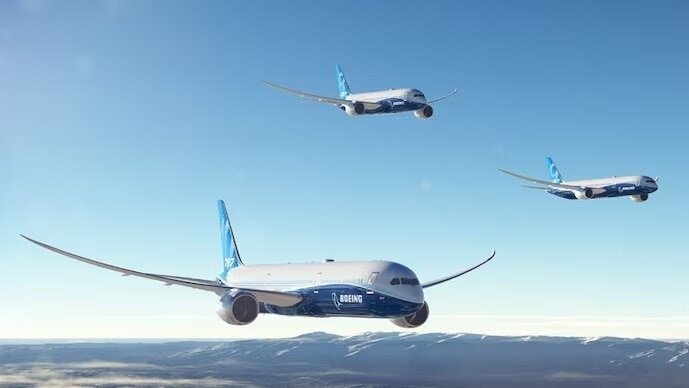
Boeing said on Wednesday that airlines in India and South Asia are expected to add 3,290 commercial jets to their fleets over the next 20 years, driven by strong economic growth, a rising middle class and an increase in first-time fliers, according to Reuters.
The projection marks a sharp increase from Boeing’s previous 20-year outlook, which had estimated demand for 2,835 planes.
India and South Asia are among the world’s fastest-growing aviation markets, with airlines rapidly adding capacity and upgrading fleets as airport infrastructure expands. Both low-cost and full-service carriers are also delving into new domestic and international routes.
The region has become a key battleground for plane makers, with Airbus and Boeing competing closely as airlines step up aircraft purchases.
Boeing said airlines in the region are likely to introduce 395 wide-body aircraft and 2,875 single-aisle aircraft during the forecast period.
The outlook is closely watched in the global aerospace industry. India is now the third largest domestic aviation market in the world, after the United States and China, and also the fastest growing, led by IndiGo and Air India, the country’s two largest airlines.
“There are many other aviation markets in the world that are larger, but now they have reached a point where they are effectively replacing fleets rather than growing fleets … what India is doing is exactly the opposite,” said Ashwin Naidu, Boeing’s general manager of business marketing for India and South Asia.
Naidu said India would need to scale up aviation infrastructure significantly to keep pace with the rapid growth of the sector.
“India’s network still remains highly concentrated in Delhi and Mumbai, with more than 30% of the network still dependent on these two markets,” he said.
Boeing, meanwhile, has recovered from a series of crises. The company delivered its highest number of aircraft in 2025 since 2018 and surpassed Airbus in net orders for the first time in seven years.
However, the industry continues to face slow deliveries due to supply chain disruptions, limiting manufacturers’ ability to meet demand and forcing airlines to spend more on maintaining older aircraft.