itstargetnews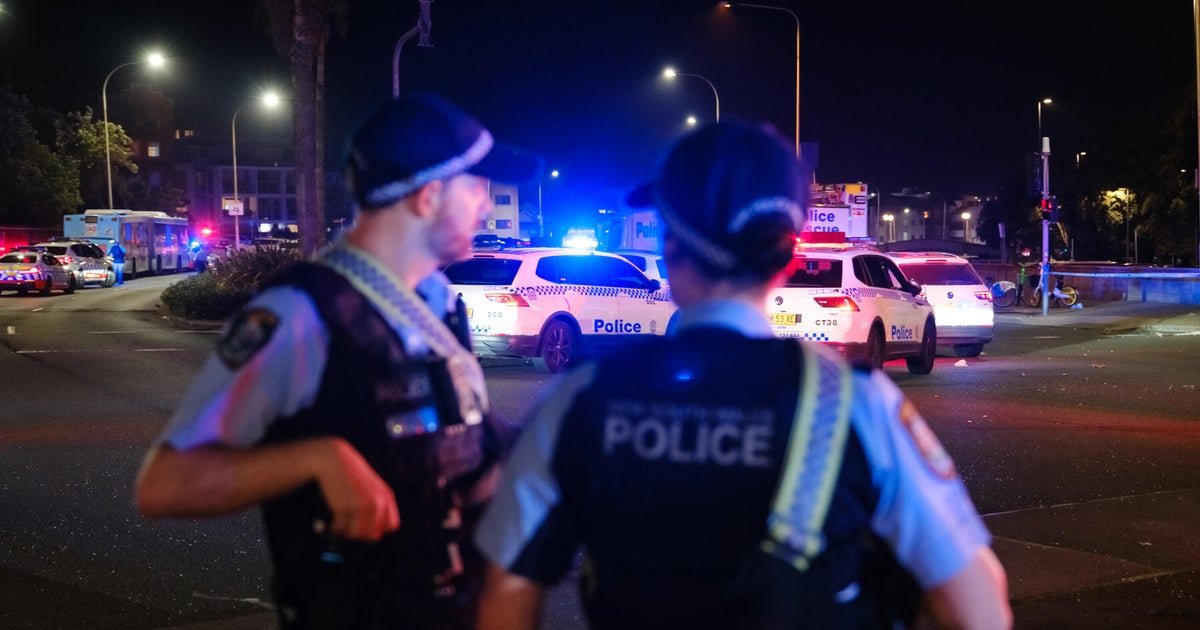
Australian Prime Minister Anthony Albanese said on Tuesday that the father and son suspected of an anti-Semitic terror attack on a Hanukkah gathering on Bondi Beach were inspired ISISas Indian officials have confirmed that the elderly man is from the large Asian nation.
Authorities also revealed that the attackers had recently returned from the Philippines, where they had traveled to an area known as a hotbed for terrorist groups.
Mass shooting on a famous beach left 15 innocent deadincluding a 10-year-old girl and a Holocaust survivor who was “motivated by the ideology of the Islamic State,” Albanese said Tuesday as he visited one of the heroes who tried to stop the attackers.
Australian Federal Police Commissioner Krissy Barrett also said on Tuesday that it was a “terrorist attack inspired by Islamic State”, referring to the now splinter group which for several years held a huge swath of territory straddling the Syria-Iraq border.
The suspects, a father and son aged 50 and 24, used weapons legally owned by an elderly man, named by New South Wales state officials as Sajid Akram. He died at the scene and his son was still being treated in hospital on Tuesday, where Australian public broadcaster ABC said he had regained consciousness.
Indian police have confirmed that the father is from Hyderabad
Police in the southern Indian state of Telangana confirmed in a statement on Tuesday that Sajid Akram hails from the city of Hyderabad. In a statement, police said he obtained his degree in Hyderabad before immigrating to Australia in November 1998, where he married a woman of European descent.
Sajid Akram held an Indian passport, while his son Naveed and daughter were born in Australia and are Australian citizens, police said, confirming earlier statements by Australian officials about the son’s nationality. US officials told CBS News shortly after the attack that at least one of the Akrams was believed to be a Pakistani national, but it appeared to be a case of mistaken identity, and a man with the same name as the younger suspect came forward in Sydney to say he had been misidentified.
Telangana police said the elder Akram had “limited contact with his family in Hyderabad over the past 27 years”, visiting six times since he migrated to Australia, “primarily for family reasons”.
A police statement said that family members in India “have expressed no knowledge of his radical mindset or activities, nor of the circumstances that led to his radicalization, and that the son’s apparent radicalization “does not appear to be related to India.”
Australian officials confirmed that homemade ISIS flags were found — along with an improvised explosive device — in the suspects’ vehicle on Bondi Beach on Sunday, and police released new information on their recent movements on Tuesday.
The suspected attackers spent most of November in the Philippines
Both traveled to the Philippines in November, New South Wales Police Commissioner Mal Lanyon told reporters on Tuesday, adding that investigators were still looking into the reasons for the trip and where exactly they went.
The Philippine Bureau of Immigration said both Sajid Akram and his son, widely identified by Australian media as Naveed Akram, spent most of November – from the 1st to the 28th – in the Philippines, citing Davao City as their final destination.
Muslim separatists, including the Islamist group Abu Sayyaf who once publicly supported ISIS, are active in that part of the southern Philippines. The ABC, Australia’s public broadcaster, said the men had undergone “military training” in the Philippines, citing security sources.
That group and others in the region have attracted and trained some foreign militants from across Asia, the Middle East and Europe in the past, according to the Associated Press, although the Abu Sayyaf has been weakened in recent years by repeated military offensives.
The AP quoted Philippine military and police officials as saying there had been no recent indication of foreign militants operating in the country’s south.
Have Australian officials failed the Jewish community?
Australian officials confirmed on Monday that Naveed Akram had been under investigation for about six months in 2019 for suspected links to a Sydney-based terror cell, although the country’s main spy agency had determined he did not pose a threat and officials said the investigation focused on associates.
ABC reported that his links included “longstanding links” with members of a pro-ISIS cell in Australia, including contact with alleged jihadist spiritual leader Wisam Haddad and a man named Youssef Uweinat, who was convicted of recruiting young people in Australia for Islamic extremism.
Haddad’s lawyer denied the priest had “any knowledge or involvement in the shooting that took place on Bondi Beach,” according to the ABC.
Many people, from the daughter of one of the victimsformer Australian leader, told CBS News that the men’s history should have given them a serious warning, if not stopped them before they took so many lives.
Israeli officials have sharply criticized the Australian government for failing to protect Jews amid a sharp rise in anti-Semitic incidents in recent years.
George Chan/Getty 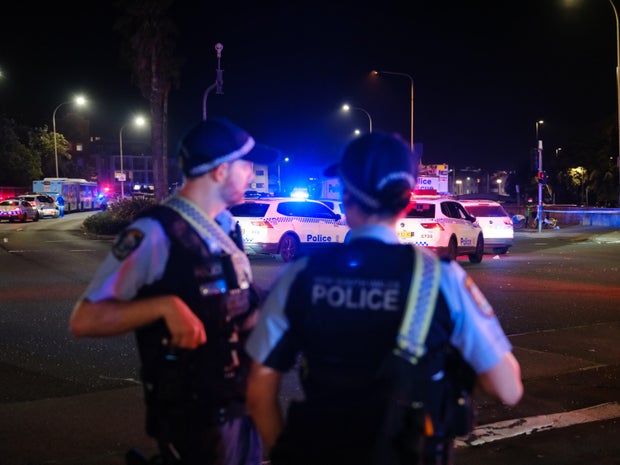
“Now we’re dealing with a wave of anti-Semitism here, and Australians of the Jewish faith don’t feel safe in their own country, and that’s crazy,” Israel’s ambassador to Australia, Amir Maimon, told CBS News on Tuesday, urging Australian leaders to create opportunities for young people of different faiths to come together, “and not once a year, but on a weekly basis.”
Maimon also said that “borders should be set” by Australian authorities, referring to the pro-Palestinian demonstrations that have taken place in the country.
“I believe it is very important to ensure that while the principle of freedom of expression should be maintained, there should also be a restriction on the language that some protesters, and at some protests, we hear,” he said. “I always believe there is room to do more. Always. Every day I ask myself, ‘what can I do better? How can I do better?’ And I try to do that. And I expect the Australian government to do better.”
The former Australian leader says there are no easy answers
Former Prime Minister Malcolm Turnbull told CBS News on Tuesday that the national government undoubtedly has some very big questions to answer, but stressed that intelligence gathering — for all nations — is an imperfect science.
“This type of terrorism, elements of it, have been present in Australia for a long time and our agencies spend a lot of time keeping an eye on them, but it’s difficult to track every single person,” said Turnbull, who was Australian prime minister from 2015 to 2018.
“Certainly, that’s a very big question: Why does someone living in the suburbs of Sydney need six long arms, like he (Sajid Akram) had, even though they were licensed? Another question is, why were they licensed to a man who had a son who was on an ASIO (Australian Security Intelligence Organization) watch list for his association with ISIS-linked entities? … And that trip to the Philippines raises another question: Why were they there? And so, you know, this goes back to the problem we face all over the world, are all the dots actually talking to me together in time?”
AAP/Sam is/Sam/viers 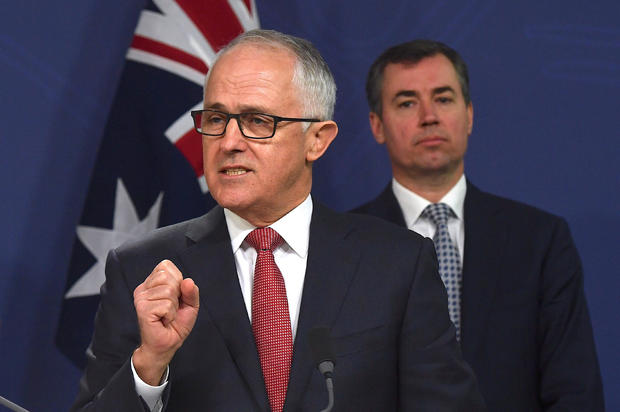
“There are holes in everybody’s intelligence gathering,” Turnbull said. “But as you know, a terrorist only has to be right once. The security agencies have to be right every time.”
In response to the sharp criticism leveled by many in the Jewish community, particularly over perceived failures to detect the threat posed by the suspects, as well as adequately protect the pre-planned Jewish event at Bondi Beach, Turnbull said he was not sure how much more his successor, Albanese, could have done.
“I was prime minister, wasn’t I? I’m on the opposite side of politics, so I’m not trying to be biased about this, but I struggle to see what he could have done differently. I mean, there were people who said he shouldn’t have allowed pro-Palestinian marches. Well, you know, we have freedom of assembly and freedom of speech in Australia. I mean, in Australia we have restrictions on speech, hate speech, and especially guns.”
“When I ask people, they’ll say he should have condemned anti-Semitism more often. Well, I’ve never heard him do anything other than condemn it, but my question is really to say, what difference would it make? Those terrorists, you know, aren’t going to listen to a lecture on the evils of anti-Semitism from you or me or Anthony Albanese.”
“Remember, terrorism is a political act, right? So you have to try to prevent people from becoming radicalized, especially young men, that’s the most vulnerable group, and that includes monitoring what’s being said online, what’s being taught, you know, in schools or mosques or other places. And intelligence agencies do that all the time,” he said.