itstargetnews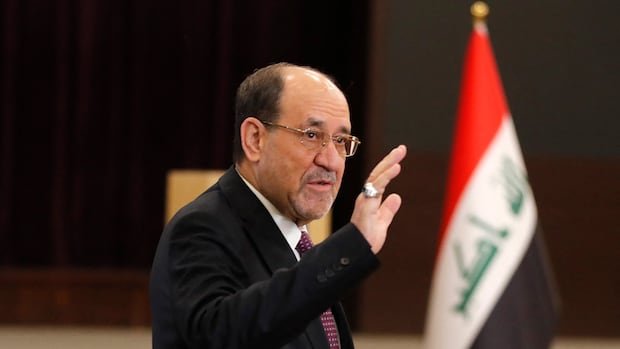
Of the many proxy battlegrounds between Iran and the United States in the Middle East, Iraq is one of the most neglected, at least outside the region.
But the American reaction to the re-emergence on the political scene of former Iraqi Prime Minister Nouri al-Maliki – again running for office – is a stark reminder of the tightrope Iraq walks between the two.
The candidacy of the 75-year-old politician has become a lightning rod as the US steps up efforts to reduce Iranian influence in Iraq.
“The last time Maliki was in power, the country descended into poverty and total chaos,” US President Donald Trump announced at the Truth Social last month, after the Coordination Framework (CF), the main Shiite bloc in Iraq’s parliament, nominated al-Maliki.
“Due to his insane policies and ideology, if elected, the United States of America will no longer aid Iraq,” Trump wrote. “And, if we are not there to help, Iraq has ZERO chance of success, prosperity or freedom.”
Al-Maliki responded in his own post, rejecting what he called “blatant American interference” in Iraq’s internal affairs.

Iran’s foreign minister called the first round of indirect talks with US officials on Iran’s nuclear program a “good start”. But neighboring countries continue to worry about a possible US military strike that would trigger a wider regional war.
Trump has threatened military action against Iran since early January – ordering a US naval strike force into the region – initially over the killing of protesters in large anti-government demonstrations. He has since moved on to Iran’s nuclear capabilities, ballistic missile stockpiles and support for regional militias.
In nominating a-Malaki for prime minister, the Coordination Framework praised his “political and administrative experience”.
Renad Mansour, director of the Iraq Initiative at the British think-tank Chatham House, says the re-emergence of al-Maliki as a candidate reflects Iran’s long-standing influence in Iraq.
“Since leaving office, al-Maliki has maintained close relations with Iran,” Mansour wrote in a recent Chatham House publication. “Among his moves as Prime Minister in 2014 was the formalization of the People’s Mobilization Forces (PMF), the umbrella organization of the armed groups.”
Critics say this opened the door to allow militias or non-state actors to infiltrate and influence Iraq’s political landscape.
Iranian proxy support
Some of those groups are already in Washington’s crosshairs — especially now that it has expanded its list of negotiating demands on Iran beyond the nuclear issue to include ending support for proxy militias across the Middle East.
“Some of these militias (now have political weapons and) participated in elections,” Iraqi Kurdish politician Hoshyar Zebari, a former Iraqi foreign minister, finance minister and deputy prime minister, told CBC News in an interview at his home in Pirman, northern Iraq.

“Now, in the new Iraqi parliament, they have over 70 seats, maybe more,” he said.
“They’re under a lot of pressure, okay? And the United States has made it abundantly clear that it will not deal with any Iraqi government that includes certain members of those militias who are wanted on the State Department’s terrorist list or the Treasury Department’s sanctions list.”
Zebari says some Shia militias have launched recruitment drives for potential suicide bombers to defend Iran in the event of a US attack.
The most powerful Shiite paramilitary group in Iraq, Kataib Hezbollah (Battalions of the Party of God), received funding and training from Iran’s Revolutionary Guards. Its political wing, Harakut Hoquq, won six seats in parliamentary elections held in November.
In the power-sharing structure agreed after the US invasion of Iraq in 2003, the post of Iraqi president goes to a Kurd, the prime minister to a Shia, and the post of parliament speaker to a Sunni.
Kurdish divisions over the election of a president have delayed the initial process of forming a government, while Washington’s objections to CF’s nomination of al-Maliki for prime minister further complicate the picture.
Al-Maliki linked to ‘very bitter past’
There is enough internal opposition.
“Overall, al-Maliki is associated with a very bitter past,” said Dlawer Ala’Aldeen, founder of the Middle East Research Institute, based in Erbil, northern Iraq.
Names mentioned as possible alternatives to al-Malaki within the Coordination Framework include current Prime Minister Mohammed Shia’ al-Sudani and intelligence chief Hamid al-Shatri.

Ala’Aldeen says that even the Shiites themselves are divided over al-Maliki.
He served two terms as prime minister between 2006 and 2014. After initially accepting him, the Americans pushed for his removal after he was accused of widespread corruption and fomenting sectarian divisions within Iraq, paving the way for the Islamic State, or ISIS.
“His premiership led to the departure of the Americans, led to the emergence of ISIS, led to tensions with the Kurds and almost to conflict,” Ala’Aldeen said. “Iraq was never the same after him.”
Now, focused on recovering from decades of conflict and hardship, many Iraqis fear that any conflict between the US and Iran will inevitably find its way across the border into Iraq.
“What did Iraq do to deserve to be a battlefield for Iran?” asked Sabiha Ismail, a school principal in her 70s, originally from the Baghdad area and now working in Erbil.
“We want Iraqi leaders to be leaders,” she said. “We don’t want them to be Iran’s proxies.”

The oil factor
Many Iraqis are also annoyed by what they see as mistreatment by the US. But Trump has a powerful tool of persuasion at his disposal.
Since the 2003 US invasion, Iraq’s oil revenues have flowed through the US Federal Reserve, and the government in Baghdad relies on them to pay, among other things, the salaries of public servants.
Iraqi Kurds, often experts in the art of realpolitik, walk a tightrope.
“It is an internal Shiite matter who they will nominate as the new Iraqi prime minister,” Niyaz Barzani, foreign affairs adviser to the president of Iraq’s Kurdish region, said in an interview.
But “in our opinion, it is very important that Iraq further strengthen its relations with the United States, economically, politically. And because the Americans, the American government, can help the Iraqi government in many different sectors.”

Even in the best of times it took Iraq several months to form a government. Former foreign minister Hoshyar Zebari says this will not be an exception.
“It’s not a done deal,” Zebari said. “It will be a complicated, lengthy process.”
The question, of course, is whether this process will bring Iraqis closer together or leave them more divided than ever.