itstargetnews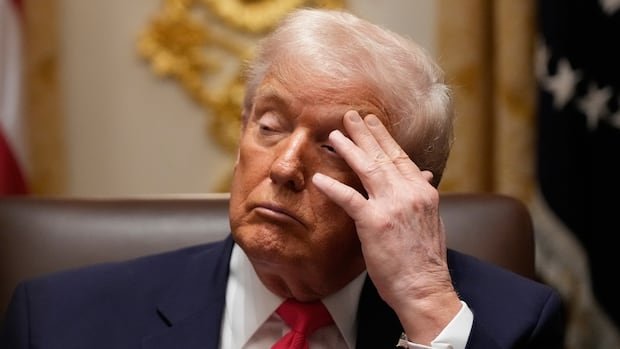
Health insurance could become much more expensive for millions of Americans, posing a political challenge for US President Donald Trump.
That challenge stems from the two competing foundations of his presidency: his promise to make life more affordable for Americans and his determination to roll back all the affordability measures put in place by the last two Democratic presidents, Joe Biden and Barack Obama.
That conflict culminates with the Affordable Care Act (ACA), a program colloquially known as Obamacare.
Enhanced tax credits introduced in 2021 under Biden, which reduced the cost of ACA premiums for roughly 24 million people, expire on December 31. Ending the benefits — often described as subsidies — will result in the average premium more than doubling, according to analysis of KFFindependent organization for health policy.
A family of four with a household income of $75,000, roughly in the middle of the U.S. annual income spectrum, would see annual premiums jump from $2,498 to $5,865, according to the analysis.
According to some estimates, millions of Americans face the possibility of losing their health insurance altogether.
Lori Hunt, an Iowa breast cancer survivor who was recently laid off from an administrative job at a nonprofit organization, is facing a $650 monthly payment increase to keep her existing policy.
“It’s about as much as my mortgage,” Hunt said in an interview from her home in Des Moines. “It’s not in my budget right now. It’s nothing I can afford.”

Hunt says her only options are to switch to a plan with lower coverage or higher deductibles, or go without health insurance until she finds a job that provides it.
“It’s just gambling and I hate it,” she said. “I would have to hope for the best.”
The Senate will vote on extending the subsidies
The hope that remains for Hunt and others in her situation, however tenuous, is that the Republican-controlled Congress will agree to some kind of extension of the ACA’s enhanced subsidies.
The ACA was designed to cover the millions of people who do not have employer-sponsored health insurance but do not qualify for Medicare because they are not elderly or for Medicaid because they do not live in poverty. They are usually self-employed, underemployed or retired before the age of 65.
The fate of the subsidies was central to the move Democrats launched this fall record-long government shutdown. It ended when Senate Republicans agreed to hold a vote on extending the subsidies — a vote likely to take place next week, but with no guarantee of success.
Meanwhile, Trump is floating his own idea that he claims would tackle rising health care premiums. His idea would also deal a huge blow to Obamacare, the program that it is tried to eliminate since the beginning of his first term. That pressure didn’t work when Republicans in Congress resisted because the ACA benefited many of their constituents.

At a cabinet meeting, US President Donald Trump disparaged Obamacare, the subsidized health insurance program formally known as the Affordable Care Act, created during then-President Barack Obama’s first term. Trump called the program a “disaster” and presented his own idea for an alternative.
This term, Trump is offering a sweeping overhaul of the system, which he presents as shifting government-funded subsidies away from health insurance corporations.
“Obamacare is a disaster. I said it years ago and I’m saying it now,” Trump said Tuesday during a televised meeting of his cabinet. “Obamacare was made to make insurance companies rich.”
Trump said he instead wants “for the money to go to the people … and for the people to go out and buy their own health care.”
He even has a name for this system: “Call it Trumpcare,” he said in one Fox News interview in November.

Trump has not provided many more details about what the system would look like, but there are already concerns that it would not provide Americans with the coverage they need.
“These proposals that Donald Trump is putting forth are nothing short of sabotaging the Affordable Care Act,” Maddie Twomey, of the advocacy group Protect Our Care, said in an interview from Boston.
Twomey says withdrawing the subsidies would undermine the entire premise of how the ACA works, because it removes certain coverage guarantees.
For example, insurance companies are not allowed to deny coverage to anyone because of a medical history, while the system attracts a large enough pool of relatively healthy people to reduce the risk to insurers.
“Donald Trump likes the idea of pushing people into crappy insurance plans that don’t cover pre-existing conditions, that may not provide essential health benefits like hospitalization, maternity care,” Twomey said.

More than 4 million could lose their health insurance
ACA premiums gained attention this fall when the 2026 renewal period began and people saw a sharp increase for themselves.
“It’s an all-out attack on our health care and it’s going to be catastrophic,” Twomey said, pointing to estimates that suggest millions of people will be left without insurance if the subsidies expire.
The Urban Institute The organization’s policy projects that 4.8 million more people will be uninsured in 2026 if the enhanced tax credits are not extended.
Non-partisan Congressional Budget Office is 4.2 million. It is also estimated that the subsidies, if made permanent, would cost the national treasury $350 billion over the next 10 years.

The debate over ACA subsidies comes as results recent elections in New Jersey, Virginia and New York City suggest that affordability is a major political concern in the US
In October poll by Reuters and Ipsosmore respondents chose the cost of living than any other issue as the main factor in how they will decide to vote in next year’s midterm elections, which will determine whether Republicans retain control of Congress.
The cost that voters want politicians to address the most, according to that poll, is health care.
In Iowa, Lori Hunt is counting on that voter sentiment to push her Republican representative to support ACA subsidies.
“My congressman came out and said, ‘Oh, I’m kind of in favor of extending the ACA credit,'” Hunt said. “But talk is cheap and I really need him to get a grip and do it.”