itstargetnews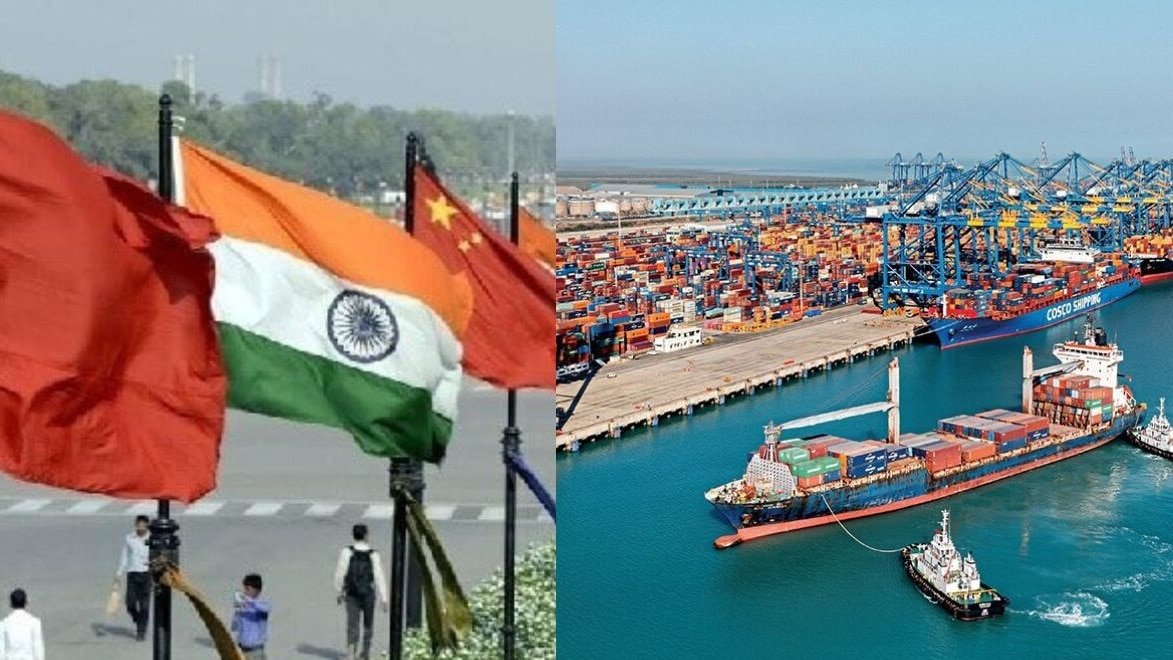
As Washington indicates that India could serve as a manufacturing base For companies looking to diversify away from China, a former US Treasury official has warned against reading too much into India’s reduced 18 percent tariff rate.
India now faces an 18 percent tariff on goods entering the American market, lower than many of its Asian competitors, including Vietnam and China. Policymakers in New Delhi are confident that this relative advantage will give Indian exporters an edge.
But Evan Feigenbaum, a former US Treasury official, argues that margin may not be as decisive as many assume.
“Unfortunately, 18 percent tariffs aren’t really that helpful if that’s your goal,” Feigenbaum said, reacting to U.S. Trade Representative Jamieson Greer’s suggestion that India could serve as a stepping stone for supply chains to shift out of China. “18 percent is a soft landing for India, because if US tariffs are going to be a reality, the relative advantage over competitors is what matters.”
“India now has a lower tariff rate than ASEAN countries – most of them are stuck at 19 percent, with Vietnam at 20 percent, and with additional penalties for transshipment of Chinese goods – and it is competitively good for Indian exporters. They are not the only factor in determining trade and investment decisions.”
Feigenbaum said it is questionable whether a 1 or 2 percent tariff differential would convey such an overwhelming competitive advantage that it would outweigh other factors working in favor of Southeast Asian competitors who are better integrated into regional supply chains and have stronger fundamentals in their favor, such as foreign direct investment, exports and manufacturing hubs.
“The straight line that many are drawing from small differentials in tariff rates to the entirety of what makes an exporter attractive misses a lot of Vietnam’s comparative advantage and especially what makes China so attractive,” he said, adding that the Chinese ecosystem, for example, has more than just costs.
“And China is likely to strike a trade deal with Trump that could keep its rate at least within striking distance of ASEAN and India rates, which would invariably affect the medium-term calculations of manufacturers thinking about relocating.”
US President Donald Trump will travel to Beijing in the first week of April for a meeting with Chinese President Xi Jinping, Politico reported Monday.
On Tuesday, Greer said India could serve as a stopover for supply chains moving out of China. Asked if India could be a good place for companies looking for alternatives to China, Greer said: “It could be. We know a lot of companies are already going in that direction. India can be a station for that (supply chains). They have a lot of people there. They have manufacturing capacity.”