itstargetnews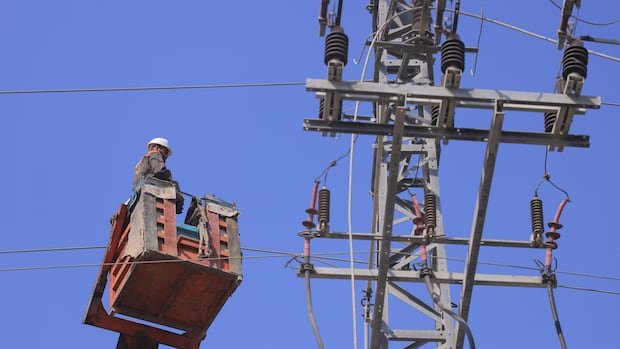

Listen to this article
Estimated 4 minutes
The audio version of this article was generated using artificial intelligence-based text-to-speech technology.
It is pitch black on the street near Al Shifa Hospital in Gaza City. The Abu Naji family huddled in their tent near the hospital around a small fire.
After more than two years of war, this time of night is unusually quiet, except for the occasional cricket and the crackling of a fire. Shrouq Abu Naji gives his children a notebook to tear pages from. This is the only way to maintain a small flame.
“We didn’t have electricity … for years,” Abu Naji told CBC freelance cameraman Mohamed El Saife on Wednesday.
On October 9, 2023, two days after the Hamas attack on Israel, The Israeli government has announced that it is cutting off the electricity supplyalong with water, food and fuel to Gaza.

As Palestinians struggle to rebuild their lives amid a fragile truce with limited resources, teams of electrical crews have begun working to restore power to parts of the Gaza Strip by working on power lines.
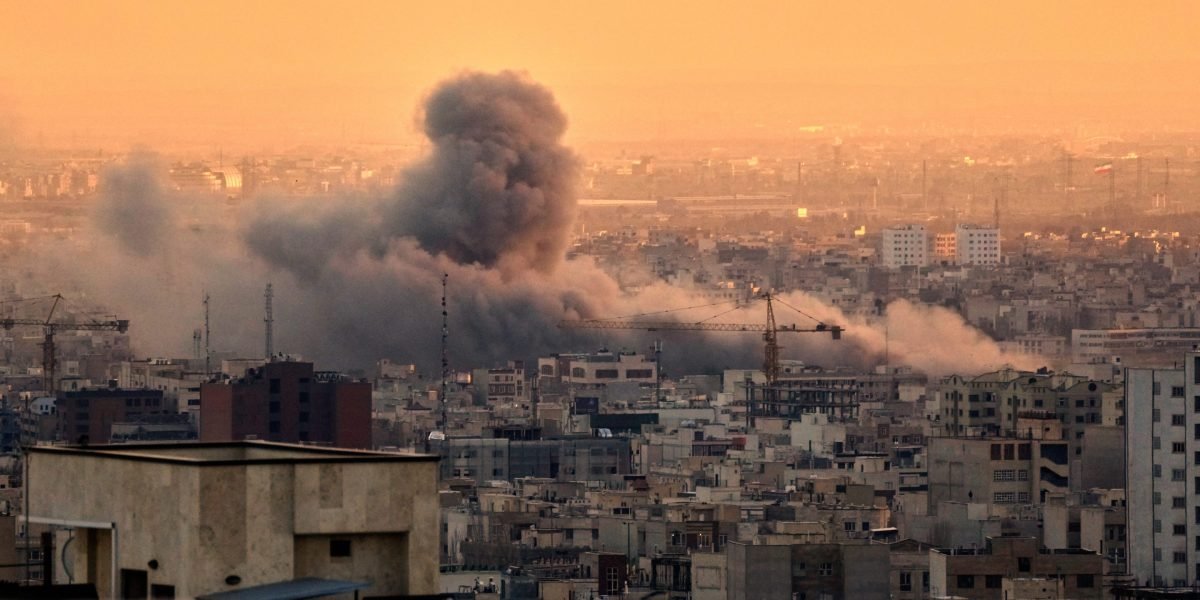
For the Abu Naji family, lLiving in a tent in one of the most heavily bombed areas of Gaza City, their only source of heat and light still comes from a fire at night.
Abu Naji puts a pot of water on an open fire for tea and lentils – something of a bedtime routine for this small family that has lived through two years of war.
“We drink a cup of tea and eat a meal, then put our heads down and sleep,” she said.
Meanwhile, in central Gaza, the Gaza Electricity Distribution Company (GEDCO), the privately funded company that supplies the strip with electricity, faces an uphill battle to get the lights back on.

Waiting for equipment
Since the ceasefire, electricity is again available from Israel, and there is a small power plant in Gaza City, but distribution repairs are needed.
On November 5, crews from the Gaza Electricity Company drove through the city of Deir al Balah for the first time since the war broke out. In central Gaza, about 20 kilometers south of Gaza City in a zone that was somewhat spared from the worst of the fighting.
Here there are low-rise buildings that are still standing and power lines that are damaged, but they exist.
Yasen Suwaihli, 50, oversees the work as men get into forklifts, climb atop power lines and begin maintenance work as part of efforts to restore basic needs to civilians in the Gaza Strip.
“Our teams are working on frepairing the destroyed power lines on the Salah el Din road so that we can restore power to the power plant,” he told El Saife.

Amidst the cacophony of Salah el Din Road, crews stop at each power line, checking and re-adjusting it to restore power to the area.
Muhammad Thabet, an engineer on site with crews assessing the work in the Zuwaida neighborhood, said crews are facing difficulties including lack of access to equipment.
He said the company was waiting for additional equipment from Ramallah, north of Jerusalem, Israel, but was not yet allowed to enter Gaza, making their work almost impossible at times.
“The utility is in dire need of maintenance equipment, including supplies and machinery, to support the teams that will restore the power lines and the utility,” he said.
He said more than 52 power poles were completely destroyed, “representing about 80 percent of the total power.”
But he said, despite the difficulties, the teams are ready to restore electricity to the Gaza Strip.
“The destruction of electrical infrastructure has exacerbated life-threatening challenges, highlighting the critical role of electricity in ensuring access to clean water, food, health care and economic recovery.”
In Gaza City, Abu Naji prepares his children for bed. The fire goes out and darkness surrounds the family.
As a mother, her only concern now is to find support for her children.
“The children have lost all their rights … they have nothing left,” she said before the fire died down and the family drifted off to sleep.