itstargetnews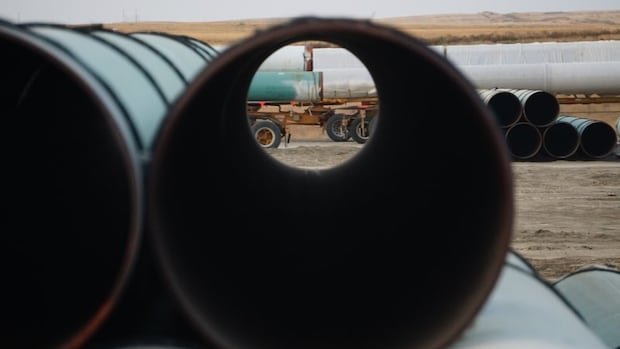

Listen to this article
Estimated 5 minutes
The audio version of this article was generated using artificial intelligence-based technology. Mistakes in pronunciation may occur. We work with our partners to constantly review and improve results.
Canada’s South Bow company’s proposal to revive parts of the canceled Keystone XL pipeline could boost Canadian crude oil exports to the US by more than 12 percent if it gets the green light from US President Donald Trump and additional links to US refineries are built.
The new proposal includes a different route through the US than the previous Keystone XL pipeline project that was canceled by former US President Joe Biden in 2021, after years of opposition from indigenous peoples and environmentalists.
South Bow, which was founded by former Keystone XL proponent TC Energy in 2024 to take on the pipeline business, is considering reviving some lines that have already been built in Alberta and already have all the necessary Canadian permits.
Canadian Prime Minister Mark Carney brought up the revival of the pipeline in a conversation with Trump in October, which could give him leverage in the upcoming negotiations to renew the Canada-US-Mexico trade agreement (CUSMA).
Trump — whose tariff wars and threats of annexation has strained relations with Canada — it has repeatedly called for lower oil prices, and many US refiners depend on the roughly 4.4 million barrels a day of exports that Canada sends south of the border.
South Bow’s potential U.S. partner, Bridger Pipeline, recently filed a proposal with Montana regulators that describes building a 1,038-kilometer pipeline — capable of transporting up to 550,000 barrels a day — starting near the U.S.-Canada border in Phillips County, Montana, and running to Guernsey, Wyoming.
But analysts say Guernsey is not an end market for crude oil, so additional links would need to be built to transport oil to refining hubs such as Cushing, Oklahoma; Patoka, Illinois; and the US Gulf Coast.

Prime Minister Mark Carney raised the Keystone XL pipeline project during talks with US President Donald Trump on Tuesday, according to a source who CBC News is not identifying because they are not authorized to speak publicly. The news prompted advocates to question whether the repeatedly canceled project could be revived.
The most plausible configuration would be a new pipeline that would stretch more than 400 miles from Guernsey to Steele City, Nebraska, where it could connect to the existing Keystone main system, said Matthew Lewis, founder of Plainview Energy Analytics. From there, the oil could go into underutilized pipelines that go to Cushing, Patoka and Wood River, Illinois.
However, it remains unclear who would be willing to take the risk associated with that part of the project.
“The biggest challenge in this plan in the Guernsey-to-Steele City segment is obtaining permits and building a new pipeline that would likely face environmental litigation that could end such a project in court,” Lewis said.
South Bow said its proposal could tie into downstream pipelines in the US. but declined further comment. Bridger Pipeline declined to comment.
Utilization of existing infrastructure
Bridger is proposing to build the Montana to Guernsey leg at locations adjacent to existing pipeline infrastructure, the filing said, which would likely make it easier to obtain the necessary permits. On the Alberta side, approximately 150 kilometers of the Keystone XL pipeline have already been built and have been sitting idle since that project was canceled.
A White House spokesman declined to comment on the South Bow-Bridger proposal, but analysts say a presidential permit would be required for the segment that crosses the U.S.-Canada border. Even if the Trump administration supports the plan, there’s no guarantee the next U.S. administration will, said Richard Masson, former executive director of the Alberta Petroleum Marketing Commission.

While the proposal may differ from Keystone XL, it remains a large-scale pipeline expansion and is likely to draw the ire of environmentalists, landowners and indigenous communities, Masson said.
Many pipeline projects in the US have been canceled or mired in litigation. Trump and his team have tried to reduce regulations and speed permits, but a multi-administration project would carry political risk.
“It raises all the same issues. For those who wanted Keystone XL repealed, this is all the same,” Masson said.
Competitive expansion of export pipelines
The proposed project comes at the same time that the company behind the Trans Mountain pipeline from Alberta to Canada’s west coast is planning a series of improvements that could increase its capacity by 360,000 bpd.
South Bow’s competitor, Enbridge, already is granted expansion projects for its Flanagan and Mainline pipeline systems, which will add a total of 250,000 bpd of capacity for Canadian heavy oil carriers transporting crude oil to the US Midwest and Gulf Coast.
Those projects are less complicated than the South Bow proposal and will be more economical, TD Securities analyst Aaron MacNeil said.
He said South Bow will face questions from investors about its ability to finance a new pipeline project while maintaining its dividend and avoiding taking on too much debt.