itstargetnews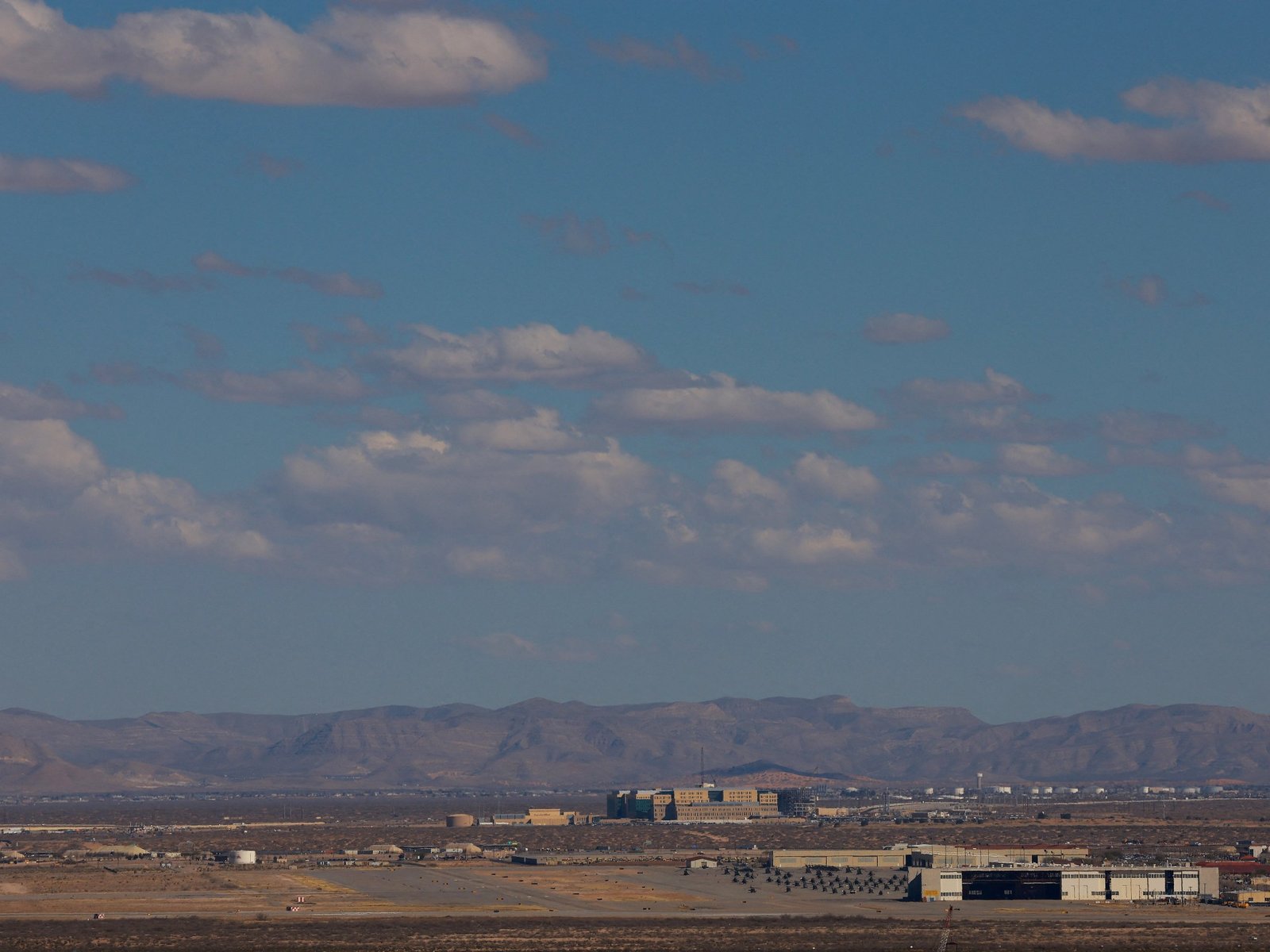
A new U.S. military laser counter-drone system has led authorities to halt air traffic in: Departing from El Paso, Texas, Aviation officials previously expressed serious concerns about the risks to commercial aircraft.
The Federal Aviation Administration (FAA) initially announced a 10-day airspace closure on Wednesday, but lifted the restriction less than eight hours later, a decision that reportedly stemmed from miscommunication between the Pentagon and aviation regulators.
Recommended Stories
4 item listend of list
According to Reuters, unnamed officials said the FAA took action because of concerns that military anti-drone laser systems could pose a risk to aircraft. The FAA and the military were scheduled to discuss the issue at a Feb. 20 meeting, but the military acted without final approval from the FAA, causing the agency to suspend flights in El Paso, sources said.
Here’s what we know:
What happened after El Paso airspace was closed?
On February 10, at approximately 11:30 pm local time (05:30 GMT), the FAA stopped all flights to and from El Paso International Airport, citing “special safety reasons.”
The restrictions were initially expected to last for 10 days.
The order, which covers about 16 kilometers (nearly 10 miles) around El Paso, including the nearby community of Santa Teresa, was scheduled to last until the evening of February 20.
The restrictions apply to all aircraft flying below approximately 5,500 meters (18,000 feet), while aircraft flying above that altitude are not expected to be affected.
U.S. Transportation Secretary Sean Duffy said the airspace was closed and “the threat has been eliminated” as the Department of Defense and the FAA deal with incursions by Mexican drug cartel drones.
according to local media reportsThe FAA also warned that pilots who fail to comply with the order “may be intercepted, detained and interviewed by law enforcement/security personnel.”
The agency added that authorities could use lethal force if “it is determined that the aircraft posed an imminent security threat.”
The airspace closure could disrupt activity in one of the nation’s largest cities, as El Paso, with nearly 700,000 residents, is one of the 25 most populous cities in the country.
Restrictions of this magnitude have only been implemented once before in El Paso, and that was after the attacks of Sept. 11, 2001, when coordinated airliner hijackings destroyed New York’s World Trade Center towers and damaged the Pentagon, closing U.S. airspace nationwide.
Why is the FAA closing El Paso airspace?
The agency initially cited “special safety reasons.”
Transportation Secretary Duffy said a cartel drone violated U.S. airspace, an explanation echoed by White House and Pentagon officials.
However, according to media reports, people familiar with the matter said that the suspension was related to the Department of Defense’s use of new high-energy laser technology designed to combat drones.
Citing a person familiar with the matter, Bloomberg News reported that the Pentagon was also flying drones as part of the test, some outside normal flight paths.
The event occurred in airspace near El Paso International Airport, raising concerns from the FAA that it could interfere with commercial flights.
Democratic Rep. Veronica Escobar, whose district includes El Paso, pushed back on the drone intrusion explanation.
“I think the FAA owes the community and the country an explanation as to why this happened so suddenly and suddenly and was canceled so suddenly,” Escobar said at a morning news conference.
“As far as I know, there’s nothing special about drone incursions into the United States,” she said.
“The information coming out of the federal government didn’t add up,” Escobar later added.
The airspace closures also prompted a backlash from other leaders, who said they were not adequately consulted.
“This unnecessary decision has created confusion and chaos in the El Paso community,” El Paso Mayor Leonard Johnson said at a news conference.
“I want to be very, very clear that this should never happen. You cannot restrict airspace over large cities without coordination with city, airport, hospital and community leadership. This lack of communication is unacceptable,” Johnson added.
Mexican President Claudia Scheinbaum rejected U.S. claims that a Mexican drone entered U.S. airspace.
“There is no information about the use of drones at the border,” she said.
Security experts say drone incursions near sensitive locations are not uncommon, but the scale of the response in this case was unusual.
“It is not uncommon for unidentified drones to linger over airports or military bases and cause short-term disruption,” Mark Cancian, a retired Marine Corps colonel and senior adviser at the Center for Strategic and International Studies think tank in Washington, told Al Jazeera.
“Yet the FAA’s attempt to close large swaths of airspace for days is unprecedented,” Cancian said.
“It’s hard to believe they took into account the economic and social costs of such an action,” he added.
Nearly 3.5 million passengers traveled The airport will pass through the airport between January and November 2025, according to data on the El Paso International Airport website.
How common are Mexican cartel drone incursions into the U.S. border?
U.S. President Donald Trump’s administration has long warned that Mexican drug cartels are using drones for drug smuggling operations along the border.
Mexican officials have become less vigilant, at times minimizing the security threats drone activity poses to the region.
Steven Willoughby, deputy director of the U.S. Department of Homeland Security (DHS) Counter-Drone Program, told Congress in July that drug cartels are using drones across borders on an almost daily basis.
According to the Department of Homeland Security, more than 27,000 drones were detected within 500 meters (1,640 feet) of the U.S. southern border in the last six months of 2024, mainly at night. He said 326 flights were detected flying across the U.S.-Mexico border every day.
“Mexican criminal groups’ drones are invading U.S. airspace in large numbers and there is a high risk of them colliding with civilian aircraft,” Vanda Felbab-Brown, an expert on non-state armed groups at the Brookings Institution, told Al Jazeera.
“In the case of El Paso, the risk is probably higher than in more remote desert areas,” Fairbab-Brown said.
“But outside of airports, there are large numbers of drones belonging to Mexican criminal gangs that are infiltrating U.S. systems both for reconnaissance of law enforcement locations and flight routes and to carry drug payloads,” she said.

Are drones used in conflicts in Mexico?
Experts say drone technology is also being used inside Mexico, particularly in conflicts where rival criminal gangs compete for territory.
One of the most prominent is the Jalisco New Generation Cartel (CJNG), one of Mexico’s most powerful criminal organizations known for its rapid expansion and use of military-style tactics and new technologies.
The CJNG clashed with the Carteles Unidos, a loose alliance of smaller groups that fought primarily to resist the CJNG’s advance in the western state of Michoacán.
In Michoacan’s rural areas, which include farming communities known as “ejidos,” drones are increasingly used not only for surveillance but also to drop explosives during territorial disputes.
“As we deploy drones in Mexico, we’re seeing other drug cartel activity, such as carpet bombings of rural Erida in Michoacán to drive people out of Ejido,” explains Fairbab-Brown of the Brookings Institution.
“The Jalisco New Generation Cartel uses these tactics to counter the local strength of the cartel’s unified organization and its deep social roots in these communities. Unable to overcome this, they try to force people to leave,” she said.
She added: “Reports from Michoacán have repeatedly shown that tens, and sometimes hundreds of thousands, of people have been displaced from Ejido as a result of scorched-earth tactics using drones.”