itstargetnews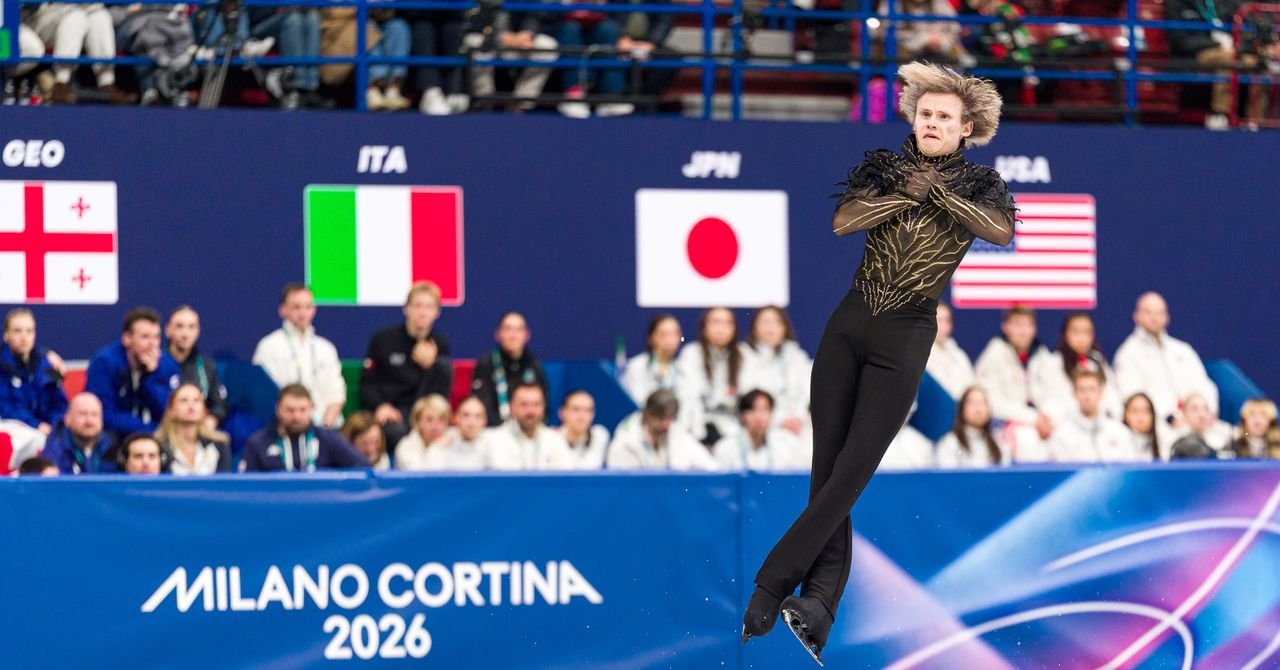
In figure skating, the quadruple axel is usually considered the hardest jump. Until 2022, when US skater Ilia Malinin—now riding high as the “Quad God” of 2026 Winter Olympics—began to do it, it seemed impossible. Landing one, naturally, gives an athlete a higher score. But for skaters who are not generational talents like Malinin, it holds true how Pulling a quadruple axel can be tricky. But physics can provide some clues.
In 2024, the journal Sports Biomechanics published a study by Toin University researcher Seiji Hirosawa that brings science closer to understanding how quad axels work. One of the biggest reasons? Rising. Like 20 inches from the ground high.
In the current scoring system in the figure skating competition, the jury, which in the case of Milano Cortina Games consisting of two technical specialists and a technical controller, assign a point to each technical element, namely jumps, spins, and steps. However, the points for more difficult jumps, such as triple or quadruple jumps, are higher than for other technical elements, so skaters must perform them correctly to win competitions.
Generally speaking the axel is the most technically complex of the jumps. There are three main types, each distinguished by their takeoffs: toe, edge, or edge. Most are named after the first person to do it; axel is named after Norwegian skater Axel Paulsen. It is also the only one that involves a forward start, which leads the athlete to make a half turn more than other jumps. A simple axel, therefore, requires one and a half rotations to complete, while a quadruple axel requires four and a half rotations of air.
To shed light on the specific kinematic strategies athletes use to perform the quadruple axel jump, Hirosawa’s study focused on footage of two skaters attempting this jump in competition. Using data from the so-called Ice Scope tracking system, the researchers analyzed several parameters: vertical height, horizontal distance, and skating speed before takeoff and after landing.
Contrary to previous biomechanical studies, which suggested that jump height does not change much, Hirosawa’s study found that increasing jump height is essential to successfully performing a quadruple axel jump. Both skaters, in fact, aim to achieve a greater vertical height in their attempts to perform this jump than the triple axel.
“This suggests a strategic shift toward increasing vertical height to master the 4A (quadruple axel) jump, in contrast to previous biomechanical research that did not emphasize vertical height,” the study concluded.
The increased height of the jump, Hirosawa added, provides more flight time by allowing a greater number of rotations around the longitudinal axis of the body. Short version: jump higher, turn more. “The results of this study provide valuable insights into the biomechanics of quadruple and triple axel jumps, update current theories in figure skating research, and provide insights into training strategies for managing complex jumps,” the study concluded.
Easier said than done—unless you’re Ilia Malinin.