itstargetnews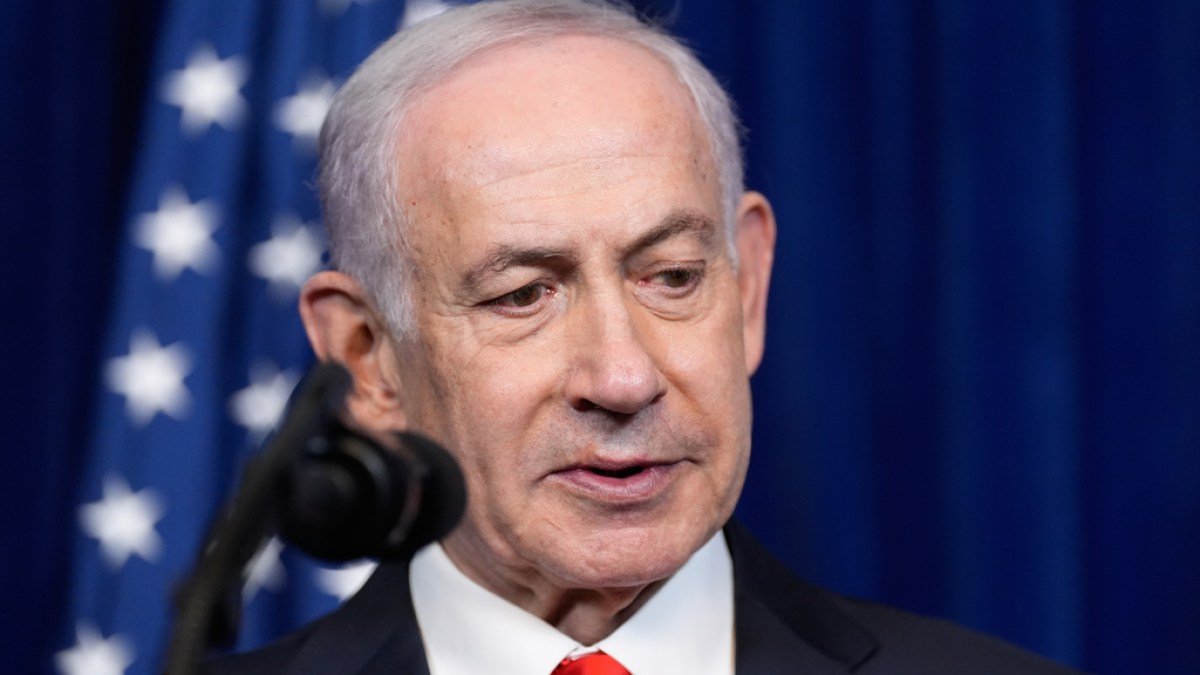
En route to Washington, D.C., the Israeli prime minister praised his close relationship with the U.S. president during nuclear negotiations with Iran.
Israeli Prime Minister Benjamin Netanyahu says he will current donald trump He laid out the “principles” for negotiations with Iran as he traveled to Washington, D.C., on his sixth official visit with the US president last year.
Before leaving Tel Aviv on Tuesday, Netanyahu praised the “unique close relationship” between Israel and the United States and his own warm relationship with Trump.
Recommended Stories
3 item listend of list
“I will present to Trump principles for negotiations with Iran that are important not only for Israel but for everyone who wants peace and security,” Netanyahu told reporters, according to the Jerusalem Post.
“I think these are important principles for everyone who wants peace and security in the Middle East.”
His visit comes days after Washington and Tehran concluded a round of nuclear talks in Oman, the first since the June 2025 war in which the United States bombed Iran’s main nuclear facilities. Israeli attack.
Israel is not involved in those talks, but Netanyahu has long sought exert influence Guides the President of the United States in formulating Washington’s policies in the region.
Netanyahu did not provide details on the “principles” of a potential Iran deal, but he has previously said Tehran should agree to a full disarmament of heavy weapons, similar to Libya’s 2003 deal with the West.
Iran has ruled out talks over its missile program, which it considers one of its most important deterrents against Israeli attacks.
When Israel launched a surprise attack on Iran last June, killing several of the country’s top generals, nuclear scientists and hundreds of civilians, Tehran relied mainly on missiles to respond after its air defenses were destroyed.
Iran fired hundreds of missiles at Israel, dozens of which breached the country’s multi-layered air defense system, Caused 28 deaths and cause significant damage.
Iran’s Foreign Minister Abbas Araghchi told Al Jazeera on Saturday that Iran’s missile program was a defense issue that was “never non-negotiable”.
Israel and the United States could also pressure Iran to stop supporting its network of non-state allies in the region—including the Houthis in Yemen, Lebanese HezbollahHamas in Palestine and armed groups in Iraq.
But this alliance is called axis of resistanceIsraeli attacks over the past two years have weakened it.
Another thorny issue in the negotiations is whether Iran should be allowed to enrich uranium domestically.
While Tehran has said it will agree to strict limits and monitoring of its nuclear activities, it insists that domestic enrichment is a sovereign national right.
Despite talks between Washington and Tehran, U.S. ambassador Mike Huckabee Trump, who traveled with Netanyahu, emphasized that Israel and the United States share the same red lines on the Iran issue.
“I think there is an extraordinary alliance between Israel and the United States. Everyone wants to see some problems that can be solved without war, but that will be up to Iran,” he told reporters.
“If they insist on having nuclear weapons and enriching uranium, then I think the president has made it clear that that’s not acceptable.”
America has moved USS Abraham Lincoln Aircraft carriers, destroyers and fighter jets are heading to the Middle East to force Iran to make a deal. Tehran says it will not be swayed by the threat of war.