itstargetnews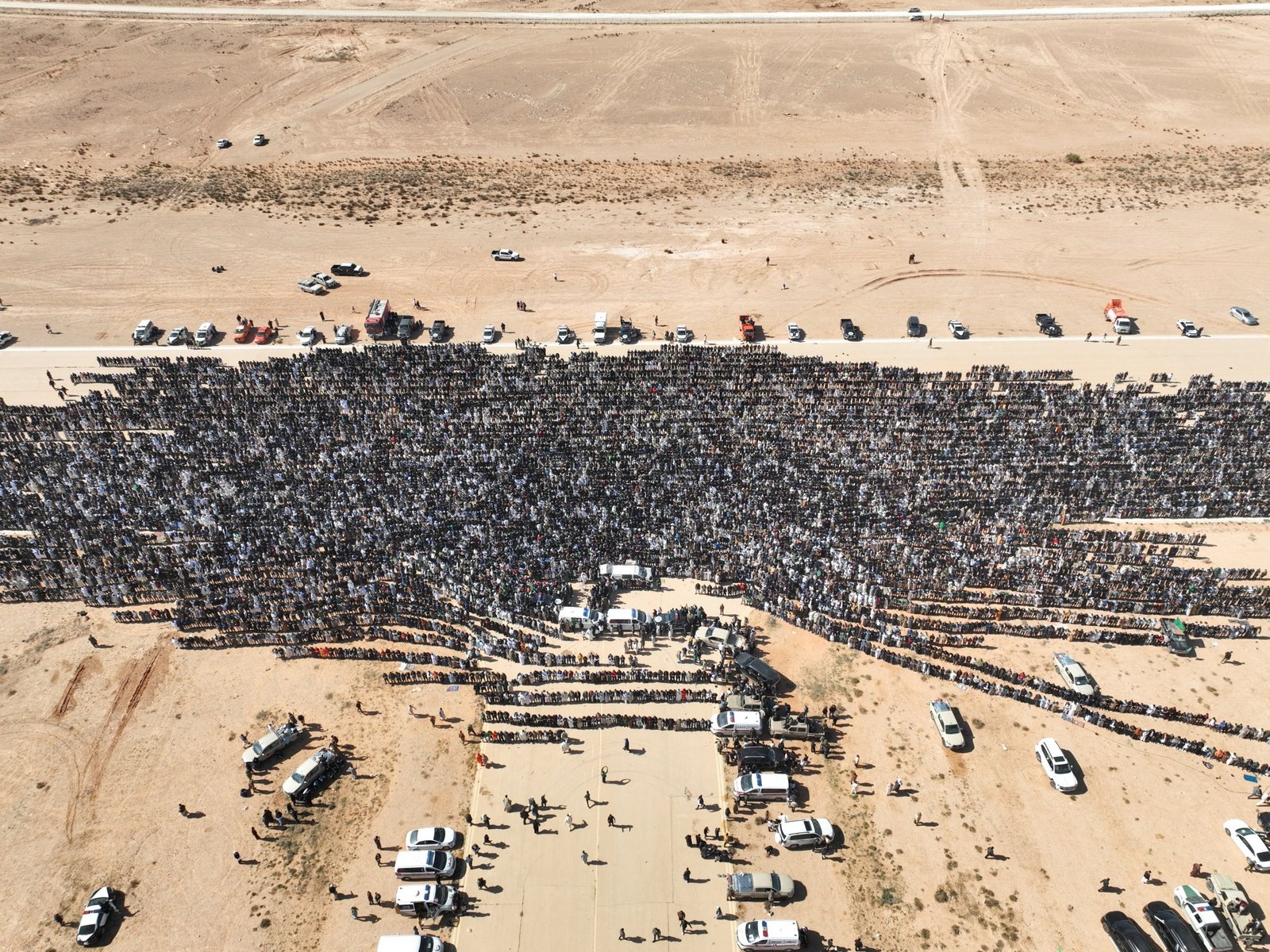
Saif al-Islam Gaddafi was shot 19 times at his compound in Zintan, a mountain town in western Libya where he had lived since his arrest in 2011. Four masked men entered the compound after turning off security cameras. About 90 minutes ago, his defenders withdrew from the area for unknown reasons. After the shooting, the attacker did not run away. They left. No shootouts. There is no pursuit. No claim of responsibility was made. Killers disappear without a trace, which in Libya often means the killers have no need to worry about investigations.
Saif is the son of Muammar Gaddafi, who ruled Libya for more than four decades before being overthrown and killed in the 2011 revolution. Since 2014, the country has been divided into two competing power centers. In the West, successive governments in Tripoli, the latest led by Prime Minister Abdul Hamid Dbeibah, have derived their power from United Nations recognition. In the east, renegade military commander Khalifa Haftar controls territory through military force with support from the United Arab Emirates, Russia and Egypt, while a paper government in Benghazi provides civilian cover for de facto military rule. Neither party has faced a national election and has no intention of doing so.
The mechanics of killing tell its own story. This is not violence born of chaos. It was an operation carried out within a narrow window by actors who understood Seif’s operations, his protection, and the informal rules that governed both. Members of his inner circle say it was an inside job. It will take more than just weapons to get to him. It requires understanding his daily routine, his guards, and the layered arrangements that allow him to survive in secret. For years, Seif has lived in varying degrees of anonymity, protected by local understanding and, at times, security support linked to Russia. By the night of the attack, all protective measures had been withdrawn. Whoever planned the operation knew it would be like this.
Motive alone is not evidence. But methods and capabilities narrow the scope.
Last year, Abdelghani al-Kikli, the commander of Tripoli’s largest militia, the Stability Support Agency (SSA), was assassinated by a rival brigade, sparking immediate chaos. Armed conflict has cordoned off much of the capital – factional, noisy, but clearly visible. Operation Zintan bears no resemblance to this. Its precision and attendant silence suggest a different kind of actor. Critics, culprits and troublesome figures from Haftar’s sphere of influence are often quietly purged. Mahmoud al-Werfalli, a senior officer in Haftar’s forces and a man wanted by the International Criminal Court, was shot dead in broad daylight in Benghazi in 2021. No serious investigation followed. Others disappeared in similar fashion. These operations do not require complete territorial control. They rely on networks, intimidation and the expectation of impunity.
None of this constitutes evidence. Libya has provided little evidence. Only patterns. But patterns have infrastructure.
The political order established by Muammar Gaddafi did not disappear in 2011. It was dismantled and repurposed. Haftar has taken its fragments, tribal patronage networks, security hierarchies and militia economies and regrouped them around his own family, based around the Guards Brigades of Tariq bin Ziad, commanded by his son Saddam, recently appointed as the self-styled deputy commander-in-chief of the Libyan National Army and his father’s most likely successor.
Former loyalists of the old regime were not excluded from the system, but they were never trusted within it. Pro-Gaddafi politicians and commanders were encouraged to return under Haftar and were absorbed after 2014 only under strict conditions. Figures such as Hassan Zadma were once allied with Seif’s brother Khamis’ notorious 32nd Brigade, but they were co-opted for their utility rather than becoming partners. When their presence threatened Haftar’s control, they were marginalized or disbanded.
Saif himself never even received conditional acceptance. He remains outside the system, tolerating, containing and observing, a reminder that there is an alternative line of succession that can never be fully eliminated. He has been living under assassination threats since 2017.
Saif does not represent change. He represents an alternative. The danger he poses is structural. Haftar’s coalition is held together not by ideology but by patronage, which is unevenly distributed. Some tribes and armed groups received more than others. Loyalty is transactional, scaled based on the benefits each faction can gain. If Haftar dies, those who feel they have been harmed will see the succession as an opportunity to renegotiate terms or defect to someone offering a better deal. The only figure with enough history and last name to appeal to them is Seif al-Islam, the heir apparent to the system Haftar has repurposed. He won’t tear it down. He would rule it with the same patronage logic and the same authoritarian responses. Same system, different family.
This made it extremely difficult for him to adapt. Forty-eight hours before the killing, Saddam Haftar secretly met at the Elysée Palace in Paris with Ibrahim Dbeibah, the prime minister’s nephew and head of Libya’s national security apparatus. There is no official news. The leaks hint at a single agenda: whether Libya’s rival camps can form another interim unity government that formally brings the Libyan Air Force under national jurisdiction, divides ministries and agencies between Haftar and the Dbeibah family, and delays elections by more than a decade. Libyans have not voted since 2014. This dissatisfaction deepens with every failed transition, every broken electoral promise, every new makeshift arrangement designed to keep the same people in power. If a family division deal is negotiated in Paris, things will get even more heated. Saif doesn’t need a program to take advantage of it. He just needs to be on the ballot. He was leading polls ahead of Haftar in the aborted 2021 presidential election. If the only viable candidates are authoritarians, then the anti-establishment authoritarians will win. If he were included in such an arrangement, it would be destabilizing for both parties, and he cannot be excluded or become an instrument of every Libyan’s anger against the arrangement.
Five days after he was killed, Saif’s tribe buried him in Bani Walid, a town long associated with his father’s loyalists. They wanted Sirte, the seat of his father’s tribe. Haftar’s forces rejected their demands. The condolence reception was cordoned off. Public mourning was prevented. Saif spent ten years being told where he could live, who he could see and when he could speak. His killer decides where he will die. His rivals determined where he was buried. No one was arrested. No one does this. In Libya, silence after killings never means there are no answers. This is the answer.
The views expressed in this article are the author’s own and do not necessarily reflect the editorial position of Al Jazeera.