itstargetnews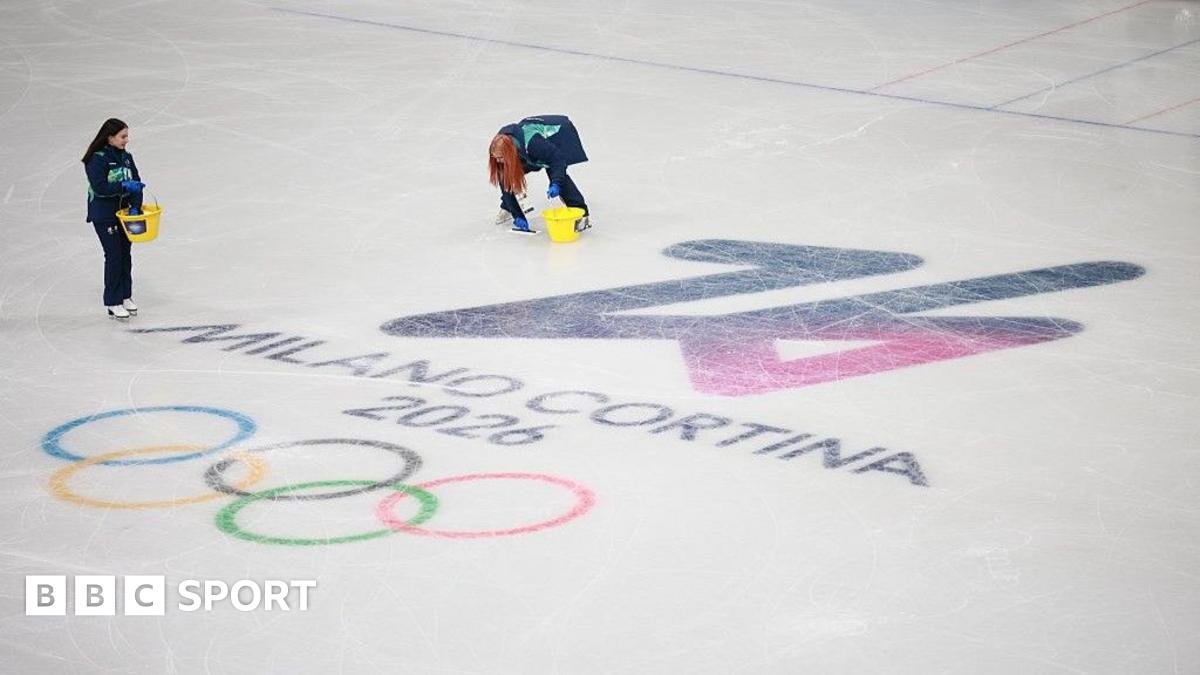
Olympic ice refers to the uniform ice surface designated for international competitions, including the Winter Olympics.
Skilled technicians are responsible for making and maintaining the ice, and they are called “Ice Masters”.
The team’s mission is to ensure the surface is optimal for athletes participating in sports such as curling, skating and ice hockey.
Milan-Cortina Ice Arena was built specifically for the men’s and women’s competitions Following delays, worries and last minute construction work.
But how do they make ice for a rink?
It all starts with laying five centimeters of insulation on the concrete floor. A vapor barrier was placed on top of the insulation before engineers placed a mat containing glycol on top to keep the cold out.
Wooden boards and glass walls are then placed around the rink, and about two inches of water are added above the pads – this is when the ice sheet forms.
The surface is painted white and sealed, and the puck markings and logo are added.
Finally, the top of the rink is covered with three to four centimeters of water to create the playing surface. The temperature is maintained between -5 and -4C.
Resurfacing machines, commonly known as Zambonis, are sent out periodically to scrape away the ice and create a new smooth layer.
Mark Messer, the ice guru in charge of long track speed skating, said the hardest part was “using a new system in such a high-profile event with little time to prepare.”
He added that although it was a makeshift ice block, ice production on this scale had not been done before at the Olympics.
Milan-Cortina will be the first time a temporary venue will be used in a winter long track speed skating competition.