itstargetnews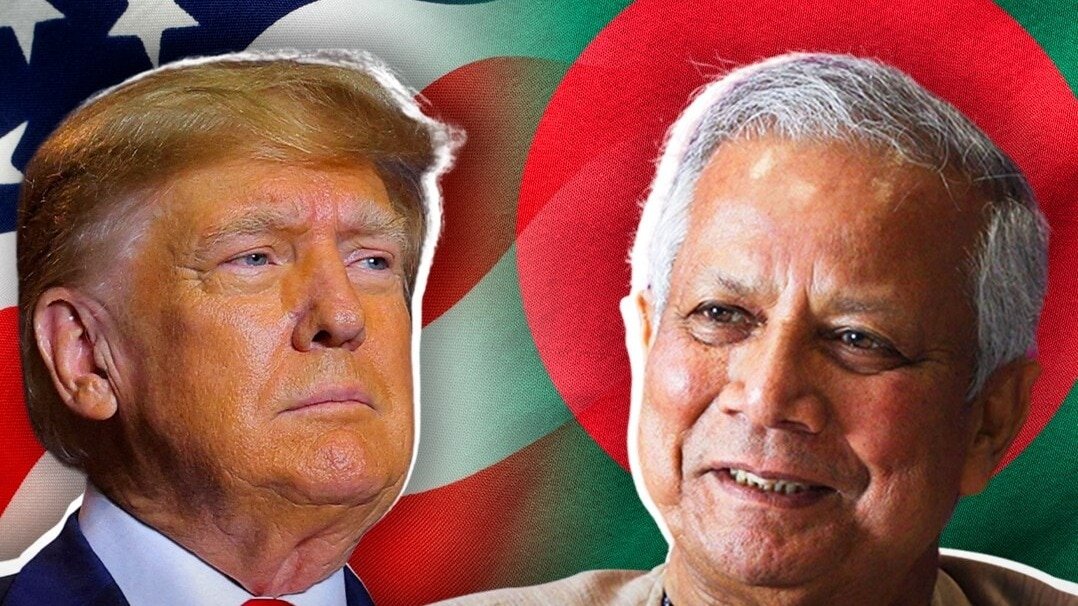
Bangladesh woke up to good news on Tuesday as US tariffs on Bangladeshi goods were cut to 19 percent as part of a trade deal. The US-Bangladesh trade deal can act as a double-edged sword for India.
Zero tariffs would be applied to textiles and garments made from US cotton/fibres, leading to the growth of Bangladesh’s garment sector. Since the deal took place with Trump in the White House, it’s not a one-way street.
While Bangladesh gets market access, the United States gets preferential market access for industrial agricultural products, including chemicals, medical devices, machinery, motor vehicles and parts, soy products, dairy products, beef, poultry, nuts and fruits.
what does it mean
The agreement reads: “The United States undertakes to establish a mechanism to allow certain textile and apparel goods from Bangladesh to receive a zero reciprocal tariff.”
In addition to this, it also included provisions for Dhaka to reduce tariffs on various US agricultural and food products to zero when the agreement comes into effect. These include poultry, pork, seafood, rice, corn, and grains.
So how does it work? For example, Bangladesh’s garment exports to the US have a 0% tariff if Dhaka buys US-made cotton and man-made fiber textile inputs.
How does this affect India?
Bangladesh’s basic reciprocal tariff will stand at 19 percent, slightly higher than India’s 18 percent, but this does not ease the stress in Indian policy circles. This is because the fine print of the Washington-Dhaka deal includes a “zero duty” clause, while India does not.
It is also likely to force Dhaka to cut imports of Indian cotton, which stand at around $3 billion a year. Historically, Dhaka has also been a massive buyer of Indian yarn. If you move to the US because of zero tariffs, you will get a double advantage in terms of raw material and entry into the US at 0 percent.
Indian textile centers such as Tiruppur and Surat, as well as companies, could face tougher competition from Dhaka, given its lower labor costs and large scale. The price difference between the two would be huge in the international market after today’s announcement.
The agreement requires Bangladesh to commit to international labor rights and environmental standards, putting Indian exporters’ argument that “we are more focused on ethics/quality” on the back burner.
Reactions of the opposition
Shiv Sena (UBT) Rajya Sabha MP Priyanka Chaturvedi hit out at the government for the announcement recently India-US Interim Trade Pact.
Chaturvedi wrote on X (formerly Twitter): “Textiles at a 3% tariff before Trump are higher than the 18% tariff after the deal, according to the logic of India’s commerce minister. We were told to applaud this great deal. Now the US has signed a trade agreement with Bangladesh in which the US has committed to a joint mechanism for US-made textiles or garments. clothes.Bangladesh with zero reciprocal tariff in US market, India’s commerce minister will now tell us how much profit Indian textile exporters will get with 18% tariff on Bangladesh’s 0%.
He added that India imports US cotton worth $200 million, while Bangladesh’s imports are $250 million.