itstargetnews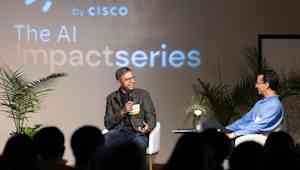
Today’s challenge in AI is about agent coordination, context, and collaboration. How do you get them to truly think together, with all the contextual understanding, negotiation, and shared purpose that is required? It’s a critical next step toward a new kind of distributed intelligence that keeps people firmly in the loop.
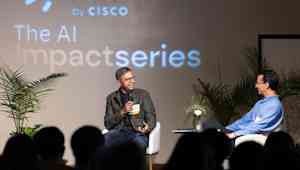
In the latest stop of VentureBeat’s AI Impact Series, Vijoy Pandey, SVP and GM of Cisco’s Outshift, and Noah Goodman, Stanford professor and co-founder of Humans&, sat down to discuss how to move beyond just connecting agents to agents full of collective intelligence.
The need for collective intelligence, uncoordinated actions
The main challenge, says Pandey, is that "Today’s agents may be interconnected, but they cannot think together."
While protocols like MCP and A2A solve basic connectivity, and AGNTCY solves the problems of discovery, identity management to inter-agent communication and observation, they only address the equivalent of a phone call between two people who don’t speak the same language. But Pandey’s team recognized something deeper than the technical pipe: the need for agents to achieve collective intelligence, not just coordinated actions.
How shared purpose and shared knowledge enable collective innovation
To understand where multi-agent AI should go, both speakers focused on the history of human intelligence. While humans became individually intelligent about 300,000 years ago, true collective intelligence did not emerge until about 70,000 years ago with the advent of sophisticated language.
This success enabled three critical capabilities: shared purpose, shared knowledge, and collective innovation.
"If you have a shared purpose, a shared goal, you have a body of knowledge that you can change, improve, build, you can go to collective innovation," Pandey said.
Goodman, whose work bridges computer science and psychology, explains that language is more than encoding and decoding information.
"Language is this type of encoding that requires an understanding of the context, the speaker’s intent, the world, how it affects what people say in order to know what people mean," he said.
This sophisticated understanding is the scaffolding of human collaboration and cumulative cultural evolution, and it is what is currently lacking in agent-to-agent interaction.
Addressing the gaps in the Internet of Cognition
"We need to imitate human evolution,” explained Pandey. “In addition to agents becoming smarter and smarter, like individual people, we need to build an infrastructure that enables collective innovation, which means sharing intent, coordination, and then sharing knowledge or context and progressing in that context.”
Pandey calls it the Internet of Cognition: a three-layer architecture designed to enable collective thinking among heterogeneous agents:
Protocol layer: Beyond basic connectivity, these protocols enable understanding, managing goal sharing, coordination, negotiation, and discovery between agents from different vendors and organizations.
Fabric layer: A shared memory system that allows agents to build and develop a collective context, with emergent properties arising from their interactions.
Cognition engine layer: Accelerators and guardrails that help agents think faster while operating within the required constraints of compliance, security, and cost.
The difficulty is that organizations need to build collective intelligence across organizational boundaries.
"Think of shared memory in different ways," Pandey said. "We have agents from different parties gathered. So how do you evolve that memory and have emergent properties?"
New foundational training protocols to improve agent connectivity
In Humans&, instead of just relying on additional protocols, Goodman’s team fundamentally changes how foundational models are trained not only between a person and an agent, but between a person and multiple agents, and especially between an agent and multiple people.
"By changing the training we provide to the foundation models and centering the training on longer horizon interactions, they will learn how to maintain interactions to achieve the right long-term results," he said.
And, he adds, it’s a deliberate departure from the more autonomous path that many large labs follow.
"Our goal is no longer greater autonomy. It’s better and better collaboration," he said. "Humans& builds agents with a deep understanding of society: entities that know who knows what, can foster collaboration, and can contact the right specialists at the right time."
Build guardrails that support detection
Guardrails remain a central challenge in deploying multi-functional agents that touch every part of an organization’s system. The question is how to enforce boundaries without stifling innovation. Organizations need rigid, rule-like guardrails, but people just don’t work that way. Instead, people operate on a principle of least harm, or think ahead about consequences and make contextual judgments.
"How can we provide guardrails in a rule-like manner, but also support outcome-based recognition if the models are smart enough for that?" Goodman asked.
Pandey extends this thinking to the reality of innovation teams having to apply rules with judgment, not just follow them mechanically. Figuring out what’s open to interpretation is a “very collaborative task,” he says. “And you can’t figure it out through a set of predicates. You can’t figure it out through a document. You can figure that out through common sense and criteria and discovery and negotiation."
Distributed intelligence: the road to superintelligence
True superintelligence will not come from increasingly powerful individual models, but from distributed systems.
"As we build better and better models, and better and better agents, we finally feel that true super intelligence will happen through distributed systems," Pandey said
Intelligence will scale along two axes, both vertical, or better individual agents, and horizontal, or multiple collaborative networks, in a manner similar to traditional distributed computing.
But, Goodman said, "We cannot move towards a future where AIs go and act on their own. We need to move to a future where there is an integrated ecosystem, a distributed ecosystem that seamlessly integrates humans and AI."