itstargetnews
The first week of February was a doozy in the markets. Anthropic, one of the brightest companies in the artificial intelligence space, rattled stocks with the seeming superpowers of its Claude chatbot, prompting a selloff across the software sector with potential obsolescence suddenly knocking on the door.
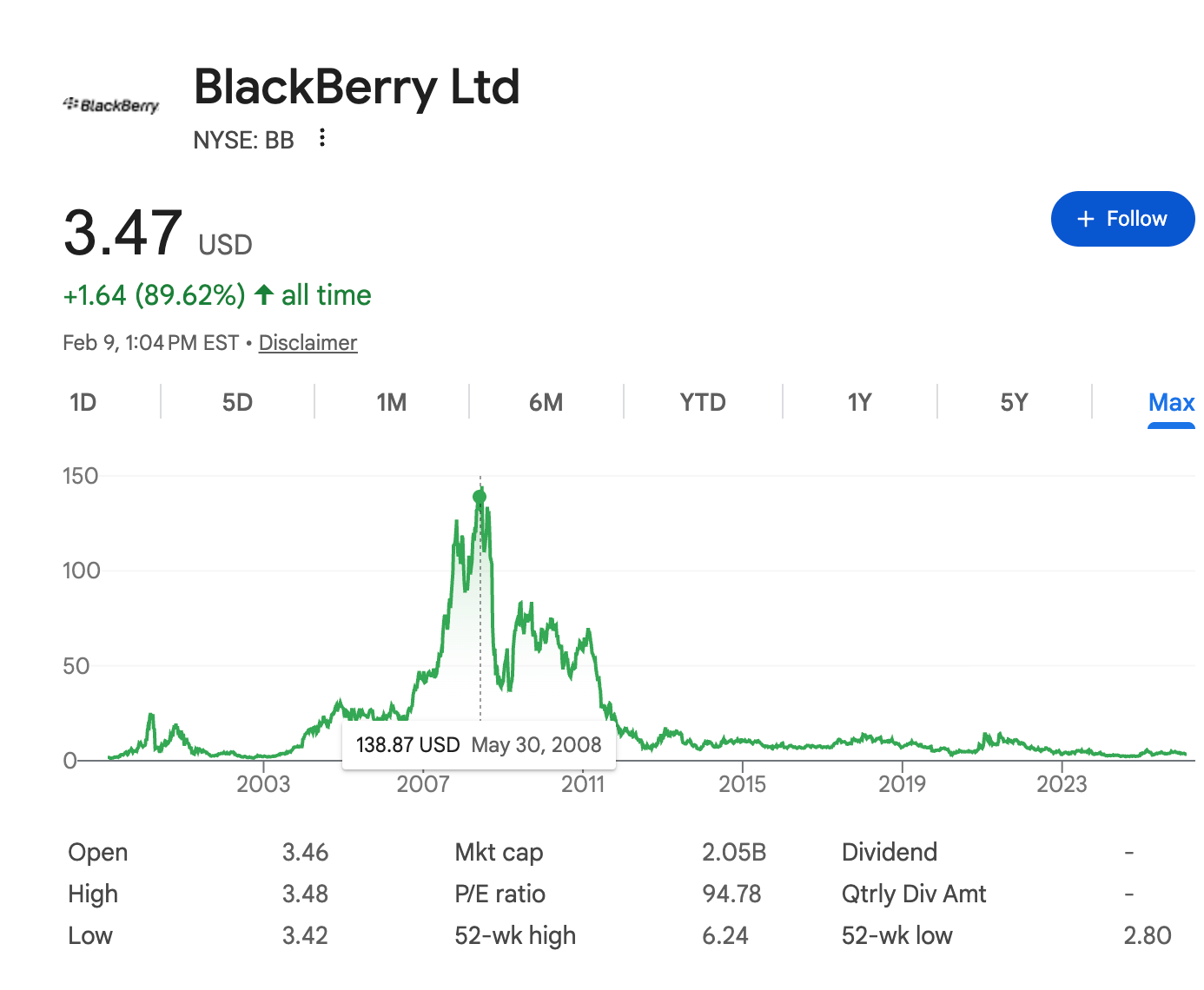
Marta Norton, chief investment strategist at Empower Investments, told Axios that it reminded her of BlackBerry’s displacement when iPhones redefined what a smartphone looked and felt like. Technically, the company survived, but BlackBerry stock is down 98% since 2008.
Bloomberg calculated that almost $1 trillion market value evaporate within a week. However, one of the leading voices on Wall Street sees a very different reality for the economy as a whole: a boom.
As investors fret over the volatility of the technology sector and the potential for an AI bubble to burst, Torsten Slok, chief economist at Apollo, urges investors to look past the noise. Concerns surrounding the software industry are unlikely to drag down the broader economy, he argues in his extensive reading. Daily Spark column.
In a research note titled published on February 8, Slok predicted that “software problems will not be a macro problem because the underlying US economy is about to finish.”
The three pillars of growth
He identified three strong tailwinds set to drive growth in the coming quarters, shifting the economic narrative from digital volatility to physical expansion.
First, the infrastructure backbone for the AI revolution has been paid for. Slok noted that “a lot of financing for data centers has already been done for 2026.” This suggests that regardless of short-term fluctuations in the stock of software companies, capital expenditure on physical hardware and facilities required to run it is locked, providing a floor for economic activity.
the Financial Times‘ Tim Bradshaw pointed out that Google, Amazon and Meta surprised investors with a combined $660 billion in capex plans for 2026, in its latest earnings release. Vivek Arya of Bank of America Research predicted AI capex to quadruple to $1.2 trillion by 2030, suggesting it is a strong segment of the economy.
Second, reindustrialization in the United States is gaining momentum, with “strong political support for bringing back production facilities for semiconductors, pharmaceuticals and defense,” he explained. This recovery effort represents a change in the structure of the economy, moving investment into tangible manufacturing assets that are less susceptible to the volatile sentiment that often governs technology stocks.
And third, the government continues to expand fiscal policy. Citing data from the Congressional Budget Office (CBO), Slok pointed out that government spending is expected to increase GDP growth this year by 0.9 percentage points.
A dangerous pivot?
This projected surge in economic activity leads Slok to a conclusion that may surprise investors hoping for relief from the Federal Reserve. “The bottom line is that it is very difficult to be bearish on the outlook for the US economy,” he wrote.
just one more day, Slok argues that the public markets are a “shrinking segment” of the US economy, presenting a collection of facts that strongly suggest people overreact to movements in equities like the $1 trillion software selloff.
“Most of the time in the financial market is spent talking Nvidia, Apple and Coca-colabut these companies and the rest of the S&P 500 companies make up only a small part of the US economy,” he wrote, noting that the employment of S&P 500 companies is only 18% of the total economy, while the capex of S&P 500 companies is only 21% of the total.
Privately owned companies account for nearly 80% of job openings, while 81% of companies with revenues above $100 million are private, he added.
However, a developing economy brings its own set of complications, according to Slok. While the market’s current obsession is predicting when the Fed will cut rates, he warned that “later this year the conversation in the markets will change from talking about Fed cuts to talking about Fed hikes.”
This forecast suggests that the US economy may be on the verge of overheating. If growth accelerates as Slok expects—driven by data center construction, a manufacturing renaissance, and fiscal stimulus—inflationary pressures will force the central bank to tighten monetary policy rather than loosen it.
For investors, the risk is not that the AI sector will eat up the stock market. The real story is that the “old economy” – construction, defense, and manufacturing – is roaring back to life, which could force a general re-evaluation of the expected interest rate for 2026.