itstargetnews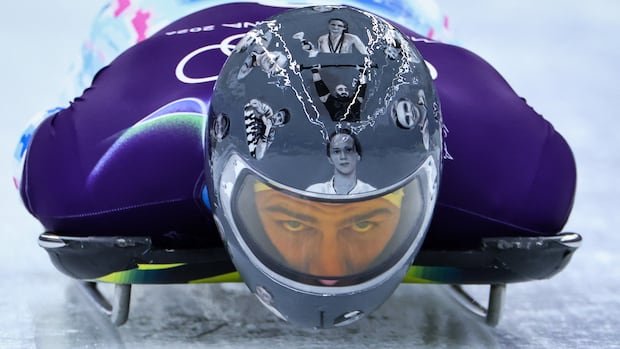

Listen to this article
Estimated 3 minutes
The audio version of this article was generated using artificial intelligence-based technology. Mistakes in pronunciation may occur. We work with our partners to constantly review and improve results.

Follow the Winter Olympic sportsPersonalize your feed
Ukrainian skeleton athlete Vladyslav Heraskevych trained at the Milan-Cortina Games on Monday wearing a helmet emblazoned with images of compatriots killed during the war in Ukraine, fulfilling a promise to use the Olympics to keep attention on the conflict.
“Some of them were my friends,” Heraskevych, who is his country’s flag bearer, told Reuters of the portraits after training at the Cortina skating center.
Teenage weightlifter Alina Perehudova, boxer Pavlo Ischenko, hockey player Oleksiy Loginov, actor and athlete Ivan Kononenko, diver and coach Mykyta Kozubenko, archer Oleksiy Khabarov and dancer Daria Kurdel are visible on the helmet, he told Reuters.
The 26-year-old said the International Olympic Committee contacted the Olympic Committee of Ukraine about his helmet.
“It’s still being processed,” he said.
Heraskevych, who held a “No War in Ukraine” sign at the Beijing Olympics days before Russia’s 2022 invasion, said he intended to abide by Olympic rules banning political demonstrations at venues while ensuring Ukraine’s plight remained visible during the Games.
Rule 50.2 of the Olympic Charter states: “No demonstration or political, religious or racial propaganda of any kind is permitted in any Olympic venue, arena or other areas.”
Neither the IOC nor the Ukrainian board immediately commented on Heraskevych’s case.

Sports and politics
After the Russian invasion of Ukraine in 2022, athletes from Russia and its ally Belarus were largely banned from international sport, but the IOC has since supported their gradual return under strict conditions.
Moscow and Minsk say that sport should remain separate from international conflicts.
Over the years, there have been a number of incidents where athletes have protested on the field of play or on the medal podium.
The most famous case dates back to the 1968 Summer Olympics. in Mexico City when American sprinters Tommie Smith and John Carlos raised their black-gloved fists during the 200-meter medal ceremony to protest racial injustice in the United States
This led to their expulsion from the Games, although Smith retained the gold medal and Carlos the bronze.
Recently, at the 2024 Summer Olympics in Paris, Afghan breakdancer Manizha Talash, a member of the Refugee Olympic team, was disqualified after wearing a cape with the slogan.
“Free Afghan Women” during the pre-qualification competition. However, there were also cases in which athletes and teams escaped punishment when their actions were not considered political.
Australia’s women’s soccer team unfurled the flag of Australia’s First Nations at the 2021 Tokyo Olympics, but even though it was not one of the recognized flags of participating countries at the Games, the team was not penalized.
Two Chinese cycling medalists who wore badges bearing the head of their country’s former leader Mao Zedong on the podium at the Tokyo Olympics drew a warning.