itstargetnews
S&P 500 futures were flat this morning after the index closed strongly on Friday at 1.97%. Asian and European markets rose sharply this morning. The STOXX Europe 600 rose 0.27% in early trading; Japan’s Nikkei 225 rose 3.89%; and South Korea’s KOSPI rose 4.1%. Even gold is now back to $5,000.
It’s nice to think this is the start of a continued global rally in equities.
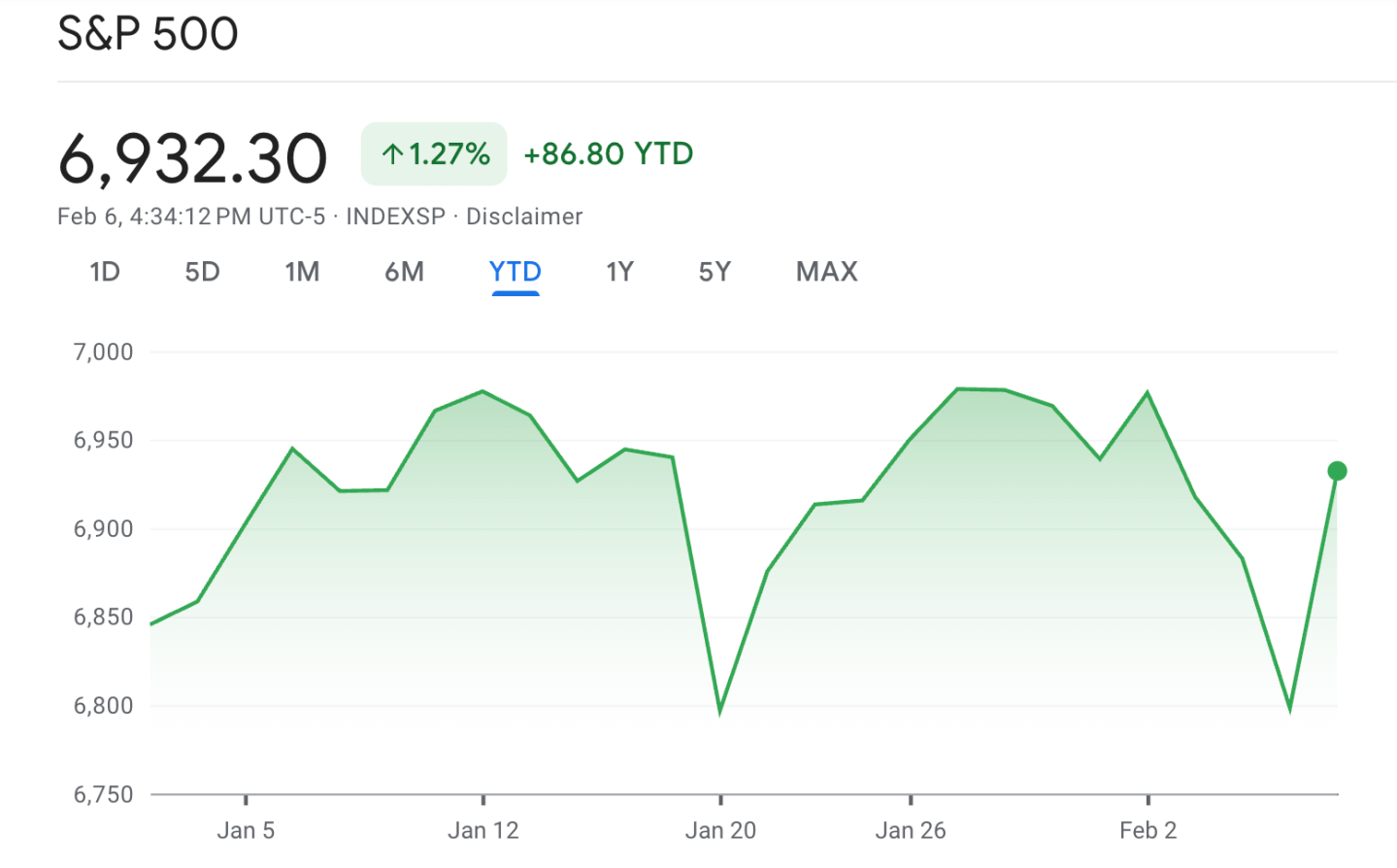
But don’t get too comfortable: The S&P has been a rollercoaster all year and Wall Street analysts don’t expect it to end anytime soon. Whenever stocks retreat in reaction to bad news, a relentless wave of buy-the-dippers sent them back up again. And every time stocks rally, the same relentless wave of skeptics erases the gains.
The shape of this chart of the index’s year-to-date performance tells you everything you need to know:
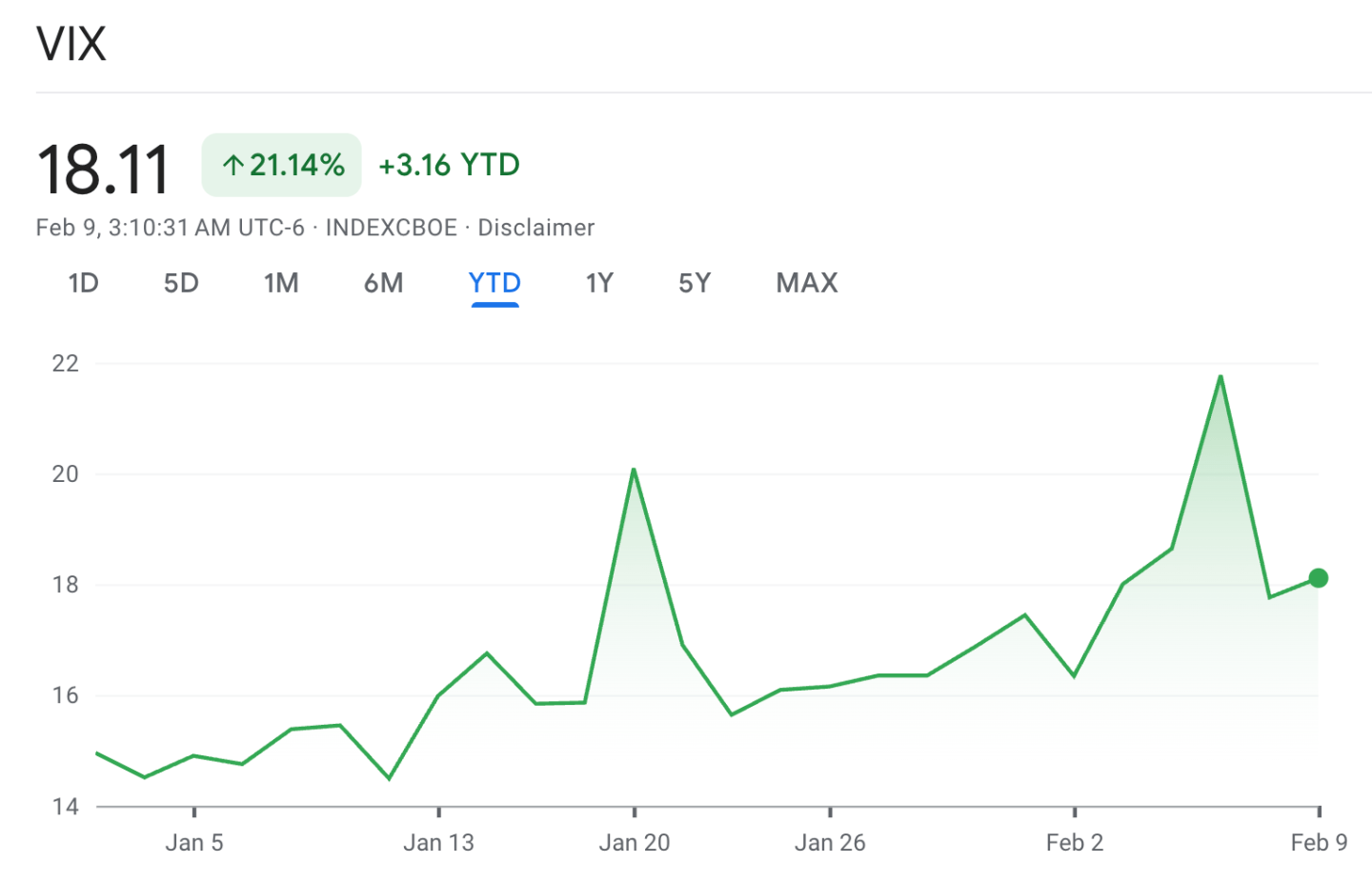
Not surprisingly, the VIX “fear” index (which measures volatility) also rose throughout the year:
Gold is supposed to be a safe haven, but anyone who bought it at the end of January was hurt by it:

And the Goldman Sachs “Panic Index”—yes, that’s a real thing—hit 9.22 out of 10 on Thursday, indicating “maximum fear” among investors, according to Bloomberg.
This “brutal volatility” is driven by investors who want to get out of software stocks-which they believe is vulnerable to being replaced by AI agents—and in almost any industry sector, according to Deutsche Bank.
Software companies in the S&P 500 fell 7.75% last week and are down 15% over the past two weeks, Jim Reid and his team at Deutsche Bank told clients this morning. “Magnificent 7 also endured its worst week since April, falling -4.66% (+0.45% Friday) with Amazon down -5.55% on Friday.
Yet the S&P remains less than 1% from its all-time high.
You can see that rotation in this chart, which compares the S&P 500 to a notional “equal-weight” index, which ignores each company’s market cap to treat all stocks equally. The real-world S&P was hampered by declines in tech stocks, but all other stocks in the index did very well:
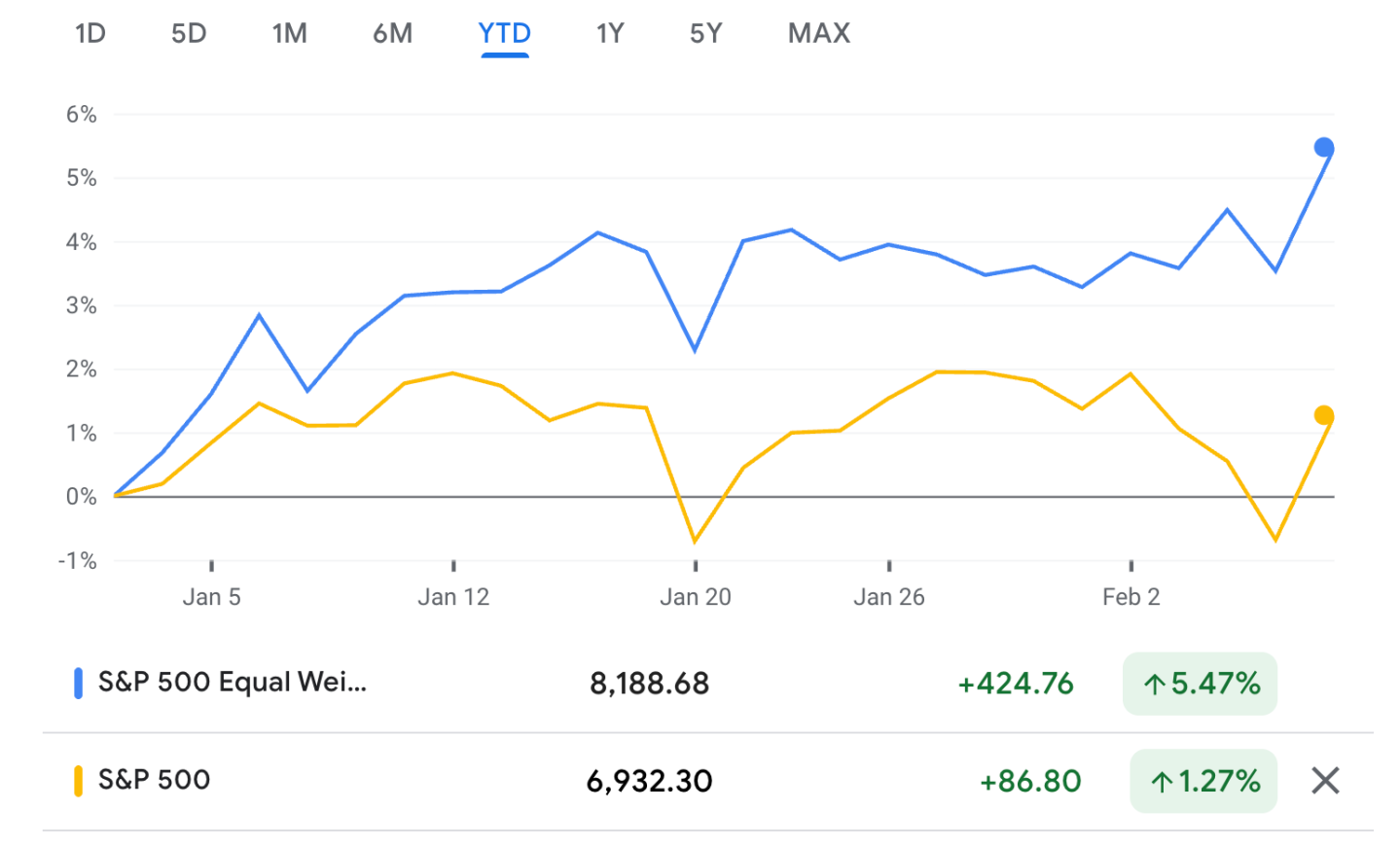
“The equally weighted S&P 500 even hit a new record, rising +2.13% (+1.88% Friday), which highlights how widespread the rotation trade has been,” said Reid et al.
the Dow The Jones Industrials—which are less influenced by tech stocks than the S&P—closed above 50,000 for the first time last week. Ed Yardeni of Yardeni Research is very happy about that. “We still forecast the DJIA at 70,000 by the end of the Roaring 2020s,” he told clients in a recent note.
Here’s a snapshot of the markets ahead of the opening bell in New York this morning:
- S&P 500 futures are flat this morning. The last session closed at 1.97%.
- STOXX Europe 600 rose 0.27% in early trading.
- The UK’s FTSE 100 rose 0.25% in early trading.
- Nikkei 225 in Japan increased by 3.89%.
- CSI 300 in China increased by 1.63%.
- The South Korean KOSPI increased by 4.1%.
- NIFTY 50 in India increased by 0.68%.
- Bitcoin available at $69.5K.