itstargetnews
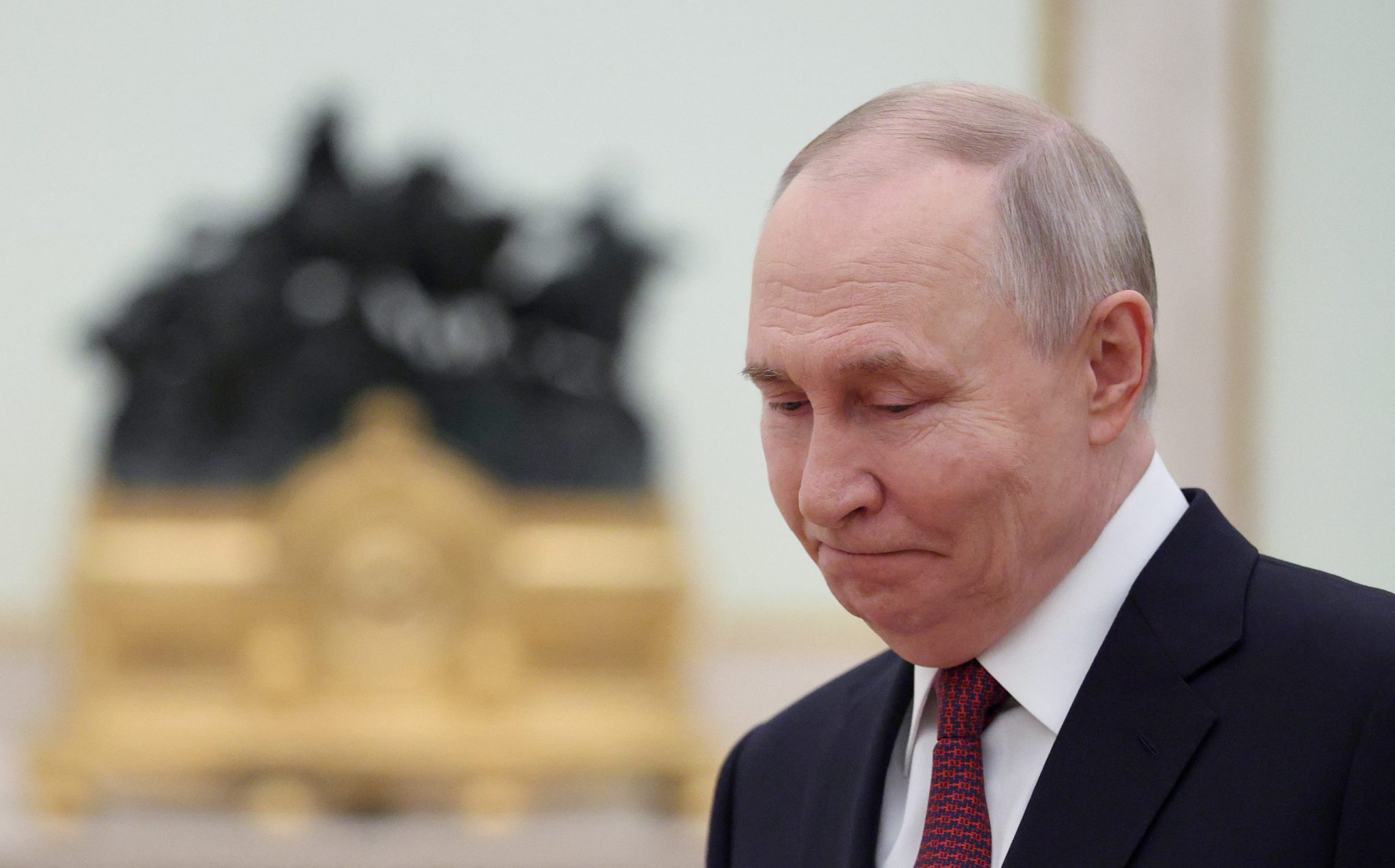
The Kremlin’s financial situation has become increasingly dire and could come to a head in a matter of months as oil revenues dwindle while President Vladimir Putin has no plans to end his war in Ukraine.
Russian officials have warned Putin of growing alarm that a financial crisis could hit in the summer, sources told Washington Post. They point to weak oil revenues, which fell 50% in January from a year earlier, and a budget deficit that continues to widen, even as Putin raises taxes on consumers.
A business executive in Moscow also spoke to Post that the crisis could come in “three or four months” amid accelerating inflation, adding that restaurants are closing and thousands of workers have been laid off.
Economic difficulties go back to Russia’s invasion of Ukraine four years ago. While sanctions were lifted and Putin mobilized the economy for a prolonged war, a tight labor market and high inflation forced the central bank to keep interest rates high. Recent easing has failed to prevent a decline in spending among many categories of consumers.
With companies feeling the pressure of high rates and weak consumption, many workers were left unpaid, furloughed, or saw their hours cut. As a result, consumers have trouble servicing their loans, raising concerns of a financial sector crash.
“Possible banking crisis,” a The Russian official told the Washington Post in December on condition of anonymity. “A crisis of non-payment is possible. I don’t want to think about continuing the war or progress.”
In June, Russian banks raised red flags in a possible debt crisis because the high interest rate burdens the ability of borrowers to pay the debts. That same month, the head of the Russian Union of Industrialists and Entrepreneurs warned that many companies were in “a state of pre-default.”
The Center for Macroeconomic Analysis and Short-Term Forecasting, a Russian state-backed think tank, said in December that the country could face a banking crisis in October if credit problems worsen and depositors withdraw their funds, according to Post.
“The economic situation in Russia has deteriorated significantly,” wrote Dmitry Belousov, head of the think tank, in a note seen by Financial Times. “The economy has entered the brink of stagflation for the first time since early 2023.”
Russia’s financial problems could worsen as Europe weighs more sanctions on the so-called shadow fleet tankers used to ship oil to Moscow. That would add to recent US sanctions on Russian oil majors Rosneft and I locked it.
A tighter Western sanctions regime has forced Russia to offer higher discounts on crude oil exports, while the recent drop in world oil prices has already eroded its main revenue generator.
Despite the worsening fiscal outlook, Moscow is still spending heavily on weapons and incentives to attract new army recruits. To cover revenue shortfalls, Russia tapped into its sovereign wealth fund, but that has also now been depleted.
Russia also suffered terrible losses on the battlefield, with an estimated 1.2 million killed or wounded since the war began. Last month, NATO Secretary General Mark Rutte said that more than 30,000 Russian troops died in December alone—an average of 1,000 per day—just to gain a little territory.
At the same time, European officials point out that Russia is losing strategically, that Ukraine is likely heading for EU membership, NATO is expanding after adding new member states, and Europe is increasing defense spending significantly.
“So people say that Russia wants to continue the war because they want more territory – that’s rubbish,” Finnish President Alexander Stubb said last month at the World Economic Forum. “Russia has to continue the war because this war is too big for Putin to fail. If you add that the Russian economy is destroyed, which means they can’t pay their soldiers that means zero growth, ending reserves, interest rates and inflation in double digits. That’s why Putin can’t afford to end this war.
In fact, while Russia is engaged in on-again, off-again talks to end the war, it continues to bombard Ukraine with missiles and drones, focused on its energy infrastructure.
Russian, Ukrainian and US officials concluded two days of talks in Abu Dhabi with little progress reported. In comments released on Saturday, Ukrainian President Volodymyr Zelensky said the US wants the war to end in June and is planning a new round of negotiations.
“America proposed for the first time that the two negotiating teams-Ukraine and Russia-meet in the United States of America, perhaps in Miami, within a week. We confirm our participation,” he said.